
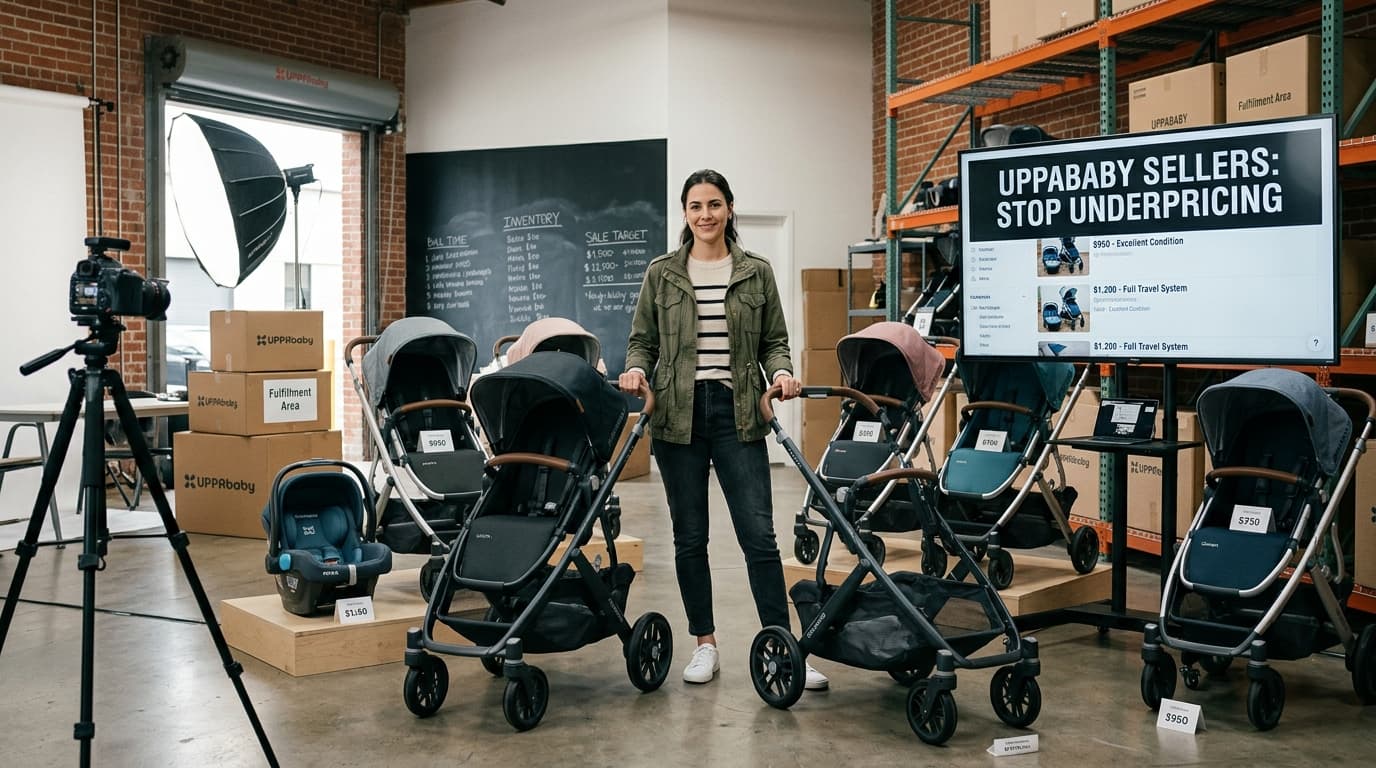

You're Leaving Real Money on the Table
You've sold enough baby gear to know the basics. Post clear photos, price at 60% of retail, ship fast. That formula works, but it's a floor, not a ceiling. Experienced sellers who treat reselling baby gear as a business, not a chore, routinely push strollers and car seats 20 to 30% above MSRP when certain conditions line up. This article covers the six tactics that make it happen.
The baby gear resale market is substantial and growing. The global strollers market was valued at over $4.8 billion in 2024, and demand for secondhand gear tracks closely behind new gear purchases. More importantly for you, premium brands like UPPAbaby, Bugaboo, Nuna, and Cybex hold resale value far better than mid-tier alternatives. That built-in demand is your leverage. Here's how to use it.
Tactic 1: Time Your Listings Around Demand Peaks
Most sellers list whenever they're ready to sell. That's the first mistake. Reselling baby gear is a seasonal business with clear windows where buyers are most active and least price-sensitive. According to SaleHoo market data, July is the peak month for baby stroller demand, driven by outdoor season, summer travel, and the fact that major retailers run competing promotions that push motivated buyers toward secondhand alternatives when new stock sells out or prices spike.
The second peak runs from late October through mid-November, when new parents and gifting grandparents flood the market ahead of the holidays. Search interest for baby travel systems peaked in November 2025, meaning buyers are primed and ready. List your best strollers two to three weeks before Black Friday, before retail discounts dilute perceived scarcity. Spring, specifically March through April, is your third window. Families expecting a summer baby are actively setting up gear, and the annual Target Car Seat Trade-In event in April pushes buyers toward secondhand options with coupons in hand.
Tactic 2: Build Bundles That Justify Premium Pricing
Single-item listings compete on price. Bundles compete on value, and value is where you win. A Bugaboo Cameleon stroller listed alone will get picked apart by buyers quoting Facebook Marketplace comps. That same stroller listed with its original bassinet, rain cover, car seat adapters, and cup holder becomes a curated travel system, and buyers will pay a premium for the convenience of getting everything in one transaction.
The key is to bundle accessories that are genuinely complementary and hard to source separately. Rain covers for discontinued models, brand-specific adapters, original carry bags, extra seat liners in good condition, and even the original purchase receipt (which confirms no accident history for car seats) all add real value. Structure your listing price to reflect the total replacement cost of every included item, then price the bundle at 85 to 90% of that combined retail figure. Buyers perceive that as a deal. You capture more than you would selling each piece alone.
According to resale data from GoodBuy Gear's 2025 analysis, the brands with strongest secondhand demand are UPPAbaby, Stokke, Cybex, Bugaboo, and Graco, in that order. If you're holding inventory from any of those brands, bundle their branded accessories specifically. Off-brand additions dilute the premium perception.
Tactic 3: Photograph Like a Retailer, Not a Reseller
The gap between a $400 listing and a $600 listing for the same stroller is often nothing more than photography. Buyers cannot physically inspect your item. They make a judgment call based on what they see, and they will pay more when the photos communicate quality and care. Clean the stroller completely before shooting. Remove every crumb from the seat fabric, wipe down the frame, clean the wheels, and check that all zippers and buckles look polished.
Shoot against a clean, neutral background. A white wall or a light-colored patio works well. Natural light eliminates the yellow cast that indoor lighting creates, which makes fabrics look dingy and materials look cheap. Take a minimum of eight shots: front, back, both sides, the fold mechanism, the seat recline, the wheel tread, and any included accessories laid flat. If the stroller has any wear, photograph it honestly but frame it in context. A tiny scuff on a frame bar is irrelevant next to a pristine seat and a functional canopy. Show condition, but lead with quality.
Include a scale reference in at least one photo, either a hand gripping the handlebar or an object placed next to the fold. Parents evaluating strollers for tight urban spaces or car trunks are sizing everything mentally. Giving them that reference builds confidence and reduces questions, which means fewer hesitant buyers and more decisive ones.
Tactic 4: Write Descriptions That Sell the Life, Not Just the Specs
Most resale listings read like a spec sheet. Brand. Model. Condition. Price. That works for electronics. It underperforms for baby gear, where the purchase is emotional as much as practical. Buyers of premium strollers are not just buying transport. They want to know their child will be comfortable, that the item is genuinely safe, and that they're getting the same quality experience that made the stroller worth $900 new.
Write your description in two layers. Lead with the story: how the stroller was used, how many children, how it was stored, why you're selling. Parents trust other parents. Knowing a stroller spent two years on neighborhood walks and was kept in a climate-controlled garage is more reassuring than any condition label. Then layer in the specs: weight, max load, compatibility, included accessories, and any relevant history like original purchase date or service records. Use the brand's own marketing language for key features. "Extendable UPF 50+ canopy" reads better than "big sunshade." Buyers recognize premium vocabulary and it anchors price expectations.
For car seats especially, note explicitly if the seat has never been in a collision. This is the single highest-value disclosure you can make. Car seats involved in accidents are typically retired, so an explicit no-accident statement removes a major buyer objection and justifies a stronger price.
Tactic 5: Use Scarcity and Discontinuation as a Price Floor
The strongest pricing leverage in reselling baby gear comes from scarcity, and scarcity in this market is often manufactured by manufacturers themselves. Brands discontinue colorways seasonally. They replace models with updated versions that are not always compatible with existing accessories. Limited-edition collaborations sell out and never restock. These dynamics create pockets where resale demand significantly outpaces supply, and sellers who recognize them can price well above retail.
If you're holding a discontinued UPPAbaby MESA in a colorway that's no longer available, or a Bugaboo Fox model year that has been replaced, check current new-in-box prices on specialty retailers and eBay sold listings. When retail stock disappears and buyers still want that specific product, you're no longer competing with MSRP. You're the only option, and buyers who've already committed emotionally to a specific item will pay for it. Frame your listing accordingly: note that the item is no longer manufactured, specify the exact model year and colorway, and let buyers do the math on what it would cost them to find another.
This same principle applies to high-value baby gear categories more broadly. Scarcity is the primary driver when resale outperforms retail.
Tactic 6: Choose Platforms Where You Keep What You Earn
The last tactic is also the most direct: your platform choice determines how much of your premium pricing actually reaches your pocket. Selling strollers and car seats above MSRP is only meaningful if you keep the margin. Traditional marketplaces extract it systematically. eBay charges sellers 10 to 15% of the final sale price. Facebook Marketplace is free but limits reach, lacks buyer protection that motivates confident purchasing, and puts you in negotiating situations that erode your price. Etsy charges 6.5% plus listing fees on top. These cuts are painful when you've worked to command a premium.
Fisheez flips this structure. Sellers pay 0% on every listing. The platform fee is paid by the buyer, ranging from 8% on smaller transactions down to 0.5% on larger ones. That means every dollar of premium pricing you command, through timing, bundles, photography, and description, stays with you. The SmartShell Escrow system holds buyer funds in USDC via smart contract until delivery is confirmed, which protects both sides and eliminates the charge-back risk that makes high-ticket resale nerve-wracking on conventional platforms.
For sellers moving premium baby gear at $800, $1,200, or more, the difference between losing 13% to a traditional platform and losing 0% on Fisheez is hundreds of dollars per transaction. When you're already applying the tactics in this article to push prices above MSRP, keeping the full margin is what transforms a good resale strategy into a genuinely profitable one.
Put It Together
Reselling baby gear at premium prices is not luck. It's a combination of timing (list in July, pre-holiday October, and spring), bundling (complete the system so buyers pay for convenience), photography (clean neutral background, natural light, eight angles minimum), description (story first, specs second, no-accident disclosure for car seats), scarcity awareness (discontinued models and colorways change the pricing rules), and platform selection (zero seller fees mean premium pricing is actually premium income).
Pick two or three of these tactics and apply them to your next listing. Compare results. The sellers consistently clearing 30% above MSRP are not doing one thing differently from everyone else. They're doing all six. The data on resale market growth backs the opportunity. The only question is whether you're positioned to capture it.
Fisheez gives you the platform to do exactly that. Zero seller fees, SmartShell Escrow for secure high-ticket transactions, and a marketplace built for sellers who know what their inventory is worth.