
The Live Selling Arena Is Bigger Than You Think
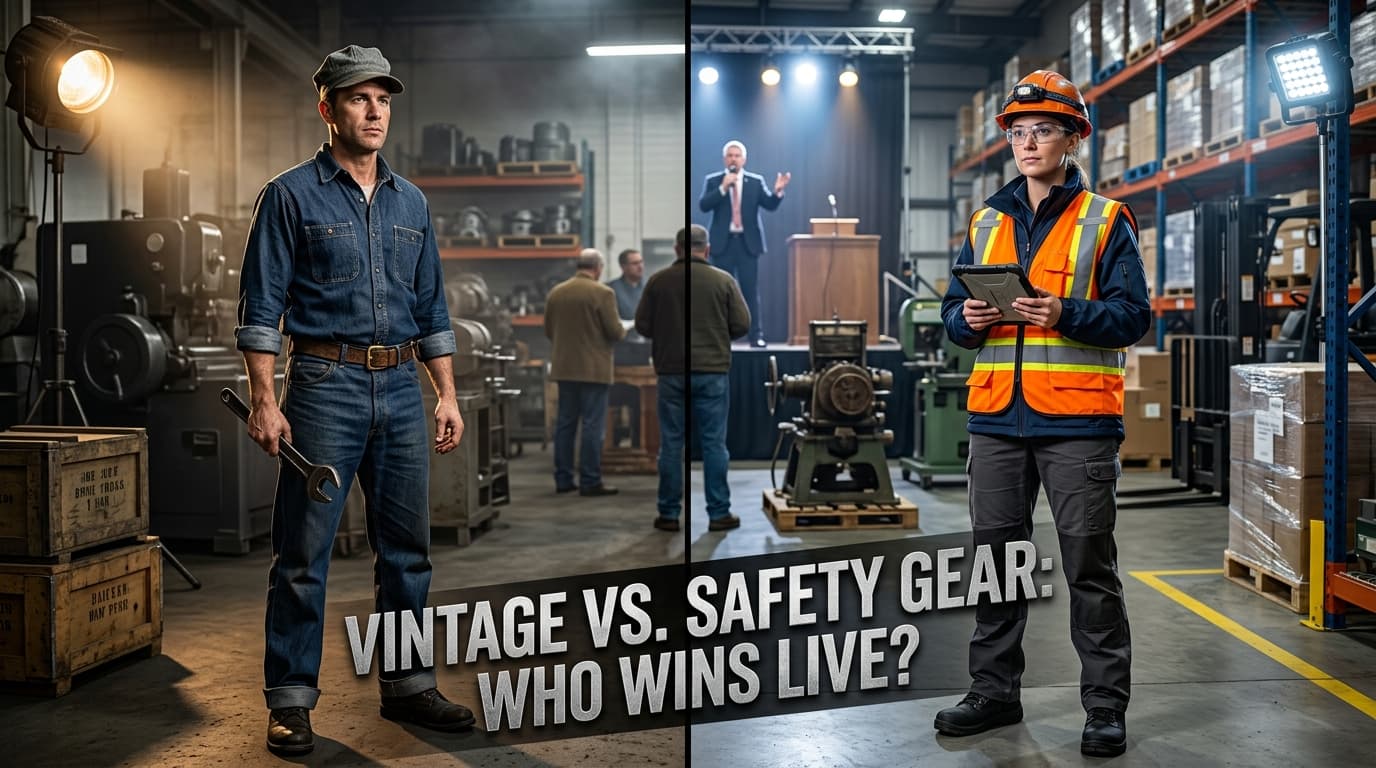
Picture this: you have two pallets of excess inventory sitting in your warehouse. One holds a rack of vintage mechanic coveralls, the kind with faded brand patches and oil-stained character. The other holds dozens of high-vis safety vests, bright yellow and barely used. You have a live auction starting in an hour. Which pile do you grab first?
That question matters more than ever. Live commerce is projected to reach $230 billion globally in 2026, with the US market alone expected to hit $68 billion. Fashion and apparel -- which includes both vintage workwear and safety gear -- account for over 28% of all livestream eCommerce activity. If you have excess inventory in either category, a live format is no longer a nice-to-have. It is where the bids are. The real question for small business owners is which category performs better in live auction work uniforms sessions, and how to build a session that makes the most of both.
Vintage Work Uniforms in Live Auctions
Vintage workwear has a storytelling advantage that almost nothing else in surplus inventory can match. A set of 1970s mechanic coveralls from a defunct regional dealership is not just a piece of clothing. It is a prop. It has a patch, a name tag, a history. In a live auction format, that narrative is your biggest weapon. Bidders will compete over the story as much as the garment itself.
The market data backs this up. Brands like Carhartt and vintage Walls overalls consistently generate stronger resale margins than basic tees because of higher average resale prices and the brand-heritage premium buyers are willing to pay. Vintage workwear has gender-neutral appeal and durable materials that expand the buyer pool well beyond fashion collectors. In a live session, this translates to a longer bidding runway per item. You can hold on a single pair of coveralls for several minutes while the bids climb because your audience -- streetwear buyers, nostalgia collectors, and vintage resellers -- is emotionally engaged.
The challenge with live auction work uniforms in this category is condition variance. Vintage pieces in your stock may be exceptional or heavily worn. Pre-sort ruthlessly before going live and lead with your best pieces. A strong opener sets the energy and price expectation for everything that follows. If you start with a tired, heavily stained piece, the whole session loses momentum before it starts.
Modern Safety Gear in Live Auctions
High-vis vests occupy a completely different position in the live format. The primary market for high-visibility clothing reached $2.04 billion in 2025 and is growing at over 8% annually, driven by tightening workplace safety regulations and construction sector demand. What that means for your live auction is a buyer base that is practical rather than emotional. They are buying to use the product, not to display it.
That practicality is actually an advantage in a live session, but only if you play it correctly. Safety gear sells on volume and speed. Rather than lingering on a single vest for four minutes, bundle lots of 5, 10, or 20 units and move them fast. Contractors, small construction outfits, and warehouse managers who stumble onto your stream want to solve a procurement problem on the spot. When you frame your live auction work uniforms pitch around "these are certified, ready to deploy, here is the lot size and here is the starting bid," you trigger a different but equally powerful buying response: urgency based on utility.
The limitation here is that safety gear has a lower ceiling per unit than vintage workwear. A high-vis vest that retails for $18 might fetch $10 to $14 in a live auction lot. The win is in volume. Clear out 200 vests in a single 20-minute segment and that is a highly efficient use of your airtime and your warehouse space.
Which Category Wins the Bid?
There is no universal answer, but there is a clear framework. If your live auction work uniforms inventory skews toward branded vintage pieces with visible heritage -- think named mechanics, old dealership logos, American workwear brands from the 1960s through 1980s -- vintage wins on margin per item. A single piece can sell for $40 to $80 or more when the story lands with the right audience. You need a smaller crowd that is more engaged and willing to compete.
If your stock is primarily modern surplus safety gear in decent condition, volume is your friend. You win through transaction speed, lot-based bidding, and repeat buyers who come back to stock up. Livestream shopping research shows that live product demonstrations drive 36% of purchase decisions, which means showing your vests in use -- holding them up, demonstrating the reflective strip quality, calling out the sizing range -- matters as much as the price point.
The real insight is that these two categories attract different audiences. Vintage workwear buyers tend to discover you through social sharing and community recommendations. Safety gear buyers find you through direct search and industry word of mouth. Knowing your audience before you go live shapes everything from your platform choice to your opening bid.
The Hybrid Session Strategy
The highest-performing sessions for excess work inventory are not either-or. They are sequenced. Open your live auction with two or three vintage workwear pieces. These are your warm-up lots. They build energy, get your comments section moving, and set the tone that this is a real auction where things sell fast. Vintage buyers are expressive; they will react in real time and make your session feel alive to anyone who joins mid-stream.
Once the room is warm, transition into your safety gear lots. Frame it as the main event for your practical buyers. "We have the vintage round done, now let us move some real volume" is a transition line that respects both segments of your audience without alienating either. Batch your high-vis vests into lots, set a tight countdown for each lot, and keep the energy high. Viewers who came for the vintage will often stick around out of curiosity, and some will buy safety gear too if the price is right.
This sequencing approach works because it mirrors how professional auctioneers structure estate sales: lead with interesting, lower-volume items to build the room, then move the bulk inventory while attention is at its peak.
Where to Run Your Live Auctions Next
If you are running live auctions on Facebook or TikTok today, you already know the core problem: when money changes hands, you are on your own. There is no built-in payment protection, no escrow, and no recourse if a buyer does not follow through. The thrill of a fast live session can turn into a frustrating collections process after the camera goes off.
Fisheez is building live selling with SmartShell Escrow built in from the start. When a buyer commits in a live session, funds are locked in a smart contract in USDC on the BASE network. The deal closes when the buyer confirms delivery. No bank, no middleman, and sellers keep everything they earn -- Fisheez charges sellers nothing, with buyer-paid fees that scale down as transaction sizes grow. For small business owners moving excess inventory through live sessions, that protection changes the math entirely.
Live commerce with smart contract protection is coming, and when it arrives, the playbook you build now with vintage coveralls and high-vis vest lots will be the foundation for a platform where every bid is backed by escrow that neither side can walk away from. Fisheez is built for sellers who need that security without the cost. Build the strategy now. The infrastructure is catching up.