
Stop Leaving $500 on the Table Every Time You Go Live
You are three minutes into your live demo and someone in chat just typed "$800 for a full driveway and patio." You countered at $1,200. They said yes. That is the moment every seasoned pressure washer chases, and it is happening more often for operators who have figured out how to run live auction services the right way. The pressure washing industry generates roughly $2.8 billion annually in the U.S. alone, and a growing slice of that is moving through live formats where the operator controls the room, the pace, and the price. If you have been running live sessions but your average ticket is not consistently hitting four figures, the problem usually is not your rig. It is your strategy.
Set Your Floor Price Before the Stream Starts
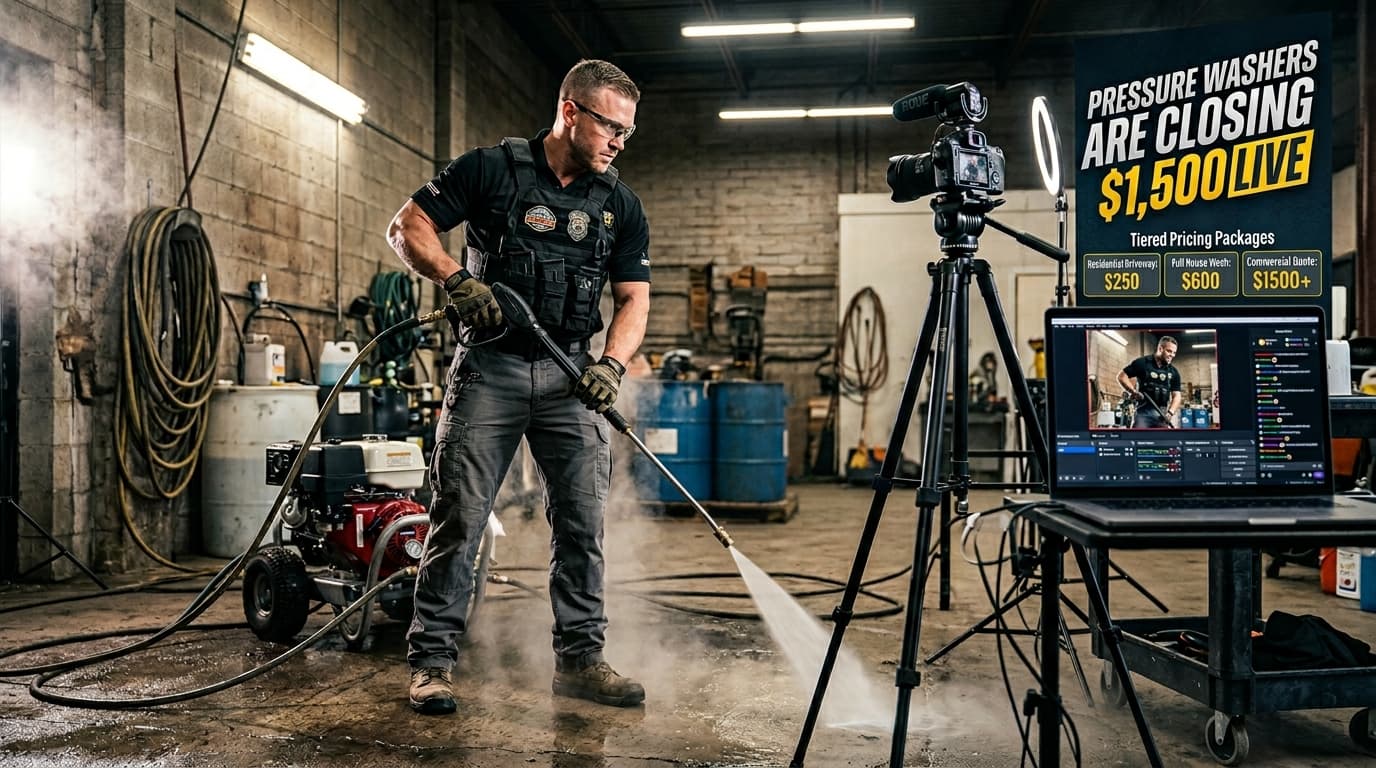
One of the most common mistakes even experienced operators make is entering a live auction session without a hard floor. When you know your fully-loaded cost per job, including drive time, chemical costs, and wear on equipment, you can anchor bids confidently instead of hedging. The pressure washing industry average runs $250 to $600 per residential job, but operators running live demos consistently close above that range because live formats create urgency and social proof simultaneously. Viewers watching others bid validate the price in real time. Set your floor at 20 to 30 percent above your standard estimate and let the room move it up. If your close rate on standard estimates is already above 70 percent, that is a signal from the market that you are underpricing. Use that data before you go live, not after.
Nail the Visual Setup to Justify Premium Bids
A live demo lives or dies on production value, and you do not need a film crew to do it right. What you need is a clean angle that shows the transformation. Position one camera on the dirty surface before you start, then cut to a second angle showing the clean results as you work across the section. Viewers bidding on a commercial fleet wash or a large concrete pad need to see scale. Show the square footage. Call it out verbally: "This is 2,400 square feet of oil-stained concrete. Watch this." The research from scaling pressure washing operators confirms that perceived value, not just actual service quality, is what drives premium pricing. A business owner in that study raised daily rates from $1,700 to between $2,500 and $4,000 using identical equipment. The difference was how they framed and presented the work. Your live session is your pitch, your demo, and your close all at once.
Use Tiered Slot Packages to Drive Bidding Competition
Random one-off bids rarely hit your ceiling. Structured slot packages do. Before your live auction services session, prepare two or three service tiers: a standard clean, a premium clean with soft-wash treatment, and an elite package that includes a follow-up visit or a priority scheduling guarantee. When viewers see three options on screen, they anchor to the middle tier and the top tier benefits from comparison. Announce the packages at the top of the session, remind the room mid-stream, and close each slot explicitly. "Slot two at the premium tier, going once, going twice." That cadence trains your audience to act fast. Operators who have refined this structure report that the elite tier books roughly 25 to 35 percent of the time when presented clearly, and that single package typically accounts for 40 to 50 percent of session revenue.
Lock Deposits Before You Leave the Stream
Here is where a lot of live operators lose money they already earned. A viewer bids $1,500 on a commercial job, you shake hands in chat, and by morning they have gone cold. The fix is securing a deposit before the stream ends. The old way of doing this, chasing Venmo or bank transfers after the fact, leaves you exposed. Escrow-backed deposit systems are increasingly the standard for service providers running live auction services, and for good reason. When a buyer deposit is locked in a smart contract the moment they commit on stream, neither side has to worry about chargebacks, ghosting, or disputes about what was agreed. It also signals to serious buyers that you run a professional operation, which tends to filter out low-quality bids early.
Build the Repeat Audience That Books You Out Weeks Ahead
A single live demo session is a revenue event. A regular live series is a business model. The operators scaling fastest through live auction formats are treating their stream schedule like a premium service slot in itself. They announce next week's sessions at the end of every stream, create early-access lists for repeat buyers, and use milestone jobs from past sessions as the opener for the next one. Show the before-and-after from last week's $1,400 fleet wash in the first 90 seconds. That is social proof, credibility, and a price anchor all in one move. Consistent marketing infrastructure is what separates operators doing occasional live sessions from those who are booked out two to three weeks in advance and commanding top-of-market rates. When your audience knows when you go live and trusts that slots fill fast, they show up ready to bid.
What Is Coming Next for Live Service Professionals
The infrastructure for live service selling is catching up to the opportunity. Right now, the biggest gap for operators running live auction services is payment protection. Platforms built for physical product drops were not designed for service deposits, milestone payments, or the kind of vetted, high-value jobs that serious pressure washers are now closing live. Fisheez is building toward exactly this: SmartShell Escrow locks buyer funds in USDC on the BASE network the moment a deal is agreed, releasing on completion or by milestone. Sellers pay nothing on the platform. The buyer covers a tiered service fee starting at 8 percent on smaller transactions and dropping as deal size grows. For a $1,500 job booked live, that is built-in protection for both sides with no bank in the middle. Disputes go to trained community Peacemakers rather than a faceless support queue. If you are closing premium slots live and still chasing deposits over text, you are one bad actor away from a $1,500 lesson. The better path is building deposit protection into the session itself, so every bid you accept is already backed.