
Live Selling Strollers: Your Pre-Auction Checklist for $300+ Bids
Live shopping converts buyers at 9 to 30 percent, compared to the 2 to 3 percent you get from a static listing. That gap is not an accident. When a viewer watches you fold a UPPAbaby Vista in four seconds flat, narrating every latch and wheel click, something clicks for them too. They want it. The comment section fills with bids. That is live selling strollers in action, and it works especially well for high-value baby gear because parents can see exactly what they are getting.
But a lot of sellers go live under-prepared and leave real money on the table. A $300+ bid on a stroller is absolutely achievable. Premium brands like Bugaboo, Nuna, and UPPAbaby regularly resell at 50 to 70 percent of retail in like-new condition. The problem is not demand. The problem is sellers who show up to their live auction without doing the work first. This checklist fixes that.
Phase 1: Gear Prep Before the Camera Turns On
Your stroller is the star of this auction. Buyers in a live session are making fast decisions, and anything that raises doubt will kill the bid. Walk through every item before you schedule your stream.
Stroller readiness checklist:
- Deep clean everything. Wipe down the frame, scrub the fabric according to manufacturer instructions, and remove any sticky residue. A grimy cup holder in frame will cost you bids.
- Check all functions. Test the fold mechanism multiple times. Confirm wheels roll smoothly, brakes engage and release, reclining positions work, and the harness buckles click cleanly. If something is stiff, fix it or disclose it.
- Gather the accessories. Cup holders, rain covers, footmuffs, adapters. Every included accessory bumps perceived value. List what you have before going live.
- Document the condition honestly. Note any scuffs, fabric fading, or missing parts before your live auction starts. Buyers who feel surprised after the fact are the buyers who dispute transactions.
- Know your model and retail price. Look up the current retail price before you go live. You will reference it on camera.
A note on car seats. If you are bundling a car seat with a stroller travel system, the disclosure bar is higher. Reselling a used car seat is legal in the U.S. for individuals, but you need to be able to truthfully confirm the seat has never been in a crash, is not recalled (check the NHTSA recall database using the model number on the label), has all original parts intact, and has at least two years before its expiration date. According to GoodBuy Gear's car seat resale guidelines, a seat involved in any crash, even a minor one, is no longer considered safe for resale. If you cannot confirm all criteria with certainty, do not include the car seat in your live auction.
Phase 2: Set Your Pricing Before You Go Live
Winging your pricing on camera is a rookie mistake. You need a starting bid, a reserve (your absolute floor), and a buy-it-now number ready before you hit broadcast.
Pricing framework for strollers:
- Like new (under 6 months of use, all accessories included): 60 to 70 percent of retail as your target, 50 percent as your floor.
- Good condition (some wear, fully functional, no damage): 40 to 55 percent of retail as your target.
- Fair condition (visible wear, missing minor accessories): 25 to 40 percent of retail. Be honest on camera about what is missing.
For a stroller with a $600 retail price in like-new condition, your starting bid might sit at $180 (30 percent of retail) to generate early bid momentum, with a reserve around $300 and a buy-it-now at $380. The starting bid should feel like a deal. That is what triggers the first comment.
Write your starting bid, reserve, and buy-it-now number on a notecard. Keep it off camera but within sight. You do not want to do mental math mid-stream while managing a comment section.
Phase 3: Set Up Your Live Auction Space
The environment you create on camera is part of your pitch. Viewers are judging the professionalism of the seller alongside the quality of the item.
Tech and environment checklist:
- Lighting. Natural light or a ring light pointed at the item, not behind it. Shadows on the stroller hide the condition and make buyers hesitant.
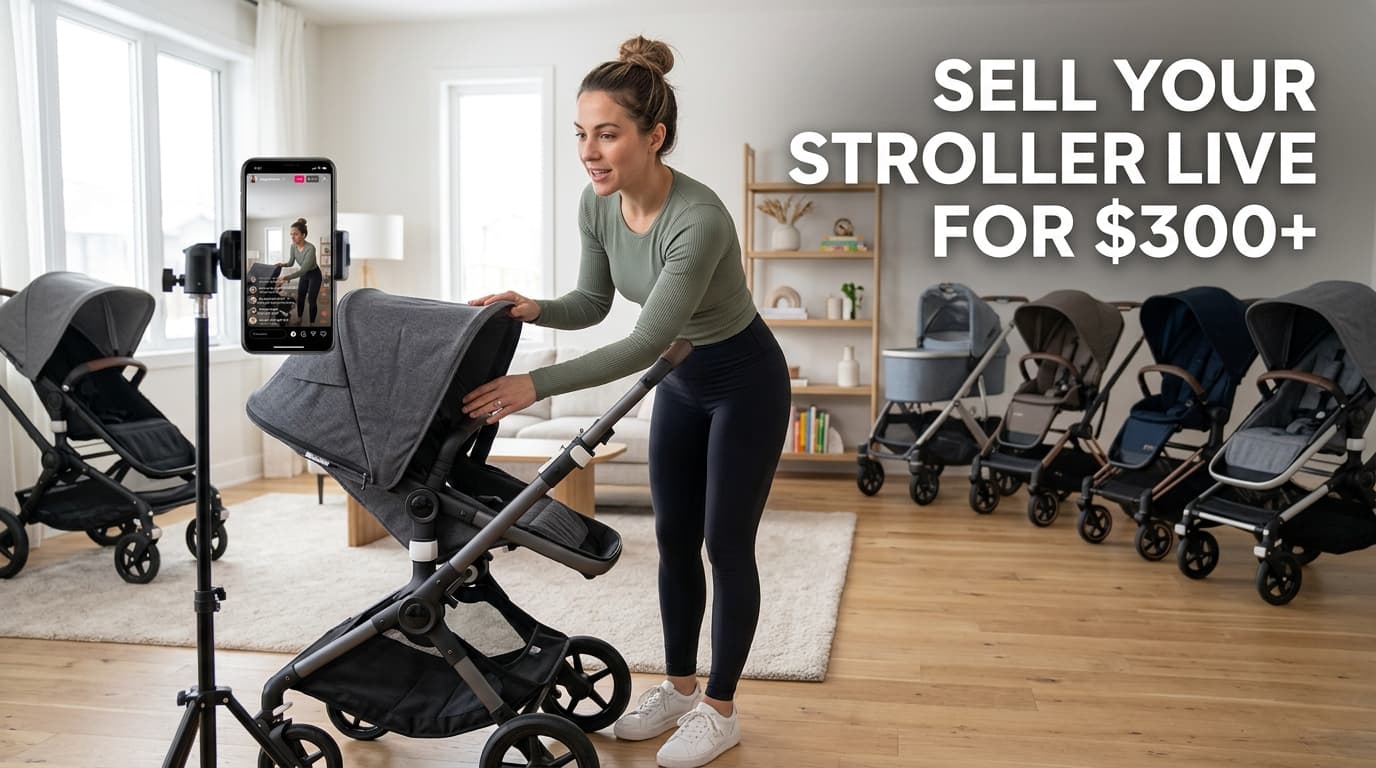
- Stable camera position. Your phone on a tripod, not hand-held. You need both hands free to demo the fold, adjust the seat, and show the harness.
- Clean, neutral backdrop. A blank wall or a clean floor. Clutter in the background looks like a yard sale, which anchors low-price expectations in viewers.
- Test your internet connection. A buffering stream mid-auction kills momentum and drops viewers.
- Have the stroller fully assembled and ready. Do the fold demo live, then reassemble. Practice it at least five times before going live so it looks effortless.
- Prepare a short description script. Jot down four or five key selling points per item: brand, model, retail price, current condition, what is included. You do not want to blank on camera.
The fold demo is your secret weapon for live selling strollers. Folding the stroller smoothly and quickly while narrating the steps answers the number one question every parent has: is this actually easy to use? Show them. Do not just tell them.
Phase 4: During the Auction, Keep Bidders Moving
Once you are live, your job is managing energy and managing bids simultaneously. The comment section is your bid sheet. According to SimpleConsign's live auction guide, the sellers who build consistent audiences are the ones who acknowledge bidders by name and create clear processes for bidding.
In-session checklist:
- Open with the retail price and your starting bid. "This Nuna Mixx retails for $700. We are starting bids at $200."
- Read bids out loud and acknowledge bidders by name. "Maria is at $220. Do I have $240?" This keeps other viewers engaged and makes bidders feel seen.
- Use a bid prefix system. Ask viewers to comment with a letter like "B" followed by their amount ("B240") to distinguish bids from regular comments. Platform algorithms can hide plain number comments.
- Create urgency in short bursts. "Going once at $280. Who is taking this home?" Urgency is legitimate when the item is real and the condition is as described.
- Do the fold demo during slow moments. If bidding stalls, fold and unfold the stroller. Physical activity on camera reengages viewers who are watching but not yet bidding.
- Have your payment method ready to communicate. Tell buyers exactly how you want to be paid before they ask.
Phase 5: After the Sale, Protect Your Transaction
Selling live is fast. Collecting payment and completing the handoff is where things can go sideways, especially on platforms that offer no protection for either side.
Most live auctions on Facebook happen with no escrow, no built-in dispute resolution, and no payment protection. Payment goes through Venmo, PayPal, or cash, and if something goes wrong after the fact, you are on your own. That gap is a real problem for sellers dealing in $300+ transactions. A buyer who claims the stroller arrived damaged has no impartial process to use. Neither does the seller.
Post-sale checklist:
- Confirm the winning bid and the buyer's name publicly on stream. This creates a record that both parties can reference.
- Follow up with the buyer directly and quickly. Send payment instructions within minutes of the auction closing. Slow follow-up creates friction and increases the chance the buyer backs out.
- Document the item's condition before handoff or shipping. Photos or a short video showing the stroller as it leaves your hands. This is your protection if a dispute arises.
- Keep records of all messages. Screenshots of the winning comment, payment confirmation, and any shipping communication.
A Better Platform for Live Gear Sales
Here is where things are shifting. The live auction format is growing fast, with the U.S. live commerce market reaching approximately $50 billion in 2023 and conversion rates outpacing standard e-commerce by a wide margin. The infrastructure supporting that growth, though, has not caught up. Sellers running live auctions on Facebook or TikTok are operating without payment protection, without escrow, and without any neutral party to call on if something goes wrong.
Fisheez is building live selling with SmartShell Escrow built in from the start. Buyer funds lock in a smart contract in USDC on the BASE network the moment a purchase is confirmed. The funds do not release to the seller until the deal is complete. If a dispute comes up, Peacemakers, trained community volunteers, step in to resolve it. No bank, no middleman.
The fee structure is buyer-paid: sellers pay nothing. Buyers pay a tiered service fee starting at 8 percent for transactions under $50, scaling down to 0.5 percent for larger amounts. For a $350 stroller sale, the seller keeps every cent of the $350.
Sellers who prep correctly, disclose honestly, and use platforms with real payment protection are the ones building sustainable live selling businesses. This checklist gets you ready to be one of them.