
The Scoreboard Doesn't Lie: Live Auctions Are Built for Team Sports Gear
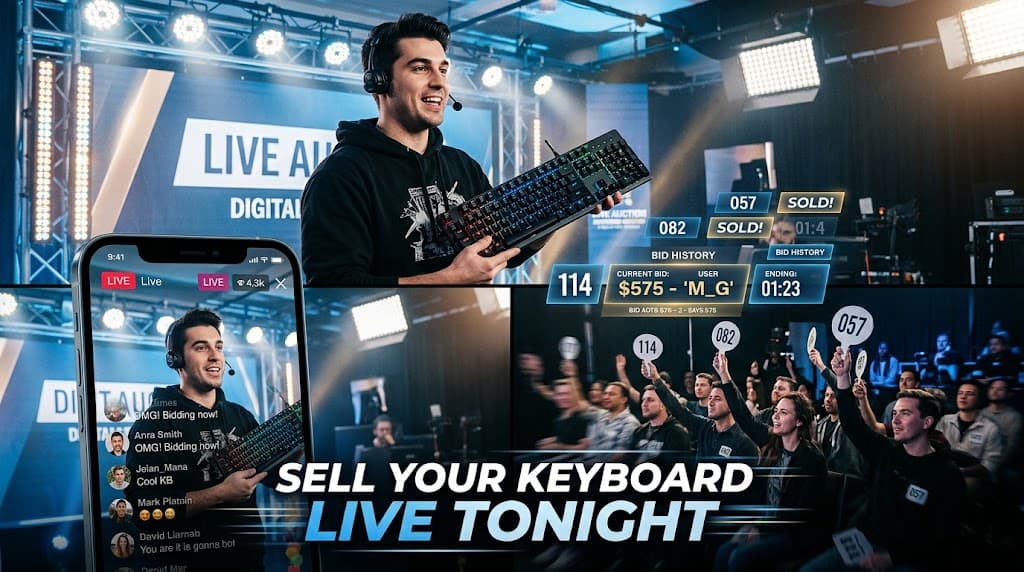
A bag of barely-used soccer balls from last season. Three parents bidding against each other within 90 seconds. The lot closes at double your opening price. That is live auction team sports gear doing exactly what the skeptics said it couldn't do. It is not a fluke, either. Shoppable live streams convert at up to 30%, compared to 2-3% for traditional ecommerce. That gap exists because live selling creates something a static listing never can: urgency, community, and real-time competition. Too many coaches and team parents never even try live auction team sports gear because they've accepted four myths as facts. Here is the proof that all four are wrong.
Myth 1: Jerseys Don't Bid Well
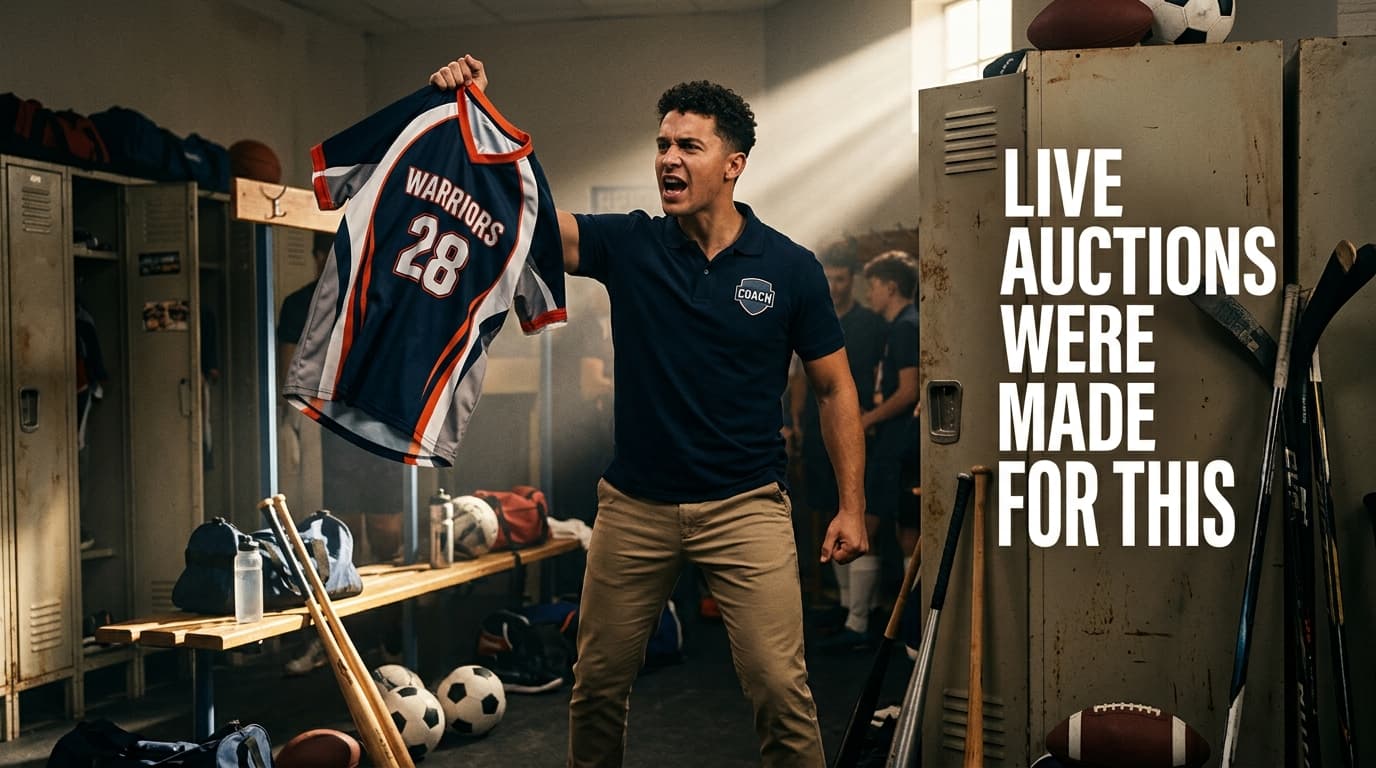
This is probably the most damaging belief in the team sports resale world, and it is completely backwards. The idea that jerseys sit flat in live auctions ignores what actually drives bidding: story and scarcity. A jersey is not just fabric. It is a season. It is a player's name. It is the championship game, the comeback win, the team that finally beat their rivals. When you hold up a jersey on a live stream and tell that story, you are not selling apparel; you are selling a moment.
Auction houses that specialize in game-worn team jerseys have built entire businesses around this insight. Grey Flannel Auctions, one of the most respected names in sports memorabilia, centers its model on game-worn jerseys because that is where collector demand is strongest, with record prices topping themselves for three consecutive years. The principle scales down perfectly to local leagues. A signed travel jersey from your U14 soccer team's tournament run will generate more bidding energy in a live session than the same jersey listed statically for a week. The live format lets you narrate, answer questions, and create the urgency that makes someone decide right now. The sports memorabilia market is projected to reach $227.2 billion by 2032, growing at 21.8% annually. Jerseys are not a weak category in live auction team sports gear. They are a headline item when you treat them that way.
Myth 2: You Need Collector-Grade Gear to Run a Live Auction
Some sellers convince themselves that live auctions are reserved for signed memorabilia, vintage equipment, or rare finds. If that were true, liquidation platforms like HiBid wouldn't be moving lots of pitching machines, soccer balls, baseball helmets, and batting gloves in live sessions every week. They do, because utility drives demand, not just rarity.
For coaches and team parents, the live format is an advantage with everyday gear. When you are on camera with a slightly used composite bat, you can flex it, demonstrate the grip, show the barrel condition, and answer questions about which league it is certified for. A photo listing on a static marketplace cannot do that. The context you provide in real time reduces buyer hesitation and increases final sale prices. Platforms that enable live sales with comment-based purchasing let viewers type "sold" to claim items without leaving the stream, which removes friction entirely. Your inventory does not need to be extraordinary. It needs to be presented with the kind of energy and information that makes a buyer feel confident enough to bid.
Myth 3: Live Selling Only Works for New Inventory
Pre-owned team sports equipment carries a reputation problem that the data does not support. The resale market for sports gear is enormous and growing fast. Sellers move used jerseys, bats, cleats, and protective gear constantly across resale platforms, and these buyers are not just bargain hunters. Many specifically seek out used items because they want gear that is already broken in, or equipment with a known history from a specific team or season.
The authenticity angle is especially powerful in live auction team sports gear settings. Used gear has provenance. It has a story. That bat was part of a winning season. Those shin guards protected a keeper who went to state regionals. When you are live, you can tell those stories directly. You can answer the parent in the comments who is asking whether the cleats ran small or large, or whether the ball has been used on turf or grass. The interactive format turns the "used" label from a liability into a feature. Being able to show the item in real time, on camera, under good lighting, is itself a form of verification that static listings cannot match.
Myth 4: You Need a Big Audience to Make Live Auctions Worth It
Broad reach is overrated in live selling, especially for team sports gear. The sellers who perform best in live auction environments are not always the ones with thousands of followers. They are the ones with 50 highly engaged, deeply relevant viewers: the parents of players on your team, the local league families, the coaches in your network who know the equipment you are selling.
Fisheez Hubs are designed for exactly this dynamic. A tight community audience converts at dramatically higher rates than a scattered general audience because every viewer already has context. They know the team, they recognize the gear, and they have a personal reason to care about the outcome. When you go live for a soccer team's end-of-season gear auction, you are not broadcasting into the void. You are running a flash sale for people who already want what you have. That is a fundamentally different conversion dynamic than cold traffic, and it is why small-audience live sessions regularly outperform large-audience static listings. The goal is not to reach everyone. It is to reach the right people at the right moment with the right energy.
Start Experimenting: The Infrastructure Is Catching Up
The single biggest barrier between you and your first successful live auction team sports gear session is not your inventory, your audience size, or the category of items you are selling. It is hesitation built on myths that do not hold up to scrutiny. Jerseys bid. Everyday gear sells. Used equipment has a market. Your community is exactly the right audience.
The infrastructure for live selling is evolving fast, and the next major shift is payment protection built directly into the live format. Fisheez is building live selling with SmartShell Escrow, meaning buyer funds lock in a smart contract the moment a bid is accepted and release automatically when the deal is done. No bank. No middleman. No chargeback risk hanging over your head after the stream ends. Sellers on Fisheez pay nothing in platform fees; the buyer pays a tiered service fee that scales down as transaction size grows.
For coaches and parents who have been running gear sales on Facebook Live or TikTok with no payment protection, Fisheez live selling closes that gap. You get the energy and community of a live format with the security of a smart contract underneath every transaction. The myths have been holding you back long enough. Your next live auction team sports gear session is closer than you think, and the buyers are already out there waiting.