


St. Patrick wasn't Irish. Born in Roman Britain around 385 AD, he was kidnapped at 16 by Irish raiders, dragged across the sea, and forced into six years of slavery tending livestock on Irish hillsides. He eventually escaped, made it home, trained as a priest, and then did something that still blows my mind: he went back. Voluntarily. To the place that enslaved him. And he changed everything about it.
I think about that story a lot. The outsider who becomes the defining figure of a culture he was never supposed to belong to. The guy who had every reason to walk away and chose instead to go back and build something. March 17 is my grandparents wedding anniversary and my birthday. It's always been my favorite month. And the patron saint of the month happens to be someone who had no business being there, but showed up anyway and got to work.
The Color Was Never Green
Here's another one that'll mess with your head. The original color associated with St. Patrick wasn't green. It was blue. Specifically a shade called "St. Patrick's Blue," which was the official color of the Order of St. Patrick, established in 1783. Green took over in the 1700s and 1800s, tied to the Irish independence movement and the symbolism of the shamrock. Green became the color of resistance, of national identity, of something new replacing something old.
I've been thinking about that a lot too. Sometimes the original gets replaced by something better, not because the original was wrong, but because the world moved. The way commerce works online is the original. High fees, opaque rules, platforms that can change the game on you overnight. I've lived through that. I spent years as the number one headband brand on Amazon, ahead of Nike, ahead of Under Armour. Then in 2020, Amazon changed how their app worked, redefined what "brand" meant on their platform, and I lost 40% of my revenue in a matter of weeks. No warning. No appeal. Just a new policy and a new reality.
The old way isn't broken because it started wrong. It's broken because something better is overdue.
March Has Always Been Money
Let me put some numbers on the table. St. Patrick's Day 2026 is projected to hit $7.7 billion in total consumer spending. Three out of five Americans plan to celebrate. Average spend is $47.45 per person. Amazon captures about 35% of those shoppers. And the top activity, by a wide margin, is buying themed apparel and costumes. Forty percent of celebrants are out there looking for green shirts, shamrock glasses, and yes, green headbands.
I sold green headbands on Amazon for years. March was consistently one of my biggest months. I knew exactly what was coming every February: a spike in searches, a run on inventory, and then the receipts. The product worked. The demand was real. The problem was always the math on the back end.
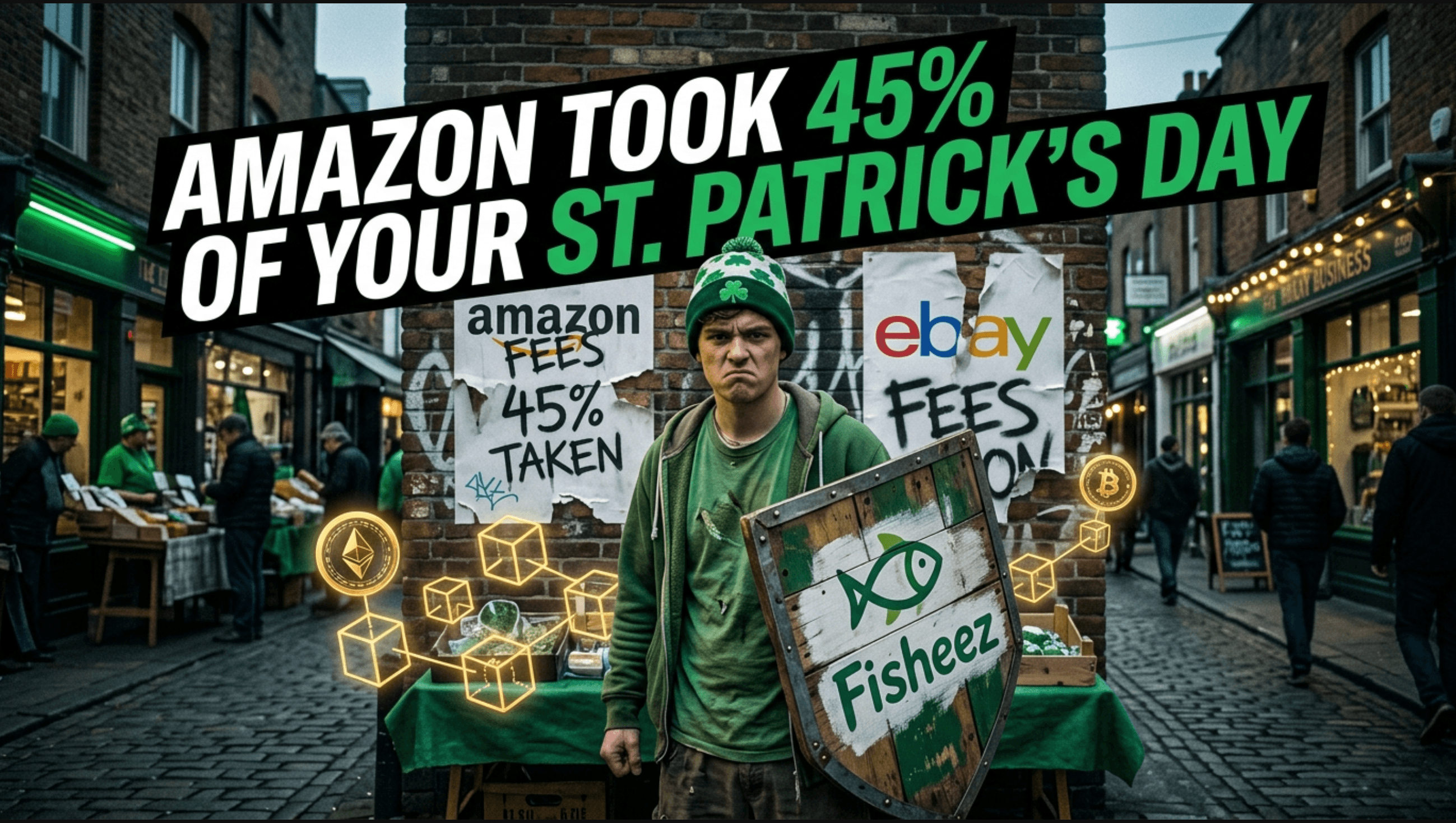
Amazon's referral fee in apparel runs 15% off the top. Add FBA fulfillment fees, storage fees, and advertising spend, and you're handing over 40 to 45 cents of every dollar back to the platform. eBay runs 13 to 15% in final value fees. You're doing the work, taking the risk, sourcing the product, and the platforms are skimming the pot before you ever touch it. A $7.7 billion holiday sounds great until you realize how much of that pot of gold isn't actually going to the sellers generating it.
That math is what I couldn't stop thinking about when I started building Fisheez.
Sellers Keep What They Earn
Fisheez flips the fee structure. Sellers pay nothing. Zero percent from the seller side. Buyers pay a tiered fee that starts at 8% on transactions under $50 and drops as low as 0.5% on larger deals. That's it. No referral fees on the seller. No FBA surprise charges. No platform redefining the rules at 2am and costing you half your business.
Transactions run through SmartShell Escrow, a smart contract on the Base network that holds buyer funds in USDC until the deal is done. No bank in the middle. No 10-day holds while a platform decides whether to release your money. Funds lock on payment and release when the buyer confirms delivery, or when the timer expires, or through Peacemaker dispute resolution if something goes sideways. Peacemakers are trained community volunteers, not platform employees with a quota. The incentive is in the integrity.
There are also TideTurner NFTs, resellable discount memberships that reduce the buyer-side fee even further. The Whale TideTurner level gets you to 100% fee discount. If you want to understand how that works and why it matters for regular buyers and sellers, this piece on fee discounts breaks it down.
The bigger picture here isn't just about fees. It's about what happens when sellers have no leverage and platforms have all of it. I've written about this pattern before, whether it's BlackRock locking the door or the numbers behind how platform capture works. The structure always ends up the same: the platform wins, the builder on the platform scrambles.
St. Patrick went back to Ireland because he believed in building something real in a place that needed it. I'm not comparing myself to a patron saint, that would be a lot, even for my birthday. But I do think there's something in the idea of the outsider who shows up anyway, who doesn't have the obvious background for the thing, and builds it regardless.
I spent 22 years selling on eBay and over a decade as a top Amazon seller. I'm not a crypto native. I came to blockchain through commerce, through the frustration of watching platforms extract value from the people doing the actual work. Fisheez is what I would have wanted when I was moving green headbands in February, watching March revenue roll in, and then handing a massive chunk of it back to a platform that could cut me off tomorrow.
We're getting close to launch. If you're a seller, a buyer, or just someone who's tired of watching the house always win, come take a look at what we're building. March 17 has always been my favorite day of the year. This year it means something extra.