
When a $75 Bracelet Buys a Kid's First Real Art Class
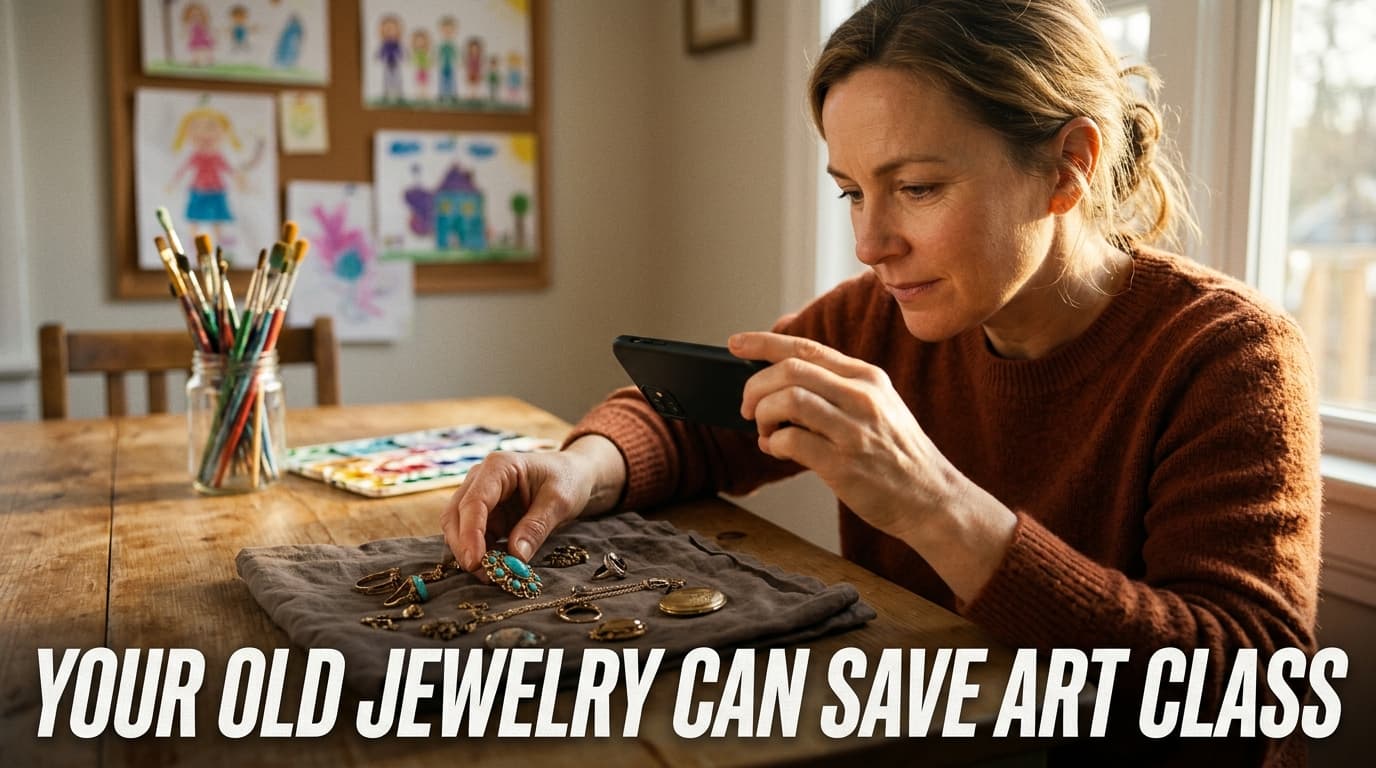
Maria kept a box under her bed. A shoebox stuffed with bracelets and rings and earrings she hadn't worn in years. She'd been meaning to do something with them. Then her daughter's school sent home a letter: the art program was being cut. No more ceramics. No more after-school painting. Maria thought about that shoebox.
Over the next six weeks, she listed 34 pieces on a peer-to-peer marketplace, averaging $72 per sale. She pooled her $2,400 with a dozen other parents doing the same thing, and together they handed the school's art teacher a check for $31,000. It was enough to save the program for the year and buy a kiln.
That story is not an outlier. In 2025, it became a movement.
The Funding Gap That Sellers Started to Fill
Arts programs in American public schools have been under pressure for years, but 2025 accelerated the squeeze. State arts appropriations dropped roughly 10% in fiscal year 2025 compared to prior years. Federal support eroded further as the National Endowment for the Arts faced historic funding reductions, with more than $27 million in previously awarded grants canceled mid-cycle. Schools that had depended on those grants were left scrambling, mid-semester, to cover costs.
The burden landed hardest on communities with the fewest resources. Suburban districts with active parent networks and corporate sponsors found ways to replace lost dollars through private fundraising. Rural and lower-income urban districts often could not. Art classes, ceramics studios, and after-school programs quietly disappeared.
What's emerged in response is something less organized but more powerful: individual sellers, working on their own terms, directing resale proceeds toward local schools. Accessories and jewelry, because of their small size, low shipping cost, and high perceived value relative to resale price, have become the workhorse of this kind of resale for good. A $75 accessory flip doesn't sound like much, but at scale, across a community, it adds up fast.
Why the Resale Market Made This Possible in 2025
The timing matters. The U.S. secondhand apparel and accessories market grew 14% in 2024, with online resale posting 23% growth, its strongest rate in years. According to ThredUp's 2025 Resale Report, the U.S. secondhand market is on track to hit $74 billion by 2029, growing five times faster than traditional retail. More people are selling. More buyers are looking for exactly what you're listing.
That growth created a real infrastructure for impact. On eBay alone, sellers have raised over $1.3 billion for charitable causes since the platform launched its giving program, including $162 million in 2023 across more than 225,000 enrolled charities. The mechanics are simple: you sell, you designate a portion of the proceeds, the charity gets funded.
What changed in 2025 is the intentionality. Experienced sellers, people who already knew how to source, photograph, price, and ship, started treating their closets and storage units as fundraising engines. Flipping unused jewelry and accessories, previously just a way to recoup value, became a tool for community investment.
How Sellers Are Actually Doing It
The sellers making a real impact aren't running bake sales. They're running resale operations with purpose baked into the model. Here's what the most effective ones share.
They keep their inventory focused. Jewelry and accessories resell fast and ship cheap. A pair of earrings in a padded envelope costs less than $4 to mail, margins stay high, and turnaround stays quick. A seller moving 20 to 30 accessory flips a month at an average of $60 each is generating real money, and the proceeds go exactly where they decide.
They make the purpose visible. Listings that mention a specific cause, a named school, a named program, consistently attract more buyers and higher offers. People want to know their $75 is doing double duty. Sellers who lead with the story close faster.
They coordinate. The $500,000 figure that's drawn attention to this trend didn't come from one seller. It came from networks of sellers, organized through school parent groups or community forums, who pooled proceeds and delivered them to arts programs as unified grants. The logistics are simple: a shared spreadsheet, a group chat, a local nonprofit to receive funds. Communities organize fast when the goal is specific and the path is clear.
The Platform Side of the Equation
None of this works unless sellers keep enough of their money to make it worth the effort. Platform fees eat into proceeds, and on most major marketplaces, that cost falls entirely on the seller. Losing 10 to 15 percent of every sale before you've calculated your share for the school changes the math significantly.
Fisheez approaches this differently. Sellers pay nothing. The buyer pays a tiered service fee starting at 8% under $50 and declining from there. Every dollar a seller earns stays with the seller, which matters enormously when those dollars are earmarked for a school art program.
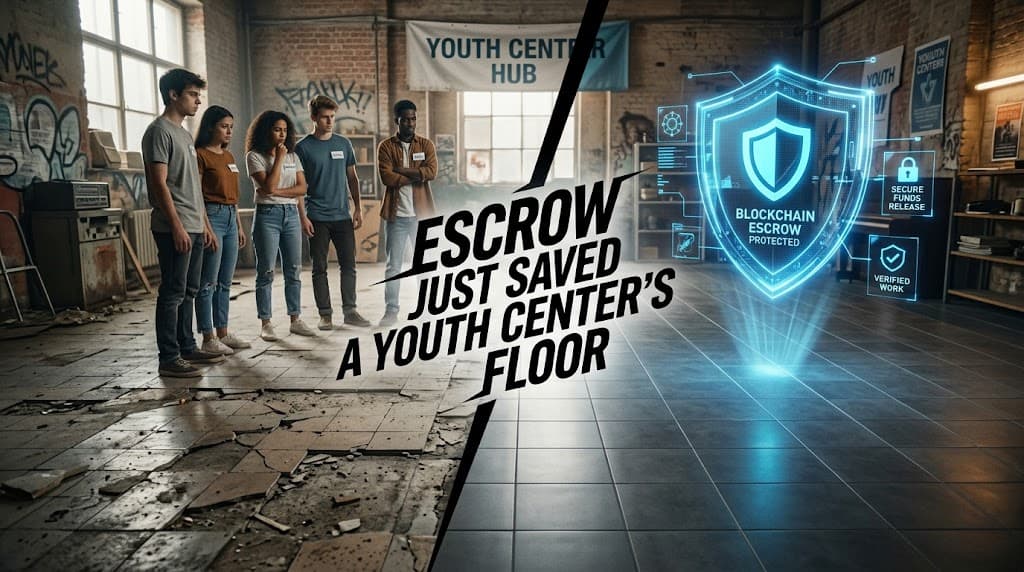
The platform runs on USDC via the BASE network, with SmartShell Escrow locking funds in a smart contract until the transaction completes. No bank in the middle, no float period. Funds move when the deal closes, which matters when you're coordinating payouts on a schedule.
Fisheez also runs the Fishlanthropy Foundation, a separate 501(c)(3) funded by 5% of platform revenue, with NFT holders voting on where it goes. Community impact is built into the structure, not bolted on.
What Comes Next for Resale for Good
The sellers who made the biggest impact in 2025 treated their resale operation like a business with a social mission. They tracked numbers. They told their story. They built community around a shared goal.
The research on this is solid: arts education correlates with higher attendance, higher graduation rates, and stronger development of the skills, critical thinking, communication, collaboration, creativity, that shape long-term outcomes for kids. When schools lose those programs, something real disappears. When a seller decides her box of old bracelets is worth more to a kid's art class than it is collecting dust, something real gets built.
Accessory flips done with intention and at scale can fund entire programs. That's not a theory from 2025. It's a result.
If you're ready to sell with your full proceeds intact and direct the money where it matters most, Fisheez is built for exactly that. And for a closer look at how peer-to-peer platforms can create real community ripple effects, this piece on the Fishlanthropy model is worth your time.