

The Youth Center That Lost Its Floor Twice
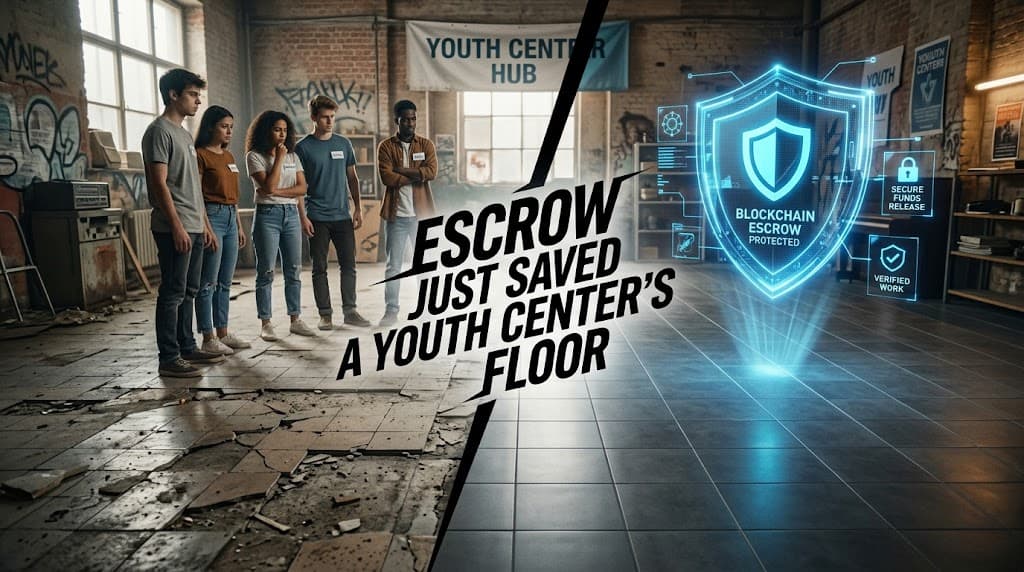
The gym at a small youth center on the east side of town was supposed to reopen the Monday after Labor Day. Instead, the director stood in the middle of a half finished room on a Tuesday morning, staring at a stack of tile boxes the installer had walked away from. The contract was $2,200. The deposit, $1,100, was gone. So was the installer. He had answered his phone once, said he was "rounding up the crew," and then the number stopped ringing.
Two weeks later the board found another tile pro. He finished the job in four days and charged $2,800 to do it right, including ripping out what little the first guy had laid because the thinset had been mixed wrong and tiles were already lifting at the corners. The youth center ate a total loss of roughly $3,900 on a project that should have cost $2,200. That money came from a spring fundraiser where kids sold cookies door to door.
This is the part of running a small community space nobody posts about, and it is the exact kind of loss that advanced vetting and a smarter payment structure could have stopped.
What $2,200 Actually Buys in 2026
Before you can vet a tile pro, you need to know what the work is worth. In January 2026, basic tile floor installation runs about $16 to $20 per square foot once you combine labor, materials, and prep. Labor alone sits in the $5 to $22 per square foot range depending on the tile and the region. For a small bathroom, a coffee bar, or a locker room entry, $2,200 lines up with a roughly 100 to 140 square foot job on ceramic or standard porcelain.
That price band is exactly where the scams live. It is too small to attract bonded commercial outfits and too big for a homeowner to shrug off. Americans reported about 83,000 home improvement scam complaints in a recent year, with average losses of $2,426. That is almost exactly what the youth center lost on the deposit, and it is not a coincidence. It is the sweet spot for installers who take a check and vanish.
Pro Vetting Moves That Actually Work
If you are hiring on behalf of a nonprofit, a church, a co op, or any communal space, basic vetting is not enough. You need the advanced version. Here is what that looks like.
Verify the license and insurance, not the screenshots. Every legitimate tile contractor carries a state license, general liability coverage, and workers comp for any crew they bring. Do not accept a photo of a certificate. Call the issuing body and confirm the policy is active for your job dates. The BBB warns that forged or expired certificates are common, and scammers count on you not checking.
Ask for live references, not galleries. Anyone can post a gallery. Pro vetting means getting three phone numbers of past clients from the last 90 days. Call them. Ask: Did the timeline hold? Did the final price match the bid? Would you hire them again for a communal space where kids or volunteers use the floor daily?
Scope the contract like a lawyer, not a friend. Your agreement needs the exact square footage, tile SKU, thinset brand, grout color, edge treatments, start date, finish date, and a written warranty (most tile pros offer one year on labor). If a contractor pushes back on documenting scope, that is the red flag.
Cap the deposit at 10 percent. A 50 percent deposit is not standard. It is a tell. Reputable tile pros have cash flow or finance materials through supplier accounts. A contractor who needs half your money on day one is using your deposit to close out a previous job. That is how the youth center's installer vanished.
The Milestone Structure That Would Have Saved the Floor
Here is where the payment architecture does the heavy lifting. For a $2,200 tile job in a communal space, the smarter structure looks like this.
Deposit (10 to 15 percent, locked not released): Enough to demonstrate commitment, but held in escrow, not handed over. The installer knows the money exists. They cannot spend it yet.
Prep milestone (30 percent): Released after the subfloor is inspected, old material is removed, and the space is prepped and photographed. The board gets photos. The funds release.
Install milestone (40 percent): Released after tile is set and grouted, with a second round of photo documentation and a visual check for lippage, spacing, and cracked pieces.
Final walkthrough (15 to 20 percent): Released only after the floor has cured, been cleaned, and passed a physical walkthrough with at least two board members present.
If the youth center had used this structure, the installer would have walked away from $1,100 he could not touch. He would have either finished the work or forfeited the funds back to the organization. The $3,900 loss becomes a $0 loss, and the Monday reopening happens on schedule.
Community Specific Safeguards
Communal spaces carry extra risk because nobody personally owns the outcome. That cuts both ways. You need to build in structure the way a private homeowner would not bother to.
Require board sign off on any contract above a set threshold, typically $1,000 or $2,000. Require two signatures on any payment release. Photograph every milestone and save the images to a shared folder with timestamps. Keep the original bid, revisions, and receipts in one place. If a dispute goes to small claims or a neighborhood arbitration board, that documentation is the difference between winning and eating the loss.
Where a Smarter Escrow Fits
This is where Fisheez is worth a look for small business owners and nonprofit leaders hiring tile pros, painters, HVAC crews, or any service for a communal space. SmartShell Escrow is a smart contract that locks buyer funds in USDC on the BASE network, with nested contracts built specifically for milestone based jobs. The deposit locks, the prep payment releases on completion, the final payment holds until walkthrough. If something goes sideways, Peacemakers, trained community volunteers, help resolve the dispute rather than leaving the nonprofit chasing a phone number that stopped ringing.
None of this replaces good vetting. A bad install is still a bad install. But when you combine advanced vetting with a payment structure where money actually follows the work, the youth center gets its floor on time, the kids get their gym back, and the $1,100 raised at a bake sale does not disappear into someone else's problem.
The floor is the easy part. Protecting the community that paid for it is the real job.