
The Shaker That Started Something
Maria had been to a dozen neighborhood potlucks before she noticed the cocktail shaker sitting on the Hendersons' kitchen counter. It was a brushed silver cylinder with a fluted grip and an art-deco pattern etched along the base, the kind of thing you'd expect in a black-and-white film. She asked about it, and Janet Henderson smiled before launching into a story about buying it from a dad two streets over, who had inherited it from his grandmother, who had used it every Friday night for thirty years. The shaker had cost Janet $145 on a peer-to-peer listing. The story came free.
That's what secondhand kitchenware offers that no retail receipt can replicate. When you buy a set of stoneware plates at a chain store, you know nothing about them. When you buy a piece of storied glassware from a neighbor, you inherit a small slice of someone else's life. For parents who host community gatherings, that extra layer of meaning turns a practical transaction into something that strengthens the whole neighborhood.
What Vintage Barware Actually Brings to the Table
The numbers tell a clear story about the secondhand market's rise. Global resale is projected to hit $350 billion by end of 2025, growing at nearly 13% annually through 2032. But the more interesting data is about consumer motivation. Survey after survey finds that people choosing secondhand rank value for money, quality, and uniqueness at the top of their list, well ahead of sustainability. That's exactly the calculus parents make when deciding what to bring to a potluck table.
Vintage barware delivers on all three counts. A well-preserved mid-century cocktail set featuring deep jewel-toned tumblers with gold atomic patterns can trade hands for $80 to $150 in a peer-to-peer sale, while the same style retails for far more at a specialty dealer. Collectors and experts note that condition and scarcity set the floor, and the right piece can appreciate meaningfully over time. More practically, vintage glassware is often heavier, more distinctive, and more conversation-starting than anything on a big-box shelf. Cut crystal pitchers, etched highball glasses, and hammered copper mugs give a gathering visual warmth that signals the host put real thought into the table, not just convenience.
Modern Dinner Sets: Practical, Beautiful, and Worth the Trade
Modern dinner sets belong at the potluck table too, and for genuine reasons. The current dinnerware landscape has leaned into matte stoneware and organic textures: earthy neutral tones, clean lines, and eco-friendly materials that survive a dishwasher cycle without complaint. Stoneware has become the workhorse of the modern dinner party, forgiving with heat, resistant to chips, and handsome enough to move from oven to table without a serving dish in between.
For parents hosting twelve people in a backyard, a coordinated modern set at $150 makes practical sense. Everything matches, nothing chips unpredictably, and the serving bowls nest neatly. If a piece breaks at the hands of an enthusiastic seven-year-old, replacing it doesn't require a deep dive into 1963 production runs.
The trade-off is story. Modern sets don't carry one. At the $150 price point in a peer-to-peer market, you're often choosing between a modern set that's barely used and a storied item with actual history. Both are legitimate choices. The question is what you want your table to say, and what you want your guests to walk away feeling.
The Fair Trade That Makes It Matter
When you buy pre-owned goods directly from another parent in your community, the economics shift in ways retail can't replicate. The seller gets fair value for something they're no longer using. The buyer gets a quality item at a price reflecting real peer negotiation, not a retailer's markup. And the exchange creates a genuine point of contact between two households that might otherwise never meet.
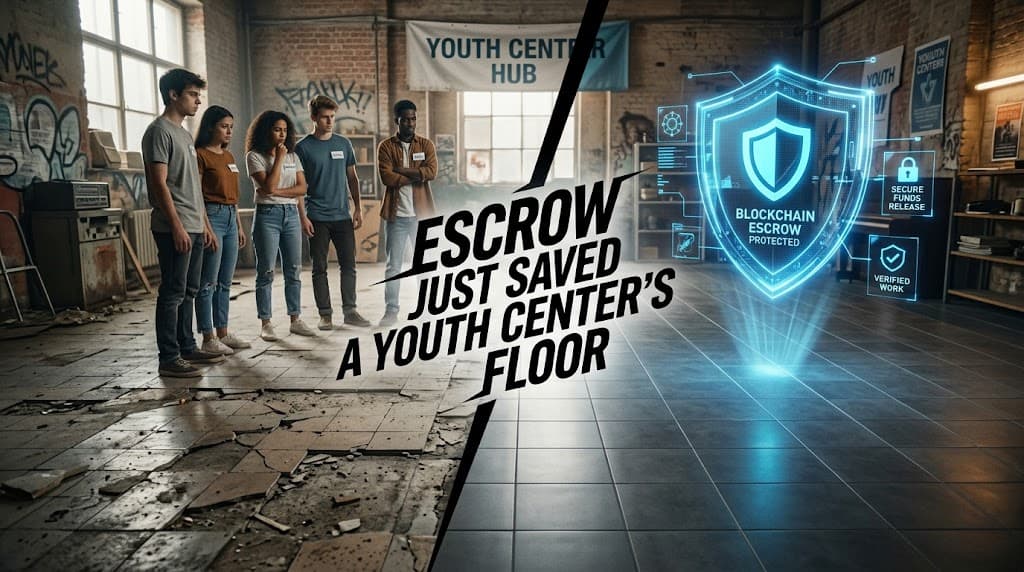
That fairness doesn't happen automatically. Buying from a stranger requires trust, and trust is what traditional marketplaces have always struggled to build into the transaction itself. Research on peer-to-peer platforms consistently shows that trust-building features like protected payments and fair dispute resolution are what separate platforms that create community from those that just process transactions. This is exactly where platforms built around buyer protection change the equation. Fisheez, a peer-to-peer marketplace on the BASE blockchain, uses SmartShell Escrow: buyer funds lock in a smart contract in USDC the moment payment is made and don't release until the deal is confirmed complete. The seller pays nothing to list. The buyer pays a modest tiered service fee that scales down as the amount rises, and gets real protection regardless of whether the other party is a longtime neighbor or someone two towns over.
That structure matters for the $150 deal on vintage glassware or a dinner set. It removes the friction that makes strangers hesitant to trade. When friction disappears, more trades happen, and more potluck tables get set with beautiful, storied items instead of another round of disposable platters from a big-box store.
More Than a Deal, a Community Ritual
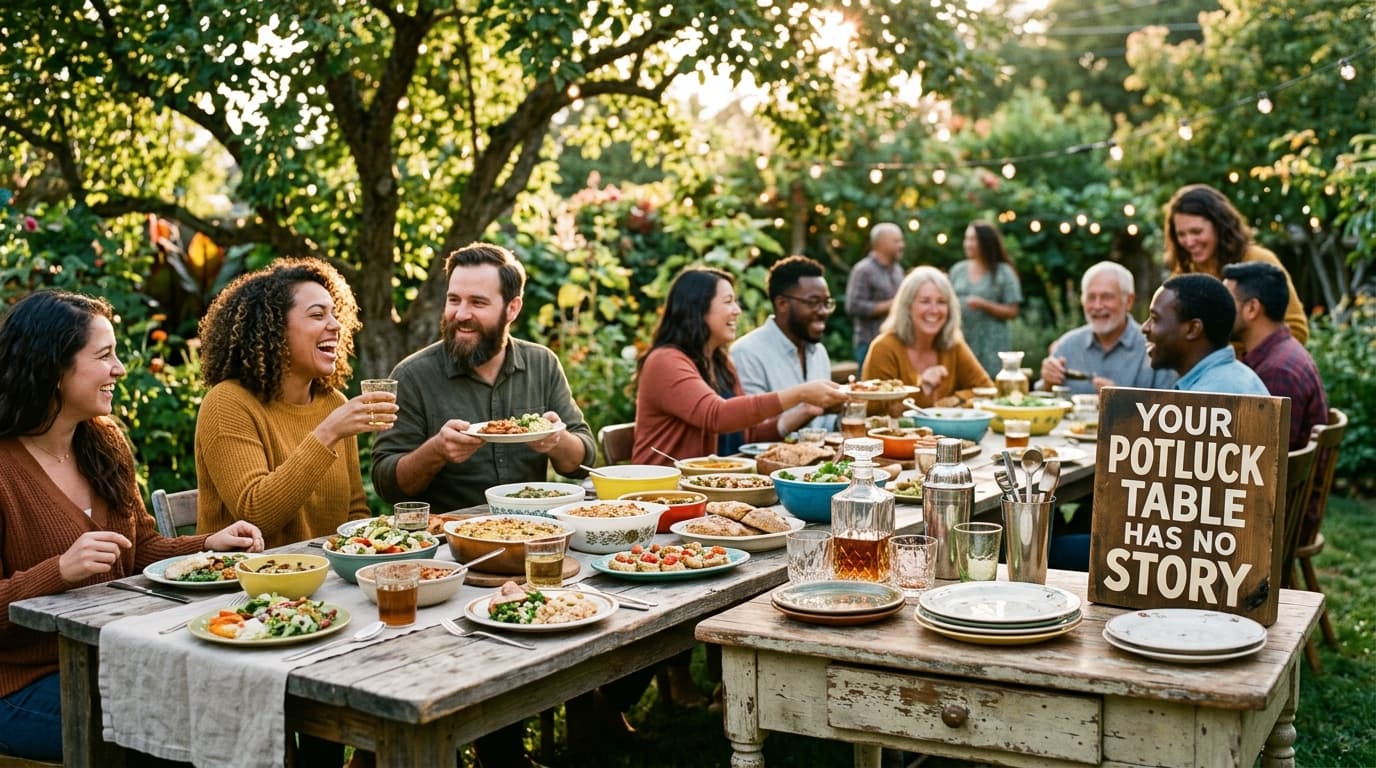
The best potlucks have always been about more than food. They're about who shows up, what they bring, and the stories that accumulate around the table over years. The casserole dish from a neighbor who moved to a smaller place. The pitcher that belonged to someone's grandmother. The matching bowls a young family found through a local listing and now use every Sunday. These objects are props in an ongoing community story, and the trades that bring them together are part of that story too.
There's a ripple effect when peer-to-peer trading is built on genuine fairness. The seller who gets honest value for their vintage barware is more likely to show up at the next neighborhood swap. The buyer who experiences a smooth, protected transaction is more likely to list something of their own. Fisheez routes 5% of its revenue to the Fishlanthropy Foundation, a separate 501(c)(3) that supports community-directed charitable giving. When disputes arise, they're handled by Peacemakers: trained community volunteers who arbitrate fairly, not on a fee-per-case basis. You can learn more about how these community deals work on the Fisheez blog.
That's the model that turns transactions into relationships. Parents hosting potlucks are already doing the hard work of building community. Whether you're drawn to the heft of vintage barware with decades of Friday nights behind it or the clean lines of a stoneware set ready for anything, the $150 peer-to-peer trade bringing it to your table is doing more than moving goods. It's forging something that lasts well past dessert.
Start your search at Fisheez, where sellers keep what they earn and every deal comes with a safety net built right in.