
You're About to Sign a $20K Solar Contract. Stop.
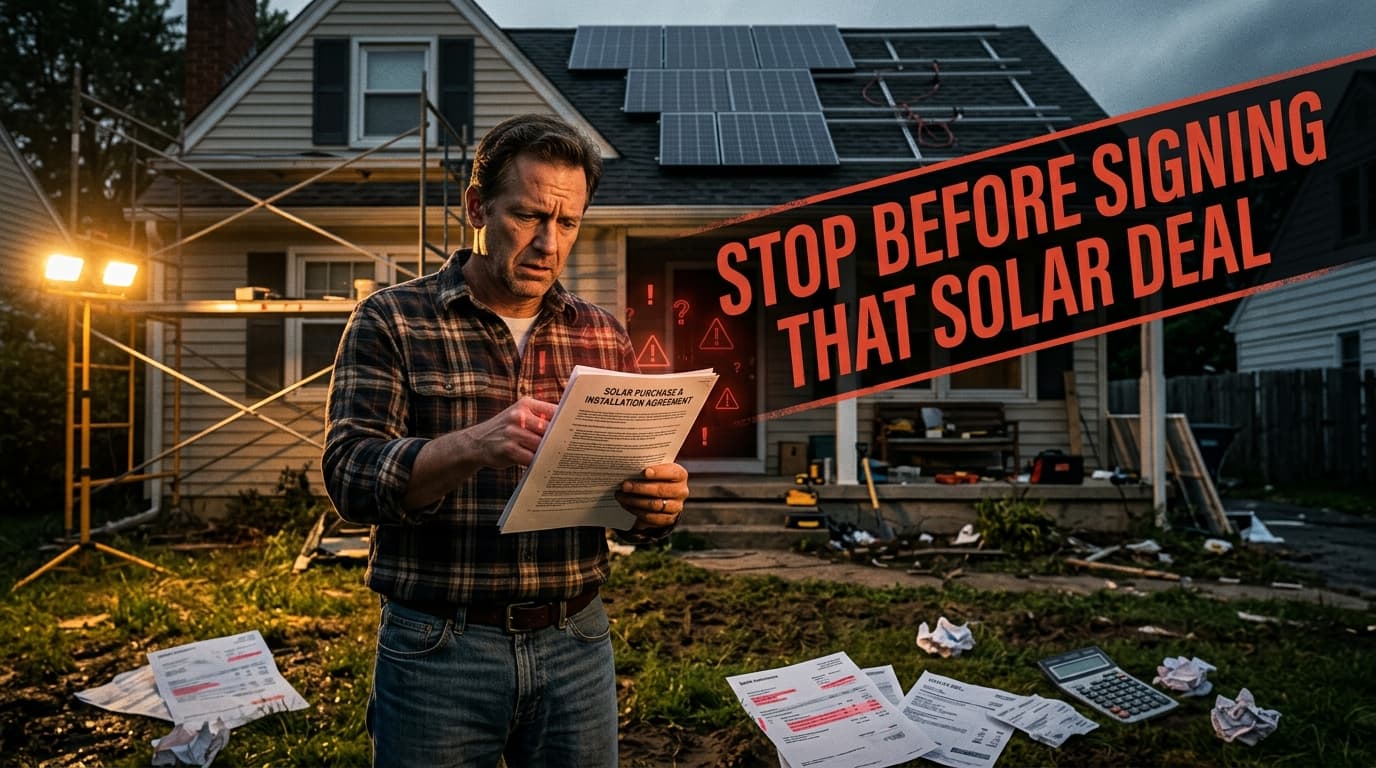
The quote is sitting on your kitchen table. Twenty-two thousand dollars, a company logo you found through a door-to-door rep, and a line for your signature. The rep told you it would add serious value to the property you're flipping. He said the deal expires Friday. He mentioned something about a government rebate. You're ready to sign because you want to close by summer, and solar is exactly the kind of upgrade that moves listings.
Here's the problem: that scenario, from the Friday deadline to the government rebate language, is textbook solar installer pressure tactics. And if you're a first-time seller adding solar to a flip, you're exactly the buyer these pitches are designed for. Vetting solar installers properly before you commit takes less than a week and can save you thousands. This guide walks you through the whole process, from getting quotes to handing over keys.
What Solar Actually Does for a Flip
Before you spend anything, understand what you're buying. A standard residential solar installation in 2026 runs between $15,000 and $25,000 before federal incentives, roughly $2.50 to $3.50 per watt installed. The 30% federal investment tax credit can knock that down significantly, but as a property seller rather than the end occupant, how you structure the deal with buyers matters. Talk to your accountant before assuming you capture that credit.
On the upside, the property value data is genuinely compelling. A Lawrence Berkeley National Laboratory study analyzing nearly 23,000 home sales across eight states found that solar adds an average of $15,000 to a home's sale price outside California, and $20,000 in California. Zillow's own research puts the premium at 4.1% of the home's value. For a $400,000 property, that's roughly $16,400 in added equity. Solar-equipped homes also sell about 20% faster than comparable properties without panels. For a flipper on a timeline, that speed matters as much as the dollar figure.
Getting Quotes the Right Way
Get at least three quotes from separate companies. Not two. Three. This isn't about haggling; it's about building a baseline that makes outliers obvious. If two quotes come in around $21,000 and one comes in at $13,500, you now know the $13,500 quote needs explaining, not celebrating.
When comparing quotes, look for the same metrics across all three: system size in kilowatts, price per watt, equipment brand and model numbers, warranty terms, and permit and inspection handling. A legitimate quote will include specific panel and inverter models. If a quote is vague about equipment or leaves out model numbers entirely, that's a gap worth pressing on before you go further. Any installer who hedges on specifics during the quote stage will hedge on specifics throughout the whole project.
Watch the per-watt math. As of late 2025, residential solar in most U.S. markets runs between $2.50 and $3.50 per watt installed. A quote significantly below that range isn't a deal. It's a signal that something, whether it's equipment quality, labor experience, or long-term support, is being cut.
Vetting Solar Installers: Credentials and Red Flags
This is the work most first-timers skip, and it's where things go wrong. Vetting solar installers starts with one specific credential: NABCEP certification. The North American Board of Certified Energy Practitioners maintains a public directory of certified professionals. Look up any installer you're considering on nabcep.org before you call them back. NABCEP PV Installation Professional certification means the person doing your job has logged real field hours and passed industry exams. It's the clearest signal of technical competence available.
After credentials, check licensing through your state's contractor licensing board and pull the company's record on the Better Business Bureau. Do a news search with the company's name and words like "lawsuit" or "complaint." Some bad actors rebrand to dodge their paper trail, so if a company seems to have started recently with no history, ask how long the principals have been operating under any name.
The red flags that should end a conversation immediately: same-day contract pressure, claims that a government program is "expiring this week," promises of guaranteed savings with specific dollar amounts, and any request for more than 20-30% upfront before a permit is even filed. Reputable installers work on milestone-based payment schedules for a reason.
Deposits, Payment Schedules, and Protecting Your Money
Solar is a big-ticket job, and contractors legitimately need working capital. A reasonable deposit structure typically looks like this: 10-15% at contract signing, 30-40% when the permit is approved, 40% after installation is complete, and a final 5-10% after the system passes inspection and receives utility permission to operate. That last payment, held until the utility signs off, is your most important piece of leverage. Never release it early.
Be especially careful if you're managing this project remotely or dealing with a contractor you've never worked with. Your 12-Step Checklist to Hire a Website Designer Without Wasting $1,000s covers the same principle for service hires generally: protect your deposit by tying every payment to a verified milestone, not a promise. For large service transactions where you want the deposit held securely until work is delivered, platforms built around milestone-based escrow, like SmartShell Escrow on Fisheez, lock funds in a smart contract until each stage is confirmed complete. No deposit disappears before the work starts.
Inspections and Completion: Don't Assume It's Done When It Looks Done
Installation day is not completion day. After panels go up, the project still needs to pass a local inspection, and then the utility company must issue what's called "permission to operate" or PTO before the system can legally run. This process can take anywhere from a few days to several weeks depending on your local permitting office and utility provider.
Do not release final payment until you have the PTO in writing. Get copies of the inspection sign-off and the interconnection agreement. Before closing any deal on the property, make sure all permits are closed out and on record with your local municipality. Unpermitted solar is a liability that will surface in due diligence, and it puts your buyer in a difficult position with their lender.
The Right Way to Run a $20K Project
Vetting solar installers isn't a bureaucratic exercise. It's how you protect a $20,000 investment on a property you're trying to sell for more than you paid. The steps above will cost you a few hours. Skipping them can cost you the margin on the whole deal.
When you're running larger-ticket service transactions, whether solar, roofing, or HVAC, consider using a platform designed to keep your money safe until the work actually happens. Fisheez is a peer-to-peer marketplace built on the BASE blockchain where SmartShell Escrow holds funds in USDC inside a smart contract until milestones are met. Sellers and service hirers keep full control. No middleman decides when funds release. If a dispute comes up, community Peacemakers are there to arbitrate, not to collect fees.
For a first-time flipper working with contractors you don't know yet, that kind of structure matters. Learn more about how smart contract escrow works for secure transactions before your next large hire. The deal on your kitchen table will still be there Thursday. Your money won't be, if you sign without doing this work first.