
Why P2P Transactions Still Fail Buyers and Sellers in 2026
You sent $800 for concert tickets on Facebook Marketplace last week. The seller promised instant digital delivery after payment. You sent the money through Cash App, watched the notification confirm it was sent, and waited. And waited. The seller's profile went dark. Their messages stopped appearing as "delivered." You're out $800 with no tickets, no recourse, and the concert is tomorrow. This isn't some relic from 2020—it's still happening every day in 2026, despite all the "verified" badges and "secure" payment options that platforms promise.
Or maybe you're the seller this time. You shipped a vintage gaming console to a buyer who found you through Instagram. They paid with Zelle, you sent the tracking number, and the package showed delivered three days ago. Now they're claiming it never arrived, demanding a refund, and threatening to report you for fraud. Your bank account shows the money cleared, but you know how this goes—banks often side with the buyer in these disputes, and you could lose both the item and the money.
The fundamental problem hasn't changed: traditional peer-to-peer platforms act like bulletin boards, not guarantors. They connect people but wash their hands of what happens next. Whether you're buying collectibles, hiring a handyman, or selling furniture, you're basically crossing your fingers and hoping the other person isn't a scammer. Platforms take their cut (Facebook Marketplace takes 5%, eBay takes up to 15%), but they don't actually secure your transaction—they just facilitate the introduction and collect their fee.
This article will show you how smart contract escrow changes that equation completely. We'll walk through exactly how money locks in a secure digital vault that only releases when both parties are satisfied, how disputes get resolved by real community members instead of faceless algorithms, and why USDC on the Base network makes this possible with fees that are measured in pennies instead of percentages. By the end, you'll understand not just how it works, but why it's the most logical step forward for anyone tired of playing Russian roulette with their money.
Smart Contract Escrow Explained: USDC on Base Network
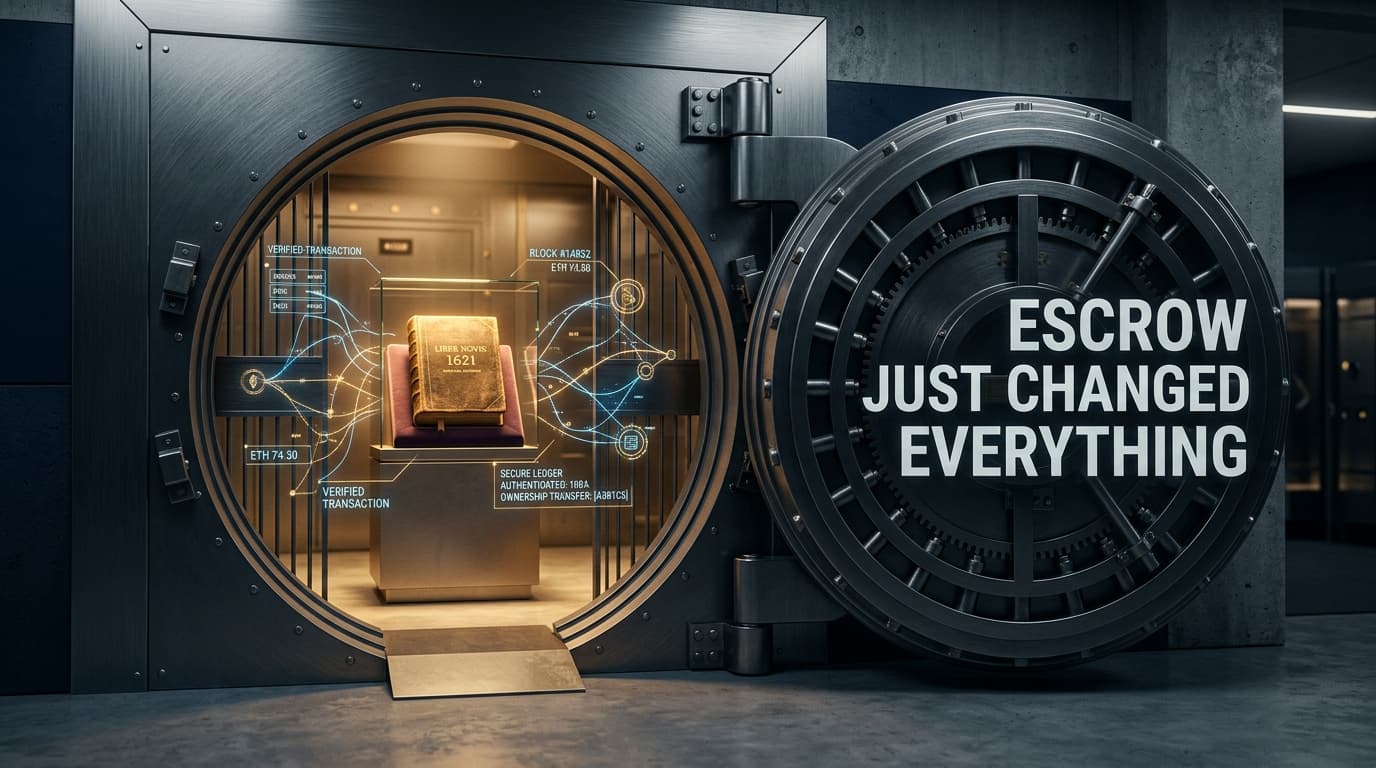
Smart contract escrow is essentially a digital version of the trusted third party you wish existed in every transaction. Instead of sending money directly to a stranger or relying on a platform that takes 15% but offers zero protection, you lock your funds in a programmable smart contract on the blockchain. This contract acts as an impartial, automated escrow agent—it holds the money securely until predefined conditions are met, then executes the release automatically. No human middleman can interfere, delay, or steal the funds, because the rules are written in code and execute exactly as programmed.
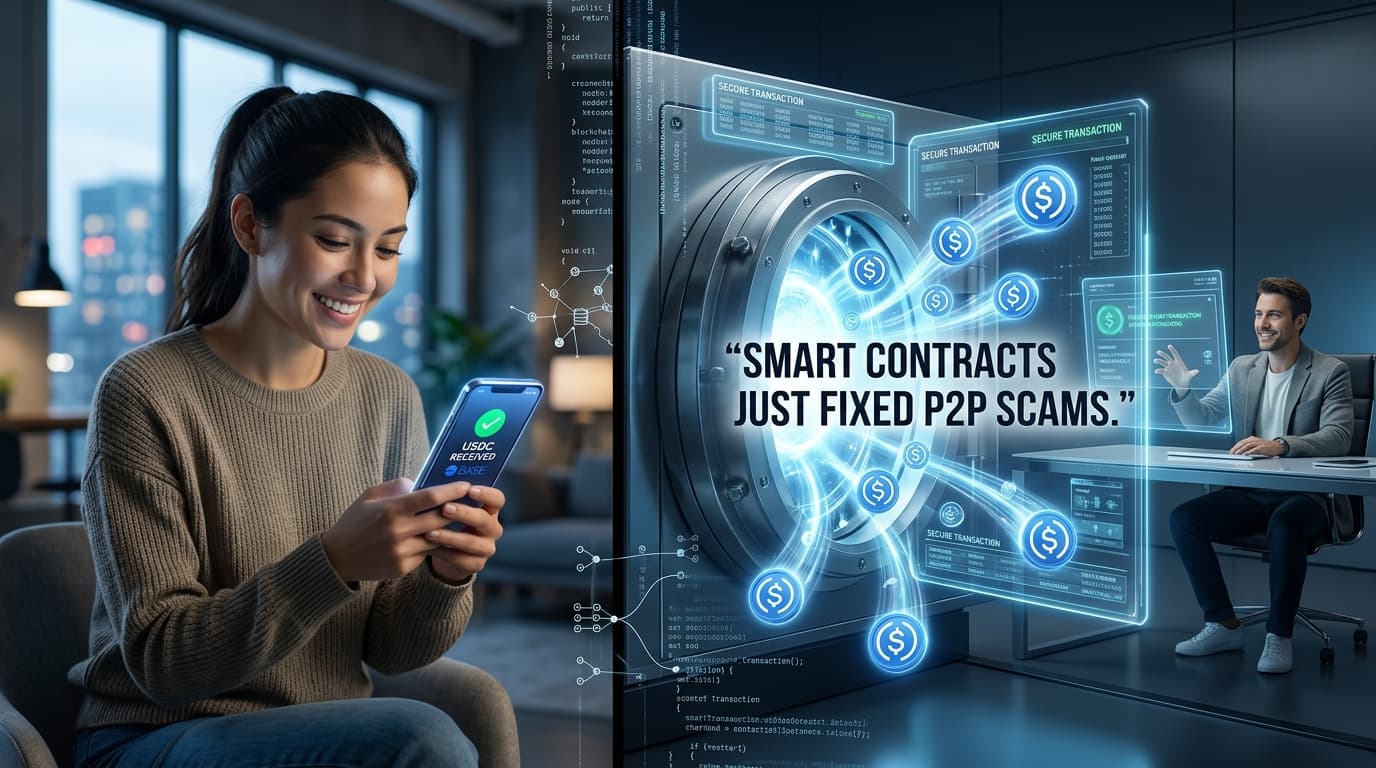
The magic happens when you combine this with USDC, a stablecoin that's pegged 1:1 to the US dollar and built for exactly this kind of transaction. Unlike volatile cryptocurrencies, USDC maintains its value, so you're not gambling on price swings while your payment sits in escrow. When you send $500 in USDC to a smart contract, you know it'll still be worth $500 when the contract releases it days or weeks later. This stability is crucial for everyday purchases, which is why platforms like Circle have been building payment solutions around USDC smart contracts for years.
Now, about those blockchain fees you've heard can be outrageous—that's where the Base network changes everything. Base is an Ethereum Layer 2 solution that processes transactions off the main chain but settles back to Ethereum for security. The result? Transaction fees that are measured in pennies instead of dollars. According to CoinDesk's 2025 State of the Blockchain report, Base has emerged as one of the most cost-effective Layer 2 networks for everyday payments, with average fees under $0.01 for simple transfers. This makes smart contract escrow economically viable for transactions as small as $20, not just thousand-dollar deals.
Put it all together, and you have a system where your payment is locked in a tamper-proof digital vault, denominated in stable dollars, and secured by blockchain technology at a cost that doesn't eat your profit. The seller knows the money is there and can't vanish, and the buyer knows they'll get a refund if the seller ghosts them. It's escrow for the digital age—trustless, transparent, and finally accessible to everyone.
Step-by-Step: Depositing Funds and Completing a Secure Trade
Let's walk through a real example so you can see exactly how this works in practice. Imagine you're selling a $750 digital camera lens. You create a listing that includes photos, description, and the escrow terms: funds held for 7 days after delivery for testing. When a buyer agrees, they deposit $750 (plus a small service fee) into the smart contract escrow through a Stripe checkout that converts dollars to USDC automatically. The whole process takes about 30 seconds, but with one crucial difference: you can see the funds are secured in escrow and can't be withdrawn until conditions are met.
For physical goods, the buyer typically sets the escrow to auto-release once tracking shows delivery confirmation. That means once UPS marks the package as delivered, the smart contract detects this through an API and automatically transfers the USDC to your wallet—no action required. If you're selling a service like website design, you might structure it as milestone payments: $500 escrowed for the initial mockup, another $1,000 for the completed design. Each milestone has its own escrow window, giving both sides clarity on exactly when payments happen.
What happens if there's a dispute, like the buyer claiming the lens is scratched when you shipped it pristine? Either party can initiate a dispute, which pauses the auto-release timer and notifies Peacemakers—real people from the community who review evidence like photos and tracking data. They vote on the outcome, and if they favor the buyer, the escrow refunds them; if they favor you, the funds release. This process typically resolves within 24-48 hours, compared to weeks with a bank. According to Investopedia's guide on smart contract disputes, community arbitration has emerged as the most effective method for resolving P2P conflicts.
The beauty of this system is its flexibility. Whether you're buying a $50 vintage t-shirt or hiring a $5,000 contractor, the same escrow mechanics apply. The buyer's funds are always protected until they're satisfied, and the seller always knows the money is actually there—not just a promise that could be reversed by a bank chargeback.
Resolving Disputes with Peacemaker Community Arbitration
When a transaction goes sideways, traditional platforms leave you at the mercy of automated systems that often get it wrong. PayPal might freeze your funds for weeks while they "investigate," and small claims court costs more than the item you're disputing. That's where Peacemaker community arbitration changes everything—instead of a faceless algorithm, real people from the Fisheez community review the evidence and vote on a fair outcome. These aren't random users; they're vetted community members who've completed transactions themselves and understand the nuance of P2P disputes.
Peacemakers get selected through a reputation-based system where their voting history, transaction volume, and community standing determine their eligibility. They're financially incentivized to make fair judgments—they earn a small fee for each case they help resolve, but that fee gets reduced or eliminated if their decisions are frequently overturned on appeal. This creates a self-correcting system where bad arbitrators get weeded out naturally. When a dispute is filed, three Peacemakers are randomly assigned, they review uploaded evidence (photos, messages, tracking numbers), discuss in a private channel, and cast their votes within 24 hours.
The efficiency here is staggering compared to traditional methods. A typical bank chargeback takes 30-45 days to resolve, with the merchant's funds frozen the entire time. PayPal disputes average 10-21 days. Peacemaker arbitration typically resolves within 48 hours, with funds moving immediately once the vote concludes. This speed matters when you're waiting on $2,000 for a laptop sale or $500 for a freelance project—you can't afford to have that money locked up for weeks while a corporation drags its feet.
What makes this system truly revolutionary is how it scales fairness. As SCNSoft's analysis of decentralized marketplaces notes, community-driven dispute resolution is the missing piece that makes peer-to-peer commerce viable at scale. When you know there's a fair process backed by real people who understand your situation, you're more willing to transact with strangers—which opens up entire categories of goods and services that people currently avoid selling online.
Start Trading Safely: Comparison and Getting Started Guide
So where does this leave the old way of doing things? Traditional P2P platforms ask you to trust strangers with your money, while taking 5-15% of the transaction for themselves. Banks chargeback systems favor buyers and freeze seller funds for weeks. Smart contract escrow with USDC on Base flips that model entirely—the buyer's money is protected, the seller gets paid when terms are met, and fees are transparently tiered based on transaction size rather than being a flat percentage that punishes small sellers.
Let's look at actual numbers. If you sell a $500 item on eBay today, you're paying $75-$100 in fees (15-20% after payment processing). On Facebook Marketplace, you might avoid platform fees but have zero protection if the buyer scams you. With Fisheez's SmartShell Escrow, the buyer pays the service fee—8% under $50 scaling down to 0.5% over $10M—and you keep 100% of your asking price. For that same $500 sale, the buyer pays $40 (8%), but you get the full $500 without worrying about chargebacks. The peace of mind alone justifies the buyer's fee, especially when you consider that Stripe integration makes payment as simple as checking out on any e-commerce site.
Getting started takes about two minutes. You sign up with just your email—no wallet required initially—and can immediately browse listings. When you're ready to buy or sell, you connect through Stripe to deposit funds from your bank account, which automatically converts to USDC and moves into escrow. If you're selling, you create a listing, set your escrow terms (like "funds release 3 days after delivery confirmation"), and share the link. Buyers see exactly how much they're paying, including the transparent service fee, and know their money is locked safely until they're satisfied.
This isn't just incremental improvement—it's a fundamentally different approach to peer-to-peer commerce. Where traditional platforms extract value while providing minimal security, Fisheez creates security through code and community. The result is what we've been describing throughout this guide: transactions that are safe by default, cheaper by design, and flexible enough to handle everything from concert tickets to home renovation contracts. Your next P2P trade doesn't have to feel like Russian roulette. You can actually know, with certainty, that the money is secure until you're happy with the outcome.