
The Escrow Paradox: Why Protection Speeds Things Up
Most dealers assume escrow slows a sale down. More steps, more waiting, more friction between a motivated buyer and a completed transaction. The data says something different, and the gap between that assumption and reality is where a lot of money gets left on the table.
A marketplace startup that integrated escrow into its transaction flow saw deal closures accelerate by 31% within six months. Successful completions rose 48%. Dispute rates, which had climbed to nearly 15% of all transactions, dropped by 72%. The mechanism wasn't complicated: when buyers know their money is protected until delivery is confirmed, they stop hesitating. The psychological friction that causes someone to sit on a $2,000 purchase for three days, or abandon it entirely, evaporates when the risk of loss does. That's not a safety net. That's a sales accelerant.
The LexisNexis research reinforces the same point from a different angle. Sixty-four percent of merchants surveyed confirmed that fraud concerns directly hurt their conversion rates. Buyers who don't trust a platform don't complete purchases. They browse, they inquire, and then they disappear. Escrow doesn't just protect the transactions that happen; it creates the conditions for transactions that otherwise wouldn't.
A $2 Billion Market Where a Dust Jacket Can Swing 80% of Value
The rare book market sits at approximately $2 billion today and is projected to reach $2.8 billion by 2033. That's a meaningful number, but the raw size understates what makes this category unusual. In most collectibles markets, condition disputes are annoying. In rare books, they're existential. A dust jacket on a 20th-century first edition can account for up to 80% of the book's total value. The difference between "near fine" and "very good" isn't a rounding error; it's the price of a used car.
First-edition scarcity compounds this dynamic. Roughly 90% of self-published books sell fewer than 100 copies, and about half of traditionally published titles sell fewer than 1,000. First-print runs represent an ever-shrinking percentage of total copies in circulation as a title's sales grow, which is why the premium exists and why it compounds over time. The Financial Samurai author Sam Dogen documented buying multiple first-print copies of his own book specifically because the first printing contained a typo that appeared four times, a manufacturing defect that collectors treat as a premium authenticity marker. Errors aren't flaws in this market. They're provenance.
James Hallam, a specialist insurance broker covering rare collectibles, frames transaction security as integral to the asset class rather than optional: serious collectors must think about risk management the same way they think about appraisals and secure storage. That framing matters because it positions the infrastructure around a transaction as part of the asset's value, not an afterthought.
The Real Bottleneck Isn't Finding Buyers — It's Trust
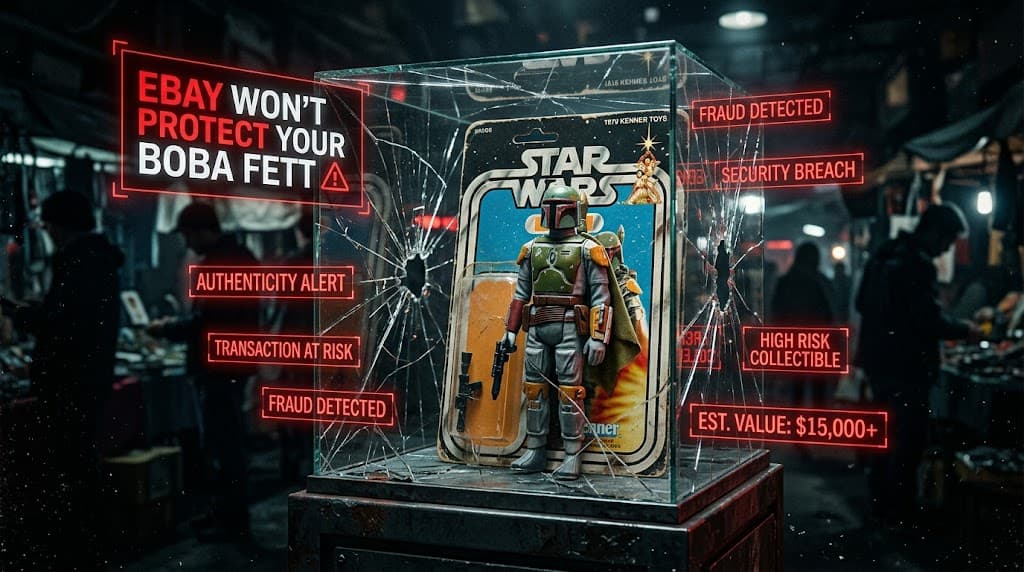
Dealers who move into online sales usually assume the hard part is discoverability. Get in front of enough buyers and the transactions follow. The market data points to a different bottleneck entirely. The antiques and collectibles market's primary identified growth challenge isn't pricing, logistics, or audience reach. It's authenticity concerns and counterfeit items on digital platforms. The trust gap is the growth constraint, not the audience gap.
This matters because it reframes where a dealer's infrastructure investment should go. Forty-one percent of North American merchants still rely on manual processes to prevent fraud, which means most platforms are operating with tools that can't scale and can't respond in real time. For a buyer considering a $4,000 signed first edition from a seller they've never met, "we'll look into it if something goes wrong" is not a confidence-building answer.
The financial stakes of getting this wrong are asymmetric in a way that surprises most sellers. US merchants lose an average of $4.61 for every $1 of fraud, according to LexisNexis research covering 569 fraud and risk executives. A single fraudulent $2,000 transaction doesn't cost $2,000; it costs closer to $9,200 once you account for the full loss multiplier. That math changes how you think about platform selection. The question isn't whether protection is worth paying for. It's whether you can afford to operate without it.
How SmartShell Escrow Works — and Why Non-Custodial Matters
This is where Fisheez enters the picture, and the mechanics are worth understanding precisely because they differ from how most people imagine escrow working.
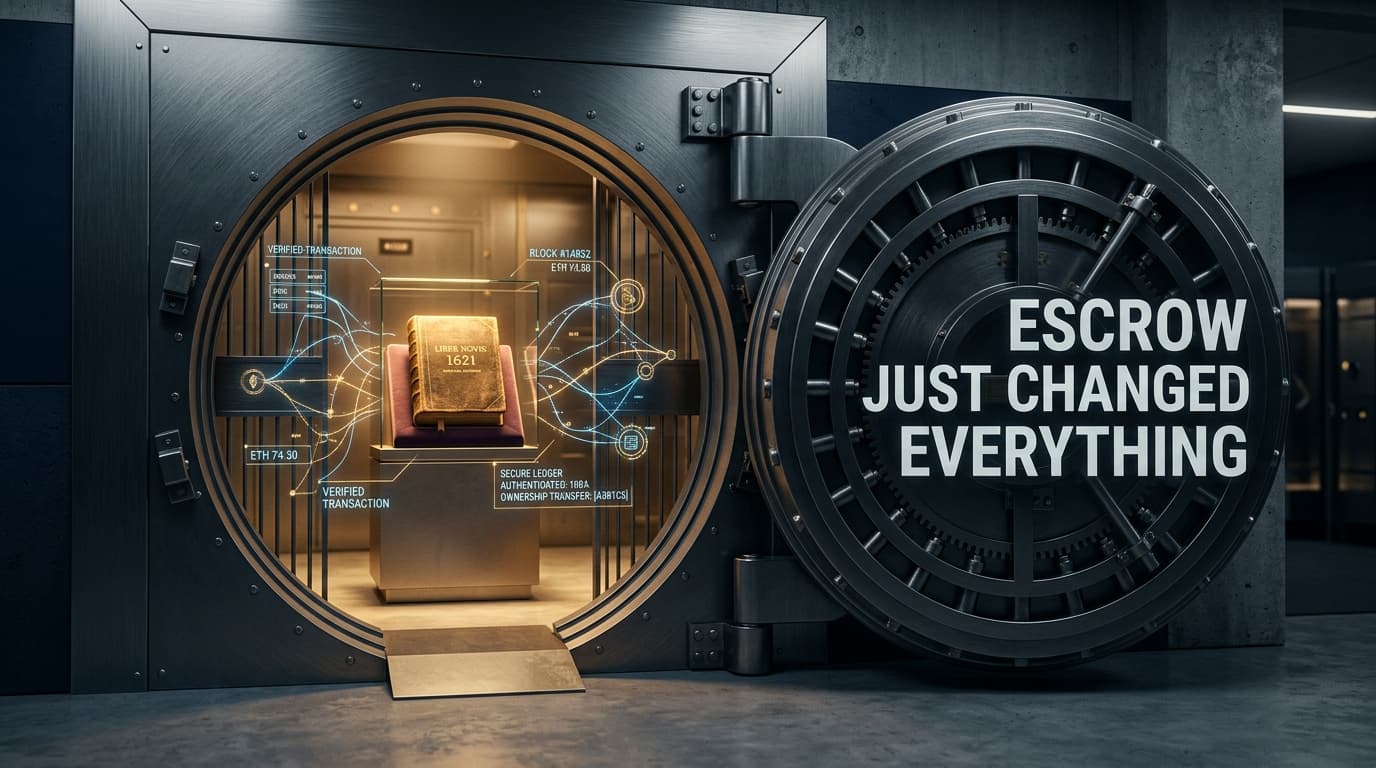
When a buyer completes a purchase on Fisheez, their funds lock in a smart contract on the BASE blockchain, held in USDC. Fisheez itself never holds, routes, or transmits those funds at any point. The money moves from the buyer's wallet into the contract, and from the contract to the seller, with no intermediary custody in between. SmartShell releases funds through exactly three mechanisms: the escrow timer expires without a dispute, the buyer voluntarily releases early, or a Peacemaker dispute resolves the transaction. All execution is automatic and irreversible once triggered.
The non-custodial structure has a practical implication that sophisticated dealers will want to understand. Because the contracts live on-chain, they're accessible via Etherscan or any compatible blockchain interface even if Fisheez's front end goes offline. Your escrowed funds are not dependent on the company's operational status. For a $5,000 transaction, that's a materially different risk profile than a traditional escrow service where the company's solvency is your counterparty risk.
Disputes are resolved by Peacemakers, who are independent community members rather than Fisheez employees. They complete training, pass assessments, and operate under conflict-of-interest rules. Peacemakers are not paid per dispute; any rewards come from prize pool eligibility rather than per-case fees. For dealers, this means dispute outcomes are determined by trained peers with no financial incentive to favor either side, not by a platform with its own interests in the resolution.
The Fee Math: What Dealers Actually Keep
On eBay, selling a $3,500 first edition costs you between $350 and $525 in platform fees before you account for payment processing. Etsy takes 6.5% from sellers plus additional charges. Amazon's seller fees in the books category run 15% or higher. These fees come out of the seller's proceeds regardless of whether the transaction is protected.
On Fisheez, the seller pays zero platform fees. On a $3,500 transaction, the buyer pays 4.50%, which works out to $157.50. The seller keeps the full $3,500. Total platform cost is lower, the protection is built in by default, and the fee falls on the buyer rather than the seller.
The comparison to Facebook Marketplace or Craigslist is also worth making directly. Both charge no seller fees. Both offer zero transaction protection. Fisheez rare collectible books escrow gives sellers cost parity with unprotected platforms while adding institutional-grade smart contract protection. That's not a tradeoff. That's a structural improvement.
For high-volume dealers, Fisheez's TideTurner NFT system adds another layer. The Whale tier eliminates the buyer fee entirely, meaning a rare book transaction can carry no platform cost on either side. TideTurners are resellable NFTs, and whichever party holds the better discount, the buyer receives it. The Make an Offer feature keeps price negotiation, which is standard practice in this market, on-platform and feeds directly into SmartShell escrow upon acceptance.
What the Data Says About Selling Rare Books in 2025
Fisheez reports 40% faster sales velocity for rare book transactions protected by SmartShell escrow. That number has an explanation, and the explanation runs through everything covered above. The LockTrust case study parallel (31% faster closures after escrow integration) demonstrates the mechanism in a documented third-party context. The LexisNexis finding that fraud concerns directly suppress conversion rates identifies the specific friction being removed. The rare book market's own identification of authenticity concerns as its primary growth barrier confirms that trust infrastructure is the category's actual bottleneck.
The antiques and collectibles market is growing at a 5% CAGR through 2033, with younger demographics entering and digital platforms driving expansion. Blockchain-based provenance verification is already identified by market researchers as an emerging competitive differentiator for platforms in this space. The infrastructure dealers choose now will determine their position as that growth materializes.
As Maanas Godugunur of LexisNexis Risk Solutions puts it, staying ahead of fraud requires a multi-layered approach that identifies risk in real time while protecting the customer experience. Fisheez rare collectible books escrow is exactly that architecture, built into every transaction by default rather than bolted on as an optional upgrade.
If you're an antiquarian dealer evaluating where to list high-value inventory, the starting point is straightforward. Browse the Fisheez fee schedule to see exactly what buyers pay at your typical price points. List a title you've been sitting on and run the comparison yourself. The 40% faster sales figure isn't a marketing claim you have to take on faith; it's the predictable output of removing the friction that was slowing your buyers down in the first place.