
The $400 Mower That Wouldn't Start
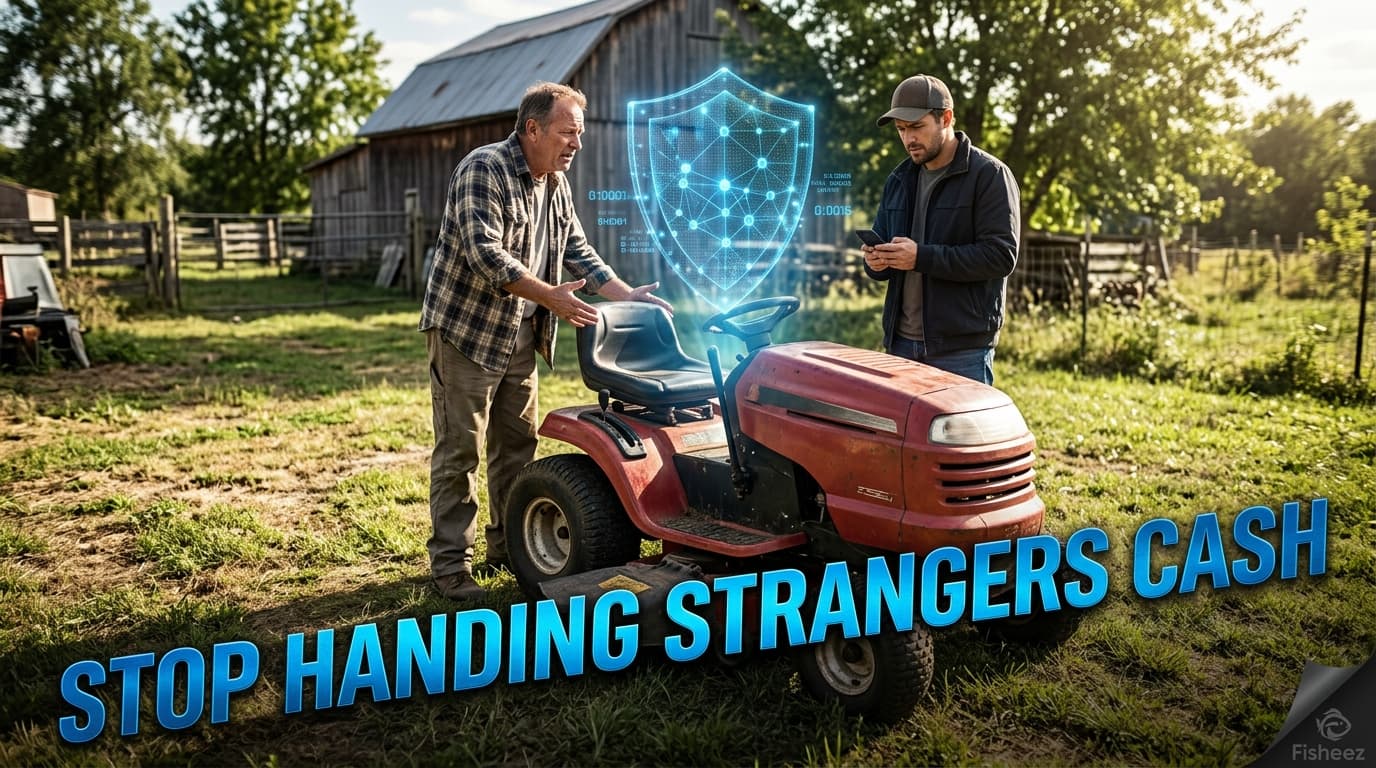
A neighbor of mine handed over four hundred dollars in cash for a used riding mower last summer. The seller seemed reasonable. The machine looked fine in the driveway. He loaded it up, drove it home, and pulled the cord. Nothing. A dead engine, a cracked carburetor, and a seller who had already stopped answering texts. Four hundred dollars gone, no receipt, no recourse, no path back.
That story is not unusual. Private-party sales of yard gear happen thousands of times every weekend across the country, and the overwhelming majority of them go fine. But when they go wrong, they go completely wrong. There is no customer service line, no return window, no chargeback option on a cash handoff. You are on your own the moment that money leaves your hand.
How Peer-to-Peer Cash Deals Actually Work
The typical cash transaction for a used mower or patio set follows a familiar script. Someone posts a listing with a few photos, you exchange a couple of messages, you show up at their house, you look it over for five minutes, and you hand them cash. That is the entire protection framework: your own judgment, formed in a stranger's driveway, under mild social pressure to not seem difficult.
Outdoor equipment is particularly risky in this format because of how seasonal use works. A riding mower might sit in a garage for eight months of the year. The seller may genuinely not know the carburetor is failing because they have not run it since September. Or they may know exactly what is wrong and be counting on the fact that you cannot test it thoroughly on a quick visit. Either way, hidden defects in used mechanical equipment are common, and cash transactions offer no mechanism to address them after the fact.
Patio furniture carries its own risks. Rust hidden under a coat of spray paint, broken welds on aluminum frames, cushions with mold underneath the covers. These are things you might not catch in a ten-minute inspection but will absolutely notice the first time you actually use the furniture.
What Escrow Actually Does for a Buyer
Escrow solves the core problem of cash transactions by separating payment from delivery. Instead of handing money directly to a seller, you deposit it with a neutral third party. The seller ships the item or arranges pickup. You have a defined window of time to inspect what you received and confirm it matches what was described. Only then does the money move to the seller.
That inspection window is the critical piece. It transforms the transaction from a one-way door into a two-way agreement. If the mower does not start, you have a documented path to dispute the release of funds. If the patio table arrives with a cracked leg that was not in the photos, you are not left arguing with someone who has already spent your cash. The money is still held, and there is a process for resolving what happens next.
This is not a complicated concept, but it is a genuinely powerful one. The seller still gets paid quickly when everything is as described. The buyer still gets the item they wanted. The only thing that changes is who holds the funds during the gap between payment and verified delivery, and that gap is exactly where most private-party disputes happen.
Five Moments Where Protection Matters
Consider five scenarios that come up regularly in yard gear transactions and how they play out under cash versus escrow.
First, the seller misrepresents the condition. Under cash, you discover the problem after the handoff and have no leverage. Under escrow, you flag the discrepancy during the inspection window and the funds are held until the dispute is resolved.
Second, there is a hidden mechanical defect the seller may not have disclosed. Under cash, you own the problem. Under escrow, a defect discovered within the inspection period gives you a documented basis to dispute.
Third, the seller ghosts after payment. With cash, this is simply a loss. With escrow, the funds were never released to the seller, so there is nothing to chase.
Fourth, the item is damaged during transport or pickup coordination. Cash transactions have no mechanism for this at all. Escrow provides a dispute process tied to the condition at delivery, not just at listing.
Fifth, there is a disagreement about what was actually agreed. Cash deals are almost always verbal, which makes these disputes nearly impossible to resolve. Escrow transactions are built around a written item description that both parties accept before funds are locked, so there is a clear reference point if something is contested.
The Real Cost of "Free" Cash Convenience
The main argument for cash is that it costs nothing. That is true in the narrow sense. There is no fee on a handshake deal. But the math changes when you factor in the realistic loss exposure on the kind of gear people actually buy in private-party sales.
Used riding mowers typically sell in the three-hundred to fifteen-hundred dollar range. A decent patio set can run four hundred to a thousand dollars secondhand. A single bad transaction at that price point wipes out the fee savings from dozens of successful cash deals. The buyer fee on a five-hundred-dollar purchase is a fraction of what you stand to lose if the item turns out to be misrepresented. That is not a fee; it is insurance math, and the premium is small relative to the risk.
There is also the time cost to consider. Disputing a bad cash deal means texts that go unanswered, possibly small claims court, and definitely a lot of frustration. Even if you eventually recover something, you have spent hours on a problem that a small upfront fee could have prevented entirely.
When Cash Still Makes Sense (And When It Doesn't)
Cash is genuinely fine in some situations. If you are buying a ten-dollar bag of garden stakes from a neighbor you have known for years, the protection overhead is not worth it. Very low-value items, items with no mechanical components, and transactions with people you actually trust are reasonable candidates for a simple cash exchange.
The calculation shifts once you cross a certain threshold. A good rule of thumb is that anything over about a hundred and fifty dollars, anything with mechanical parts, or anything purchased from someone you met online deserves more structure than a handshake. The risk is simply too concentrated in your hands if something goes wrong. Platforms like Fisheez make escrow accessible for exactly these everyday transactions, not just large commercial deals, which is what has historically made escrow feel like overkill for yard gear purchases. For a deeper look at how peer-to-peer protection compares across platforms, this overview of marketplace buyer protections covers the key differences worth knowing.
How to Use Fisheez Escrow for Your Next Yard Gear Buy
Fisheez escrow yard garden outdoor living transactions work through a system called SmartShell Escrow, which locks buyer funds in a smart contract on the BASE blockchain and holds them in USDC until the deal is confirmed. The process is straightforward for both sides.
As a buyer, you create a transaction on Fisheez and describe the item you are purchasing, including the condition and any specifics you and the seller have agreed on. The seller accepts the terms. You pay, and those funds lock immediately in the smart contract. The seller does not have access to them yet.
Once you receive the item, you have an inspection window to evaluate whether it matches what was described. If the mower starts, runs, and looks like the listing, you release the funds and the transaction closes. If something is wrong, you open a dispute. Fisheez disputes are handled by Peacemakers, trained community volunteers who review the case and help determine the outcome. Peacemakers are not paid per dispute; instead, they earn eligibility for prize pools through their participation, which keeps their incentives neutral and their decisions fair.
The fee structure on Fisheez is buyer-paid, which means sellers pay nothing. For a five-hundred-dollar patio set, the buyer fee sits well within the range where it makes obvious sense as protection. For purchases over a thousand dollars, the percentage drops further, making Fisheez escrow yard garden outdoor living transactions even more cost-effective as the stakes get higher. Buyers who want to reduce their fee further can explore Shorefront subscription tiers or TideTurner NFTs, with the Whale TideTurner level bringing the buyer fee to zero.
If you are planning to buy used outdoor equipment this season, the practical next step is simple. Before you agree to meet a stranger with a stack of cash, set up the transaction on Fisheez instead. Describe the item, lock the funds, inspect what you receive, and release payment only when you are satisfied. That is the entire process. It takes a few extra minutes on the front end and saves you the experience of standing in your driveway, pulling a cord on a dead engine, and realizing the money is already gone.