
The Stakes Are Not What They Were
A 1979 Rocket-Firing Boba Fett prototype sold for $1.342 million. A Ben Kenobi Double-Telescoping Lightsaber closed at $105,000 in January 2025. An R2-D2 on a 12-back card went for $38,940 the same month. These are not anomalies. They are the current reality of a market that continues to accelerate: the global toy figurines and collectibles segment hit $52.2 billion in 2025, growing at nearly 25% annually. The people who once traded at swap meets are now conducting investment-grade transactions online, often with strangers, often for thousands of dollars.
If you are flipping 1980s Star Wars figures, you already know the money is real. What you may not have examined is whether your platform's protection matches the risk. Most basic marketplace listings were built for a different kind of trade. The vintage Kenner market has outgrown them.
What Basic Listings Actually Offer You
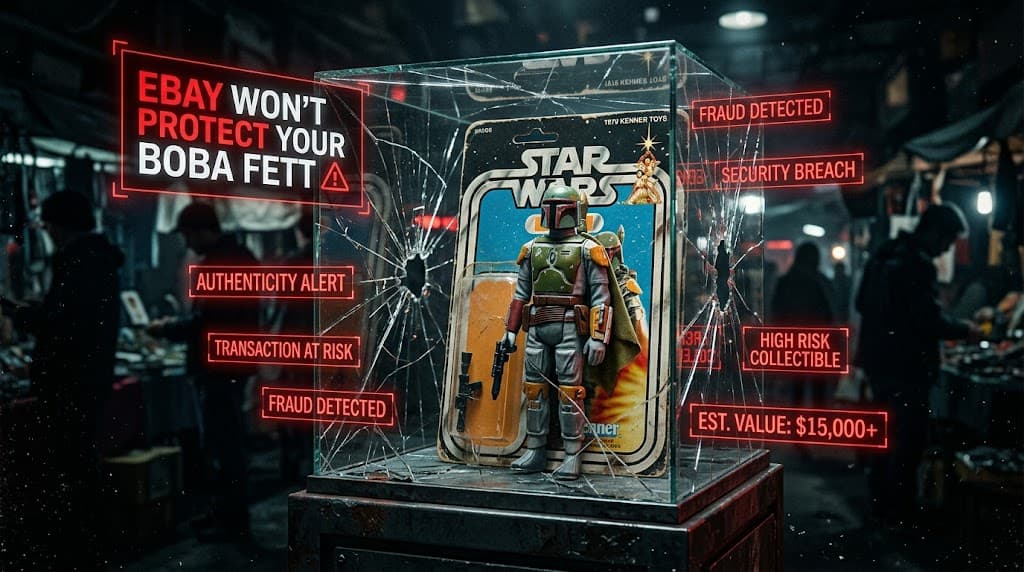
Take a clear-eyed look at what the standard options actually provide. On eBay, sellers pay a final value fee of roughly 13.25% on most categories, plus $0.30 per order. A $5,000 carded Boba Fett costs you $662.80 in fees before shipping or packaging. If a buyer opens a dispute, you have five calendar days to respond or the decision defaults against you. eBay functions as the final arbiter in its own resolution process: once the platform rules, your recourse is limited to a 30-day appeal window.
Facebook Marketplace and Craigslist charge nothing and protect nothing. No fund-holding, no third-party review, no verification that the buyer has money. That model works for a $40 coffee table. It does not work for a graded Star Wars figure that could fund a car payment.
Where Grading Variants Turn Into Disputes
The vintage Star Wars figure market is layered with complexity that makes honest disputes easy to trigger. A standard Luke Skywalker on a 12-back card and a Luke Skywalker with a Double-Telescoping lightsaber are technically the same character, but they are not the same product and do not command the same price. A seller who does not know the distinction will price incorrectly. A buyer who does will dispute it after the fact.
Grading introduces a second layer of friction. An AFA 85 and an AFA 90 of the identical figure can differ by thousands of dollars. Condition descriptions in a basic listing are not objective. "Near mint" means something different to a seller who has owned a figure for thirty years than it does to a buyer bidding $2,000. When the box arrives and the corners do not match the photographs, you have the ingredients for an action figure dispute resolution scenario with no neutral party and no held funds. These situations are common. The question is what infrastructure you have in place when they hit.
How Fisheez Peacemakers Change the Equation
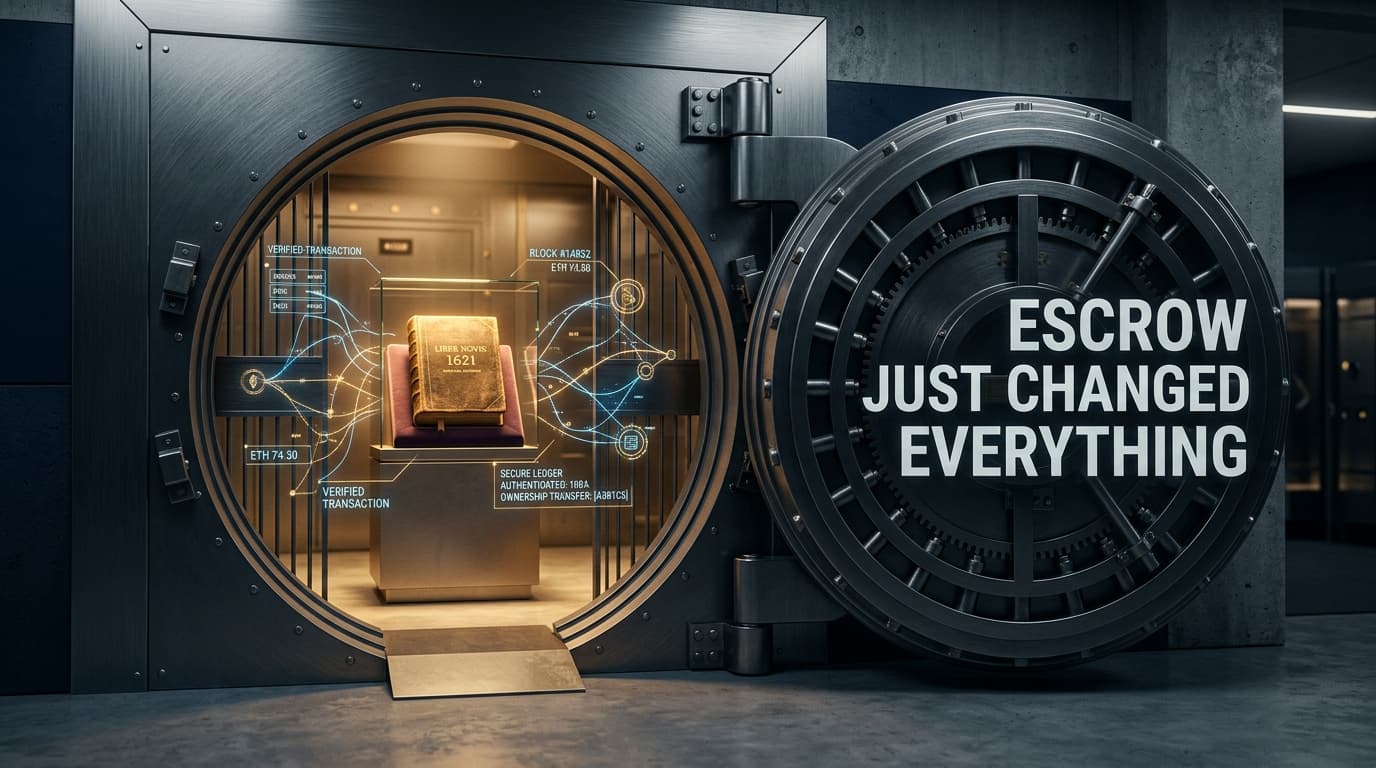
Fisheez was built for peer-to-peer trades where trust is the limiting factor. The core mechanism is SmartShell escrow: when a buyer pays for a listing, the funds lock in a smart contract on the BASE blockchain, held in USDC. The seller ships. The buyer inspects. If everything checks out, the funds release automatically. If something is wrong, either party can escalate to a Peacemaker.
Peacemakers are trained community volunteers. They are not platform employees protecting corporate interests, and they are not paid per dispute, which removes the incentive to rush cases at the expense of accuracy. Peacemakers are eligible for prize pools through their participation, creating alignment toward doing the work well.
On eBay, the platform you sell through is also the entity that judges disputes about your sale. On Fisheez, funds are held by a smart contract and reviewed by community volunteers. Neither party controls the escrow. For action figure dispute resolution, that is not a minor improvement. It is a fundamentally different system.
The Seller Math Nobody Talks About
Sellers on Fisheez pay 0%. Not a promotional rate or a new-user discount. It is the permanent structure. Buyers pay a tiered service fee that starts at 8% on transactions under $50 and decreases as transaction values rise, reaching 0.5% at the top tier. The fee belongs to the buyer, not the seller.
For a seller moving serious vintage inventory, the numbers are stark. A $5,000 Boba Fett on eBay costs you $662 in fees. On Fisheez, it costs you nothing. A $38,000 R2-D2 on eBay runs roughly $5,035 in final value fees. On Fisheez, sellers keep the full amount. Buyers can further reduce their fee using TideTurner NFTs, five-level discount memberships where a Whale TideTurner eliminates the buyer fee entirely.
What a Protected Trade Actually Looks Like
Say you are listing a carded 1983 Return of the Jedi Bib Fortuna in very fine condition. You photograph every corner, write a precise description, and list it on Fisheez with SmartShell escrow active. A buyer makes an offer through the platform's Make an Offer feature. You accept. The buyer pays, and the funds lock immediately in the smart contract. You ship with tracking.
The buyer has an inspection window to review the item against your description. If they are satisfied, the funds release and the trade is done. If they believe the condition was misrepresented, they escalate to a Peacemaker. Both parties submit evidence. The Peacemaker reviews the listing, photographs, and communications, then decides based on what was promised versus what was delivered.
Compare that to the same trade on eBay. You ship, the buyer receives it, and they open a "not as described" case. eBay gives you five days to respond. The buyer has up to 30 days after delivery to file. The platform rules, typically in the buyer's favor on high-value disputes where documentation is ambiguous. You pay the refund, and the $662 in seller fees you already paid is not returned.
The Fisheez approach to action figure dispute resolution is not more complicated. It is more protected.
Start Trading With Protections That Match the Market
The vintage Star Wars figure market has matured into something that warrants serious infrastructure. Single figures command prices that rival used cars. Grading disputes swing values by thousands of dollars. Variant misidentification happens even among experienced collectors.
Fisheez was built for exactly this kind of trade: high-stakes, peer-to-peer, between buyers and sellers who cannot afford to get the transaction wrong. SmartShell escrow means funds are never just sent and hoped for. Peacemakers mean action figure dispute resolution is handled by trained community members with no financial stake in rushing the outcome. The zero-seller-fee structure means you keep more of every trade.
If you are selling 1980s Kenner figures, create your first Fisheez listing and enable SmartShell. Review the Peacemaker process before you need it. The protections are built in. You just have to use a platform that has them.