
Three-Quarters of Parents Are Scared — And That's the Problem
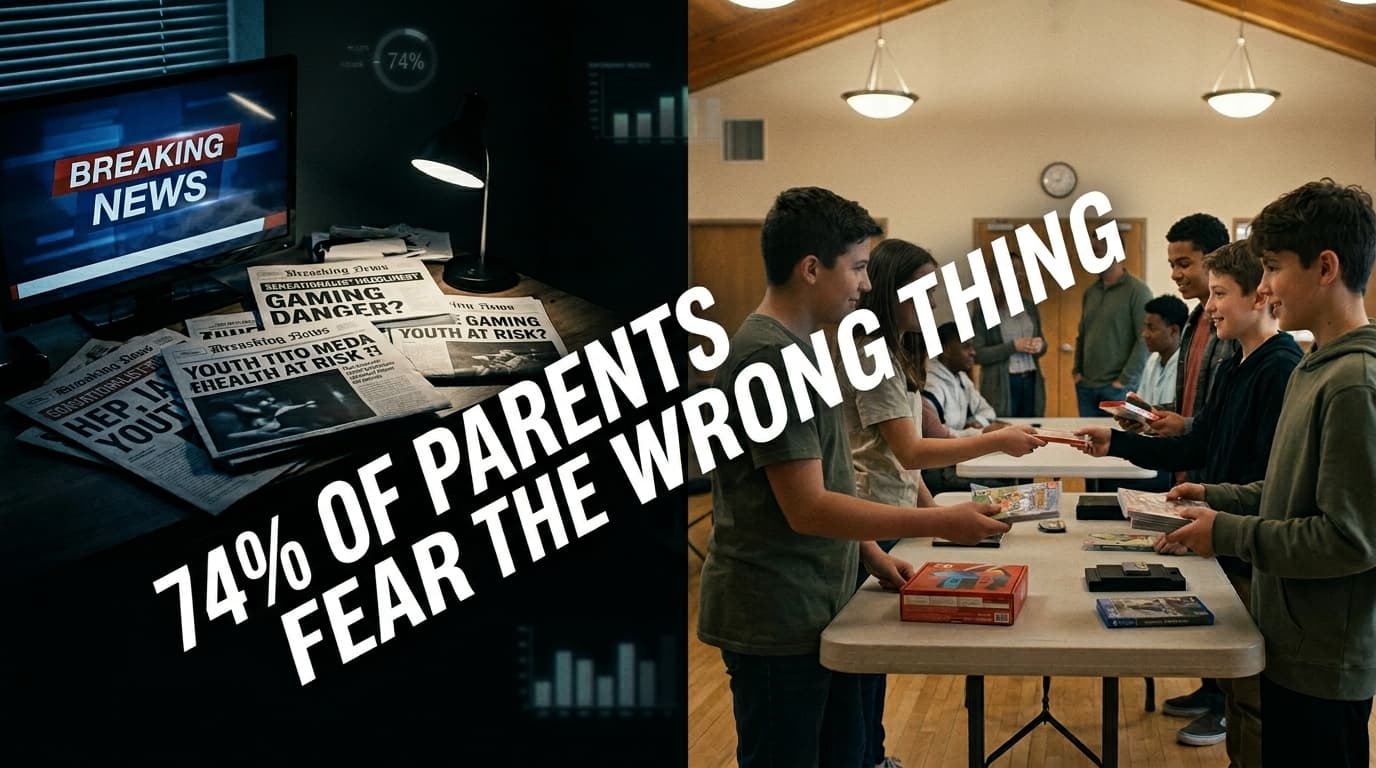
Seventy-four percent. That's the share of Ontarians who say they're uncomfortable meeting a stranger for a peer-to-peer marketplace transaction. Three out of four people, walking around with a low-grade dread about the neighbor selling a used console, the kid across town offering a fair trade on a game cartridge, the retired teacher clearing out her collection. The fear is real, it's widespread, and it feels completely rational. The only problem is that the data behind it tells a very different story.
Here's the tension worth sitting with. That same survey found that 31% of Ontarians have actively considered using peer-to-peer marketplaces because the cost of living has made new retail feel impossible. So nearly a third of people are being pushed toward P2P by economic reality, while three quarters of people are pulling away from it out of fear. Something doesn't add up. And when you trace the fear back to its actual source, the whole picture starts to shift.
The Fear Is Real. The Source Is Not.
When researchers asked the uncomfortable 74% what was driving their anxiety, 60% pointed to the same thing: news and media coverage of scams and fraud. Not a personal bad experience. Not a friend who got burned. Not a close call at a parking lot swap. The headline cycle. The fear most parents carry about their kid's video game console peer trust stories is, in measurable terms, a media contagion, not a lived risk assessment.
This matters enormously. The FTC's Consumer Sentinel Network logged 6.5 million consumer reports in 2024, spread across 29 fraud categories. The categories driving those headlines tend to involve stolen vehicles, rental fraud, and impersonation scams, not a teenager trading a cartridge with someone from a local collector group. The scam stories that saturate the news are real, but they are not the story of local game swaps. Parents absorbing those headlines and applying them to their kid's hobby are making a category error that the data simply doesn't support.
Consumer Reports' Verdict: 'Generally Safe'
Consumer Reports studied five major peer-to-peer payment services and came to a conclusion that tends to surprise people: P2P payments are, in their words, "generally safe." That's Consumer Reports saying it, the same organization that will cheerfully tell you which blender will catch fire. Their endorsement carries weight precisely because they don't hand it out lightly.
What they did flag as genuinely risky was not the people on the other side of the trade. It was the infrastructure underneath it. Venmo, Cash App, and Facebook Payments all default to no PIN, no password, and no fingerprint requirement for repeat access. Apple was the only platform in their study requiring payment confirmation before funds moved. None of the five used escrow. The danger in a typical P2P transaction is not the stranger with the game collection; it's the payment app that moves money with almost no friction and even less recourse. The problem is architectural, and that distinction matters for anyone thinking seriously about where video games, consoles, and peer trust stories actually intersect with real risk.
The Community That Was Already Doing It Right
Long before any app tried to solve the trust problem in game trading, the retro collecting community had already built its own solution. Kayla Minniear, a Bowling Green State University researcher and retro game store owner, documented this culture in detail, and what she found is striking. Store owners routinely refuse to quote prices or discuss trades without seeing an item in person, not to protect themselves from scammers, but because in-person inspection is the community's own standard for honesty and transparency. The face-to-face meetup that parents fear is, inside the collector world, the most trusted format available.
The ethics run deeper than logistics. Veteran collectors operate by a motto that inverts the zero-sum scam narrative entirely: a deal was good if neither party feels they got a deal. Both sides walk away feeling they received fair value. Offers below 60% of established market value on sites like PriceCharting.com are considered lowball moves that invite community censure. Bad actors don't just lose one deal; they get disowned from trading groups entirely. This is a community that has built accountability, pricing norms, and a culture of fairness from the ground up, without a platform enforcing any of it. The collector subculture around video games, consoles, and peer trust stories is, by any reasonable measure, more ethically self-aware than most formal marketplaces.
Game Swaps Build Neighborhoods, Not Scam Networks
The ESA's 2025 Power of Play report surveyed more than 24,000 players across 21 countries and found that 71% say games introduce them to new friends, 64% say games help them feel less isolated, and 62% agree that gaming fosters positive connections. An Oxford University study of over 80,000 players found that positive impacts from gameplay outpaced the mood benefits of watching television, reading, and shopping. The ecosystem in which game trades happen is, by a significant body of evidence, a prosocial one.
The real-world examples make that abstract data feel concrete. RetroPalooza Houston started in 2013 with 350 attendees and hit 1,200 by its second year. TORG Gaming Expo began as a Facebook group with strict ethical rules for Ohio collectors and grew into a multi-day convention drawing people from around the world. Tyler Esposito, collector and TV host, describes his father meticulously recording every game acquisition in the 1990s, a multigenerational ritual that turned a hobby into a family archive. Kayla Minniear and her husband traveled across states chasing games, built a network of collectors who became a secondary family, and eventually opened a store out of a shed on her parents' property. These are not cautionary tales. They are the actual, documented outcomes of video game console peer trust stories playing out in real communities over real years.
What Parents Actually Need (And It's Not Avoidance)
The same survey that surfaced all that parental fear also surfaced the solution. Among the uncomfortable 74%, a full 78% said they would feel more comfortable with P2P transactions if they could verify the identity of the person on the other side. They don't want to stop trading. They want infrastructure that matches the values the game-trading community already holds.
That is precisely where Fisheez enters. The platform's SmartShell Escrow locks buyer funds in a smart contract in USDC on the BASE blockchain the moment a transaction begins. Funds release only when the deal is confirmed, the timer expires, or a dispute is resolved. It's the digital equivalent of the in-person inspection standard the collector community already practices, built directly into the transaction. When something does go wrong, disputes go to Peacemakers, trained community volunteers who are not paid per case but are eligible for prize pools. That structure mirrors what the BGSU research documents in collector trading groups: accountability enforced by community members who have skin in the game, not faceless algorithms optimizing for speed.
The fee structure is worth knowing. Fisheez charges sellers nothing. Buyers pay a tiered fee starting at 8% on small transactions and scaling down significantly as amounts rise. Compare that to eBay's 10 to 15% seller fees, or Facebook Marketplace, which is free but leaves both parties with zero recourse if anything goes sideways. The trade-off is concrete: a small buyer-side fee buys escrow protection, community-based dispute resolution, and a platform designed from the ground up for exactly the kind of video game console peer trust stories that have been building real communities for decades.
Kayla Minniear describes the retro collecting subculture as a place that provides "an equitable place for all," where a kid can build the same credibility as a veteran collector, and where the quality of your knowledge and your honesty matters more than your age, your budget, or your background. The community already figured out the values. The missing piece was formal architecture to match them. That piece now exists.