
The Sign That Started It All
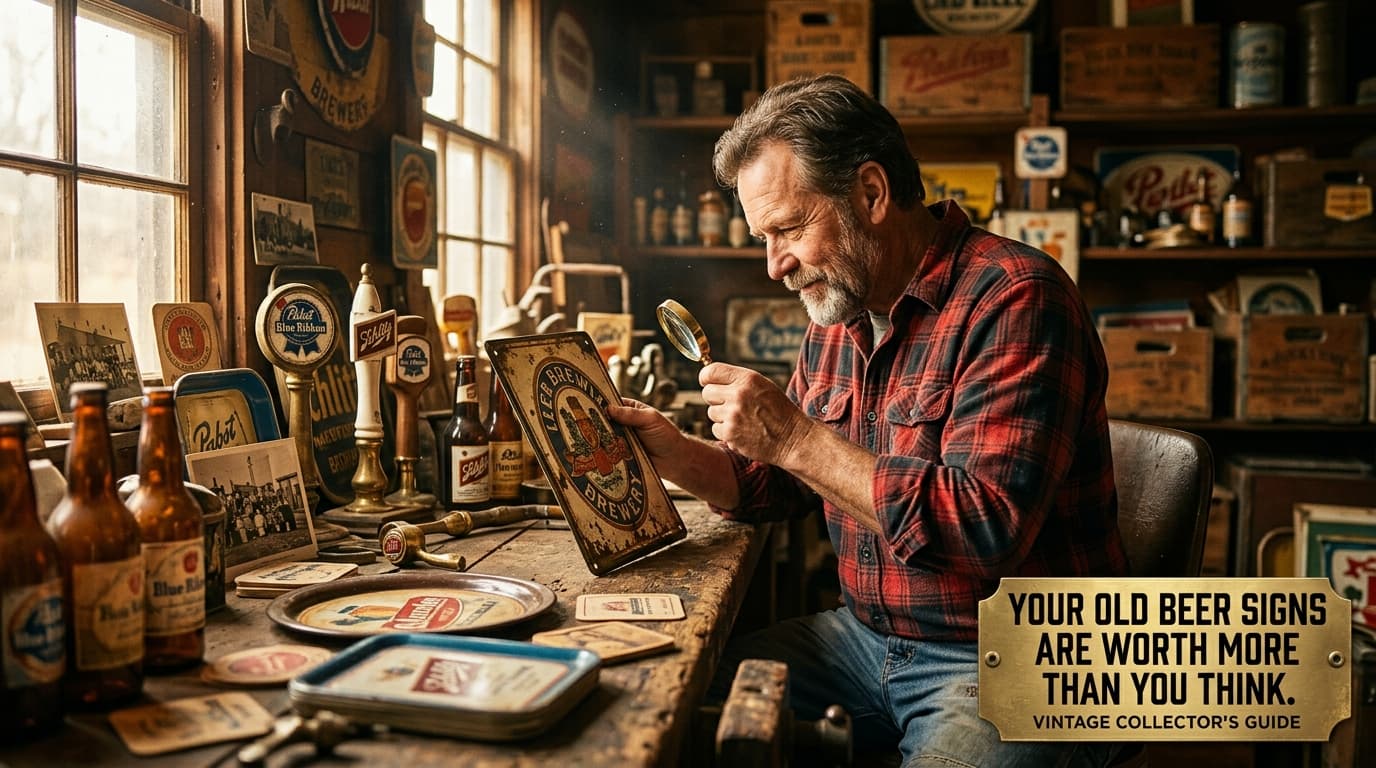
Marcus had been collecting breweriana for eleven years before anyone suggested he sell any of it. His garage in Millhaven, a small Ohio river town of about 4,000 people, held three walls of vintage beer signs: porcelain enamel panels, tin litho trays, reverse-glass beauties from long-dead regional breweries nobody under fifty had ever heard of. He loved every one of them. Then the Millhaven Brewery Festival came up $3,200 short of its venue deposit with six weeks to go, and the organizing committee started making phone calls.
Marcus looked at a 1940s American Club Beer sign he had picked up for $40 at an estate sale outside Toledo. He had two of them. He did not need two. Within three weeks, he had sold eight pieces from his collection and raised just over $2,100 from those sales. The festival ran. The local brewery that had sponsored it for nine years did not have to watch it disappear. And Marcus, to his own surprise, found he enjoyed selling almost as much as collecting.
What Breweriana Is Worth (And Why Most Collectors Don't Know)
The breweriana market is wider and deeper than most people realize. Auction records from established price guides show individual signs changing hands for anywhere from $46 for a simple promotional piece to more than $7,200 for a rare pre-Prohibition piece. An American Brewing Company sign recently sold for $4,070. An Anheuser-Busch White Label sign brought $4,600. These are not outliers reserved for museum-quality rarities; they are documented prices from actual completed auctions.
The Brewery Collectibles Club of America, founded in 1970, now counts more than 4,000 members across all fifty states and 27 countries. The BCCA is the clearest signal that this is not a fringe hobby. It is an organized, active community with regional chapters, seasonal shows, and decades of institutional knowledge about what things are worth and why. If you have collectibles sitting in storage and you have never consulted a BCCA price guide or attended a local chapter show, you are almost certainly underestimating what you own.
Before you price anything, photograph each piece in natural light from every angle. Note the brewery name, the approximate manufacture date if you can determine it, and any visible wear. That documentation does not just protect your asking price; it is the foundation of a transaction that both sides feel good about.
Listing Your Collection Without Getting Burned
Selling peer-to-peer is different from selling through a traditional auction house. The buyer cannot hold the sign, and you cannot hand it over in person. That distance is where deals fall apart, and it is why the mechanism protecting the transaction matters as much as the listing itself.
When you list a vintage beer sign for sale online, the written description carries the weight of the entire deal. State the dimensions. Describe the condition in plain language, not collector jargon. If there is a chip in the enamel at the lower left corner, say so. Buyers who know exactly what they are getting are buyers who complete purchases without disputes.
Pricing is the part most sellers get wrong. Check recent comparable sales, not asking prices. Asking prices are optimistic. Completed sales are reality. A $250 sale that closes cleanly is worth more to your community goal than a $400 listing that sits for four months.
The safest peer-to-peer transactions use escrow. When a buyer's payment is held by a neutral system until the item arrives and is confirmed as described, both parties are protected. The seller knows the money is real and committed. The buyer knows they are not simply wiring funds into the void. That structure removes the biggest single reason private collector sales fall through: neither side trusting the other enough to go first. Platforms built around this model make escrow the default rather than an afterthought.
How the Festival Got Its Money
Marcus spent about two weeks identifying the pieces he was most willing to part with: duplicates in his collection, or items he had acquired primarily for resale value rather than personal attachment. He listed them one at a time, spaced a few days apart, so he could monitor interest and adjust descriptions based on buyer questions.
The practical mechanics were simpler than he expected. He communicated with every buyer before confirming a sale, answered questions directly, and shipped each piece with more padding than seemed necessary. Four of his eight buyers left detailed positive feedback. Two asked if he had more pieces available. One became a repeat buyer for a second-year festival donation.
This pattern has played out in other communities. The Ravenswood neighborhood in Chicago runs an annual craft beer festival through its chamber of commerce, with proceeds supporting local small businesses, public art projects, and community programs. The Rock The Junction festival in Westfield, Indiana, created by a local brewery, has used event proceeds to fund high school scholarships for eight consecutive years. None of these started large. All of them started with someone deciding that a community asset was worth putting to work for the people around it.
Building Trust That Outlasts the Transaction
The reputation Marcus built through those eight sales was worth more than the sum of the individual transactions. Buyers talk to each other, especially within collector communities. A seller who communicates clearly, ships carefully, and describes items honestly becomes known. Being known is the most durable competitive advantage a private seller can have.
For hobbyist collectors who want to channel sales into community impact, the platform choice matters. Fisheez is a peer-to-peer marketplace built on the BASE blockchain where sellers pay no platform fees at all. The buyer pays a tiered service fee that scales down as transaction value increases, starting at 8% for purchases under $50 and falling to 0.5% on high-value deals. For a seller trying to maximize what actually reaches the community, keeping the full sale price is significant.
The core of the Fisheez trust structure is SmartShell Escrow. When a buyer pays, funds are held in USDC in a smart contract on the BASE network. They release when the buyer confirms receipt, when a timer expires, or through the outcome of a dispute handled by Peacemakers, trained community volunteers who work through a fair resolution process. There is no bank in the middle, no chargeback risk, and no ambiguity about whether the money is real. Both sides transact with confidence because the mechanism, not just good faith, does the protecting.
Fisheez also supports the Fishlanthropy Foundation, a legally separate 501(c)(3) funded by 5% of platform revenue. For sellers already thinking about community impact when they decide to part with a beloved piece of their collection, that alignment is not incidental. The festival ran. The community showed up. The signs found good homes. That is how it works when the tools match the intent.