

The Lot Was Empty Until Tuesday
She stood on the cracked sidewalk with $900 in her pocket, the kind of money that could disappear into groceries and gas before the week was out. She had flipped a chair. Listed it on a resale platform, answered a few messages, handed it off to a stranger in a parking lot. Nine hundred dollars for something someone else had left behind. Standing there, she looked at the empty storefront across the street and thought: what if this could be something else entirely?
That moment, ordinary and a little absurd, is exactly how community workspaces get born. Not from a venture capital deck or a ribbon-cutting ceremony, but from someone doing the math on a small windfall and deciding to aim it at a problem everyone around them already has. Suburban coworking has grown 25% year over year as remote workers search for somewhere to belong that is not their kitchen table. The lot was empty until someone decided it did not have to be.
What $900 Actually Buys a Community
The honest answer is: not much, and also everything. A typical coworking build-out runs around $210,000, with furniture alone reaching $150,000. Those numbers exist, and they are real, and they belong to a different conversation. The more interesting conversation is the one that starts with what Indy Hall started with in Philadelphia, which was under $15,000, and what a lot of scrappy, community-rooted spaces have started with since: somewhere between $5,000 and $15,000 in minimal startup costs, a borrowed table, and a group chat.
Nine hundred dollars does not open a building. What it does is change the question from "how do I spend this?" to "what does my block actually need?" That shift in thinking is the seed. A repurposed church basement costs nothing to borrow for Tuesday mornings. A shared router, a folding table, and a whiteboard are a few hundred dollars. The community workspace that emerges from that kind of resourcefulness looks nothing like a WeWork and everything like a neighborhood.
The math starts to make sense fast once people show up. Hot desks in shared spaces run $150 to $215 a month. That is the income side. The expense side collapses when the space is built on reciprocity instead of real estate ambition.
The People Who Showed Up
The freelance photographer came first, then the woman who made hot sauce and needed a commercial kitchen address to put on her labels, then the solo parent who needed two hours of quiet on Wednesday afternoons while her kid was at soccer. They did not arrive because of a branding campaign. They arrived because someone they trusted told them about a place where they could work without feeling like a ghost.
This is the texture of a real community workspace. Eighty-eight percent of coworking members report reduced isolation after joining a shared space. Sixty-five percent say they have passed a professional lead to another member. Those are not soft metrics. They are the actual outputs of proximity and trust, the things that happen when people who would otherwise be working alone in their cars or their spare bedrooms are given a table and permission to belong somewhere.
The economic logic compounds. Businesses save between $11,000 and $13,000 per employee when they shift to flexible, shared arrangements instead of dedicated office leases. For a freelancer or a food entrepreneur running on thin margins, access to a community workspace is not a luxury. It is infrastructure. Sixty-five percent of coworking memberships are held by people within a 15-minute commute of their space, which means these places are genuinely embedded in neighborhoods, not just located near them.
Small Business Owners Already Know How to Give Back
There is a persistent myth that small business owners are too stretched to be generous. The data says otherwise. Seventy-five percent of small business owners donate approximately 6% of their profits to community causes. They do it because they understand, viscerally, what it means to be the newcomer who needed a break, the vendor who got a referral that changed everything, the person whose business survived because someone vouched for them.
The Coven, a women-centered coworking space in Minneapolis, raised $349,000 through crowdfunding from its own community. Dimension Mill in Bloomington, Indiana, secured a $399,650 economic development grant. Lowcountry Local First in Charleston has connected more than 250 entrepreneurs to resources, mentorship, and each other. These are not outliers. They are examples of what happens when generosity is treated as a structural value instead of an afterthought.
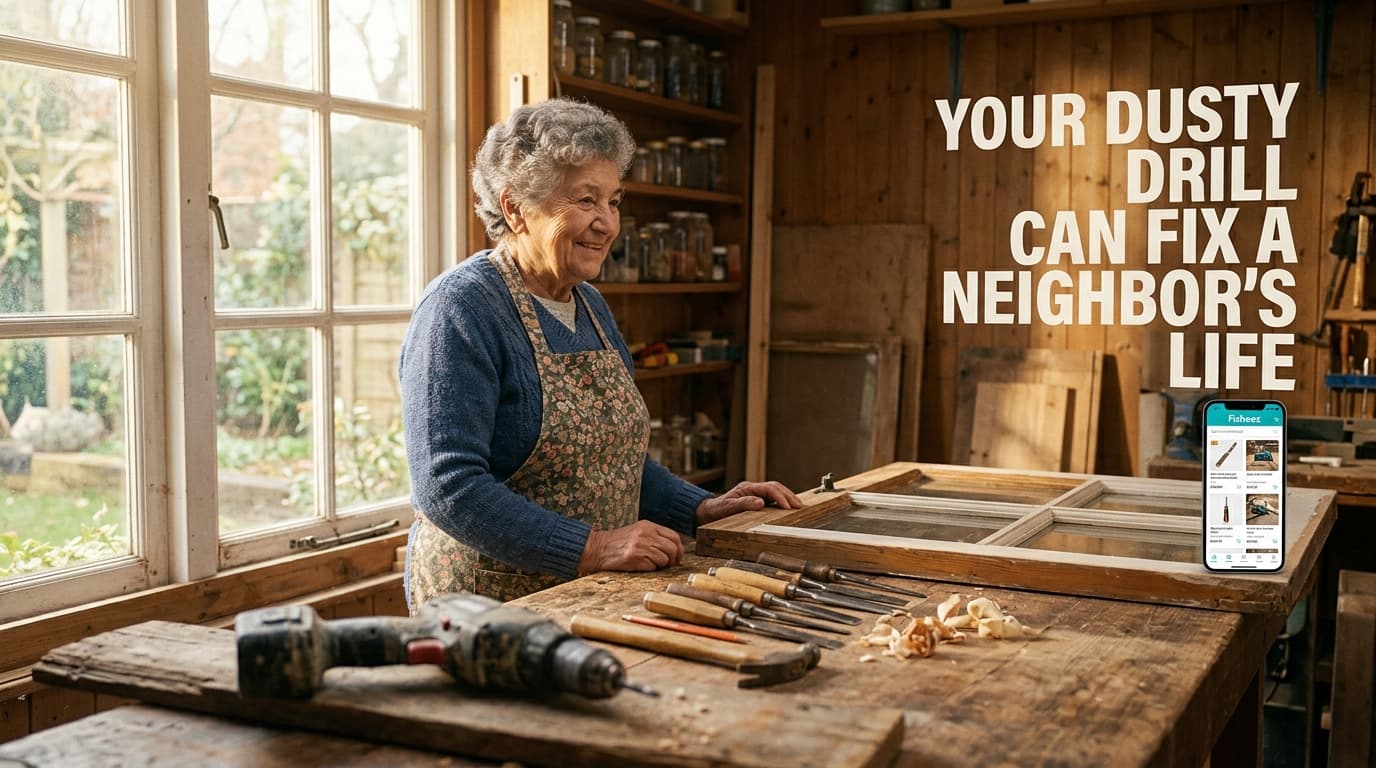
Platforms like Fisheez, which runs a peer-to-peer resale marketplace on the BASE blockchain with a seller fee of zero percent, exist inside the same logic. The person who flipped a chair and walked away with $900 kept more of that money because the platform was designed around the seller's interest. That design choice, small and almost invisible, is the kind of thing that changes what someone decides to do next.
One Trade, One Ripple, One Template
Coworking still represents only 2% of total US office inventory. That number is both sobering and clarifying. The category is not saturated. There is room for the $900 experiment, for the church basement and the borrowed router and the Wednesday afternoon quiet hour, to become something real and replicable. The question is not whether community workspaces can scale. The question is whether the people who build them have the tools and the resources to get started.
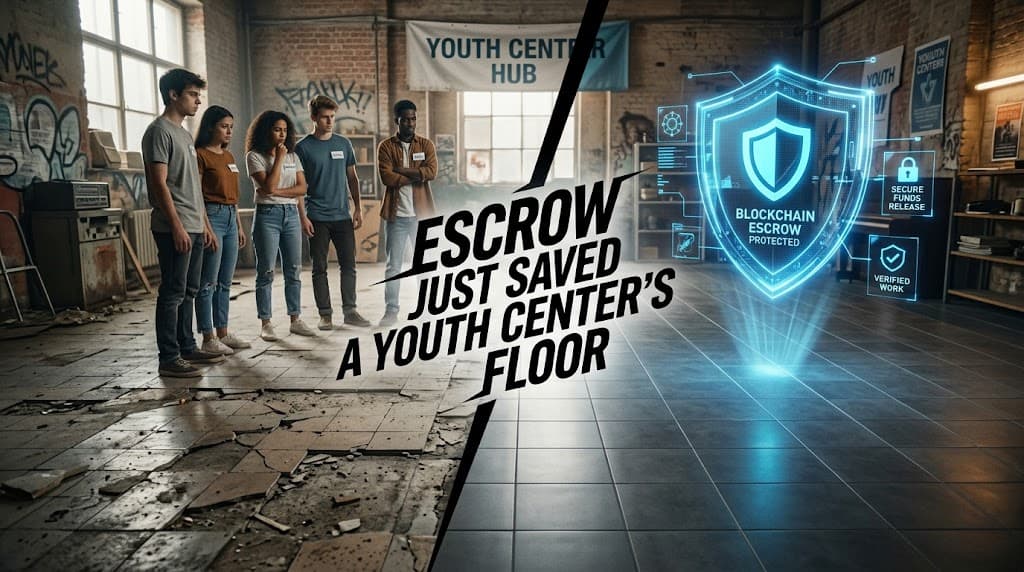
Fisheez becomes infrastructure rather than just a marketplace in moments like these. The SmartShell Escrow system holds funds in USDC until both sides of a transaction confirm everything is right, which means the person selling furniture, equipment, or supplies for a nascent community workspace is protected from the start. The Peacemakers program brings in community volunteers to resolve disputes, keeping the system honest without bureaucracy. The Fishlanthropy Foundation, a registered 501(c)(3), directs 5% of platform revenue back into community initiatives, which means every transaction on Fisheez is quietly funding the kind of work that a chair flip started.
Reset Austin turned a vacant commercial kitchen into a coworking space for food entrepreneurs, solving a licensing and infrastructure problem that had blocked dozens of small producers from going legal. That is what happens when someone asks the right question at the right moment. One person with $900 and a clear view of an empty lot is asking that question right now.
The ripple from a single trade does not have to stop at the parking lot handoff. It can cross the street, unlock a door, pull up a few chairs, and become the place where the next person finds exactly what they needed. That is the template. It fits in your pocket. It starts today.