
The Fraud That Came Back
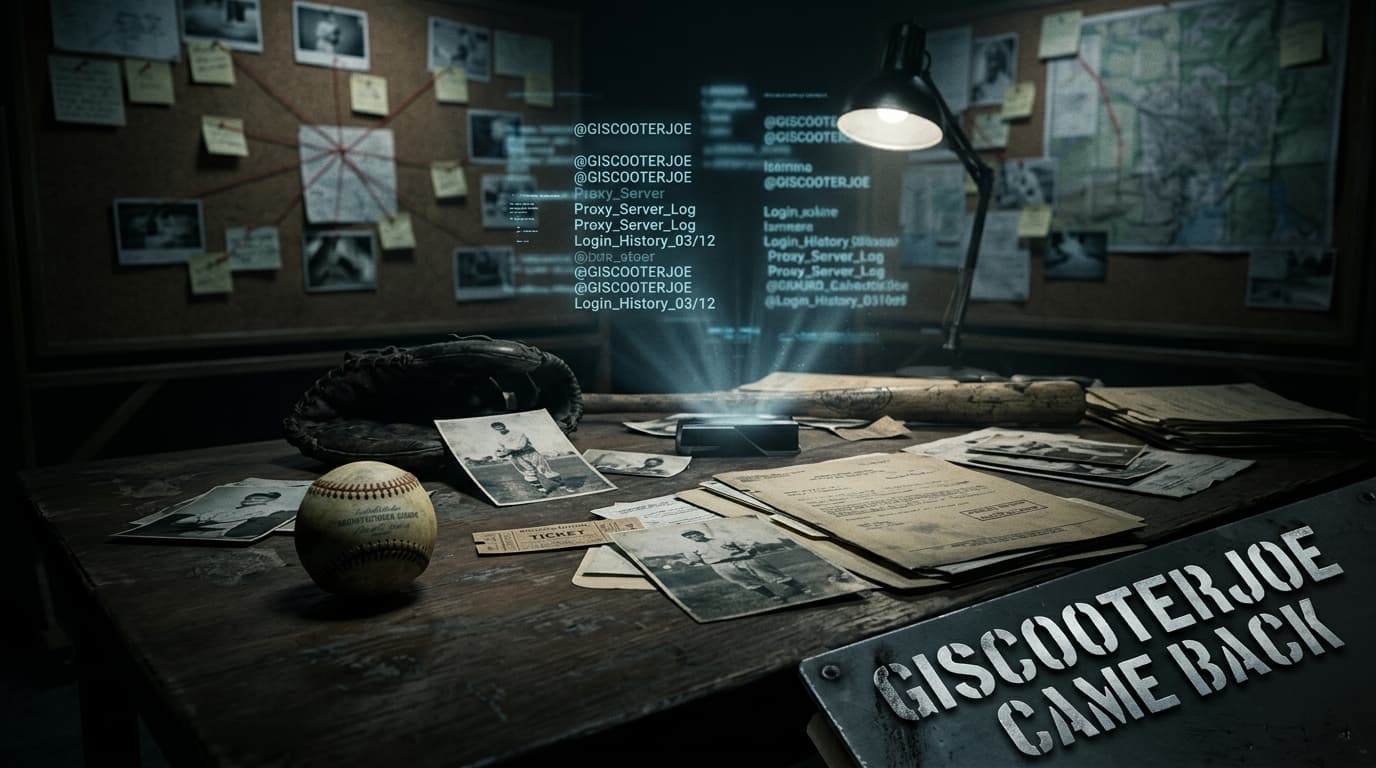
In 2017, a seller operating under the name "giscooterjoe" quietly disappeared from online militaria marketplaces. He had spent several years selling WWII Army baseballs, 53 of them in total, pulling in $3,864.65 before researchers at Chevrons and Diamonds documented the operation in enough detail to effectively shut it down. The balls were fakes. Convincing ones, too, staged in listing photos alongside olive-drab military bags and 1940s-era gloves to create the visual impression of authentic provenance. Then he was gone.
Six years passed. New collectors entered the hobby. The people who remembered giscooterjoe moved on. And then, between October 2023 and February 2024, the same operation resurfaced under two new account names: "westporter_87_00" and "jatav-6011." The technique had been refined. The new fakes featured torn-away baseball hide and synthetically darkened stitching to better simulate age. Thirteen more baseballs sold for a combined $448.90 before the story was published again. When Chevrons and Diamonds researchers tried to warn the seller directly, they were blocked.
One of those fraudulent baseballs sold for $422 with 17 competing bidders. Seventeen people, each one raising the price on a fake, each one creating the illusion of legitimate demand. That is how this works. The collectibles market is now valued at $142.5 billion and is projected to reach nearly $249 billion by 2034. Every time the market grows, a new wave of buyers arrives with money, enthusiasm, and no memory of the last fraud cycle. The predators, as one researcher put it plainly, "seek to leverage naivete."
Why the Militaria Market Rewards Patience and Punishes the Unprepared
Militaria sits inside the antiques segment, which led all second-hand collectibles categories with $58.4 billion in revenue in 2024, growing at a 6.7% annual rate. These are not trivial numbers for a hobby. Certain categories within militaria appreciate at rates that would make a stock portfolio blush; swords, for instance, can increase as much as 20% per year depending on collector demand. That kind of appreciation attracts serious money, and serious money attracts fraud.
Understanding why militaria is valuable is the first line of defense. According to EBTH, the specialist auction platform, the baseline approach is to evaluate the uniform or item first, then layer in the insignia. Combat exposure is the primary value driver: items worn by soldiers in battle command more than items that never left the depot. Identified pieces, meaning artifacts traceable to a specific named serviceperson, often command a premium beyond that, and their value compounds when combined with other items from the same individual. A paratrooper's jacket with patches, wings, citation ribbons, and unit awards tells a complete story. A bare jacket tells almost none.
The mid-price segment, transactions between $50 and $500, accounts for 49% of the entire market. That is where most collectors operate, and it is exactly where the giscooterjoe operation worked, selling individual items for anywhere from $19.95 to $422. The fraud does not only target high-ticket relics. It targets the everyday transaction, the one buyers are most likely to treat casually. And it is not limited to online platforms: at the Ohio Valley Military Society's 2024 Show of Shows, a dealer was selling freshly stamped contemporary baseballs as vintage pieces at $25 each and instructed patrons not to photograph them when he noticed attention. In-person buying is not inherently safer.
What to Look for Before You Bid
Before you commit a dollar, request documentation. Not a listing photo, actual documentation: provenance records, period photographs showing the item in context, any paperwork linking it to a named serviceperson. Staging is not provenance. The giscooterjoe listing photos were carefully composed to look like a discovery from a veteran's attic, but they were theater. A vintage bag and a period glove prove nothing about the item they surround.
Evaluate the seller's history with the same rigor you would apply to the item itself. Cross-reference usernames and listing photo backgrounds across platforms. The jatav-6011 account was linked to westporter_87_00 precisely because the listing photos shared the same background. Specialist communities like Chevrons and Diamonds maintain documented records of known fraud operations, and consulting them before a significant purchase costs nothing. The 17 bidders who drove that baseball to $422 almost certainly did not check.
Competitive bidding pressure is one of the most reliable tools a fraudulent seller has. When you see a price climbing and multiple bidders stacking up, the instinct is to assume the item is legitimate because other people want it. That instinct is exactly what the seller is counting on. Due diligence does not become less necessary when a listing looks popular; it becomes more necessary. All of this pre-transaction work is the foundation layer, but it is not a complete structure on its own. It reduces risk. It does not eliminate it.
How SmartShell Escrow Works: The Step-by-Step
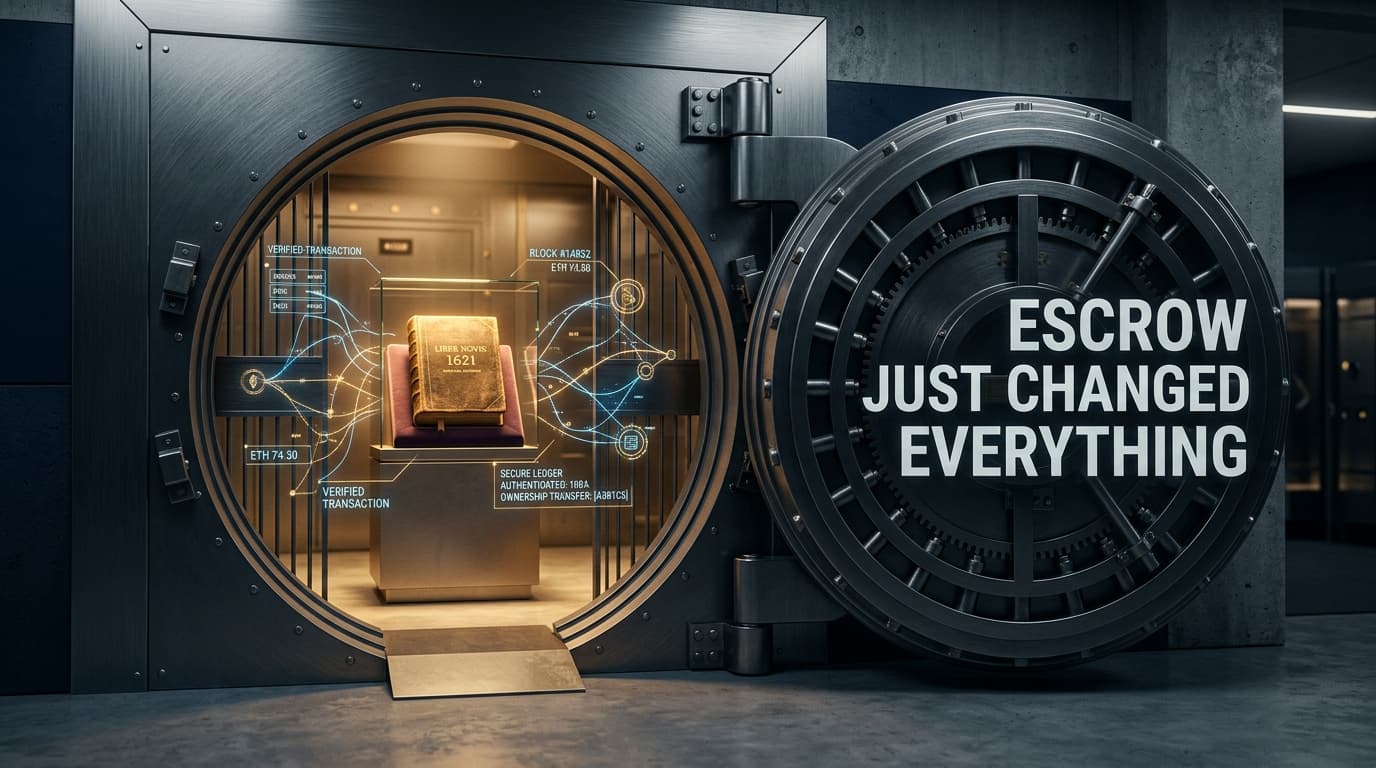
This is where Fisheez escrow militaria historical collectibles transactions move from relying on trust to relying on structure. SmartShell Escrow is a smart contract on the BASE blockchain that holds funds in USDC between buyer and seller. Fisheez never touches the money. The funds move directly between your wallet, the SmartShell contract, and the seller's wallet, which is why Fisheez does not qualify as a money transmitter under FinCEN regulations. There is no corporate account holding your payment. The escrow is code.
Here is how a physical militaria transaction works in practice. You find a listing, deposit funds, and those funds lock in the smart contract. The seller has 72 hours to acknowledge the order; if they do not, SmartShell automatically refunds you without any manual intervention required. Once the seller ships and the item arrives, you have 21 days to inspect it and either release the funds or initiate a return. If you request a return, the seller has 72 hours to respond, and then you have 21 days to ship the item back. The seller then has a 3-day review window before the refund processes.
Two features of this design matter especially for Fisheez escrow militaria historical collectibles deals. First, outcomes are binary: full release to the seller or full refund to the buyer, with no partial settlements within a single contract. That structure, documented in Section 2.4 of the SmartShell Escrow Agreement, removes the ambiguity that fraudsters exploit in informal disputes. Second, if the Fisheez platform ever experiences an outage, you can interact directly with the smart contract through Etherscan or any compatible blockchain interface. The escrow cannot be held hostage by a website going down.
If Something Goes Wrong: The Peacemaker Dispute Process
If you receive a suspected fake and the seller disputes your return request, the matter enters a formal 7-day dispute cycle. Both parties submit evidence. Peacemakers, trained community volunteers who are not Fisheez employees and are not paid per case, review that evidence and vote. Their compensation structure matters here: Peacemakers are eligible for prize pools, not per-dispute payments, which means they have no financial incentive to churn through cases quickly or favor either side. They vote based solely on the evidence presented.
If the first dispute cycle does not produce a valid outcome, perhaps due to insufficient votes or a tie, the matter proceeds to a 7-day appeal cycle handled by a separate Peacemaker panel. The separation is deliberate. A fresh set of reviewers evaluates the same evidence without being anchored to the first panel's reasoning. Think of it as the difference between a specialist community like Chevrons and Diamonds and a generic customer service department. The people reviewing a dispute about a fraudulent WWII baseball are not reading from a script; they are evaluating militaria-specific evidence with domain knowledge.
Contrast this with what happened on eBay. When researchers tried to warn westporter_87_00 about the fake listing, the seller blocked them. The platform's own tools were used to suppress the warning, and the listing stayed up. A dispute system that depends on the platform being responsive and the seller acting in good faith is not a dispute system; it is a suggestion. Peacemakers adjudicate regardless of whether the seller cooperates.
The Fee Math: What This Protection Actually Costs
SmartShell fees are paid by the buyer on a 20-tier structure. Under $50, the fee is 8%. It scales down from there, reaching 0.5% on transactions over $10 million. Sellers pay nothing, which is a direct financial incentive to list on Fisheez rather than eBay (where sellers pay 10 to 15%) or Amazon (15 to 45%). On a $300 WWII medal, a buyer pays roughly $18 to $24 in SmartShell fees. The seller pays zero.
For context, Facebook Marketplace and Craigslist are free, but they offer no transaction protection at all. The Fisheez buyer fee is not a listing cost; it is the cost of the escrow infrastructure and dispute resolution that comes standard with every transaction. You are not paying for a slot on a website. You are paying for a locked contract that releases only when you are satisfied.
If you transact frequently, TideTurner NFTs reduce that fee further. A Seahorse TideTurner takes 20% off your buyer fee. A Whale TideTurner eliminates it entirely. These NFTs are resellable, so a serious collector who buys regularly can accumulate fee savings that exceed the NFT's cost and then sell it when they are done. It functions as a membership that pays for itself over time.
Your Operating Procedure for Every High-Value Deal
Build a checklist and use it every time. Research the item using specialist resources before you bid. Request provenance documentation, not just listing photos. Check the seller's account history and cross-reference listing backgrounds across platforms. Set a personal threshold, perhaps $75, perhaps $150, above which you use Fisheez escrow militaria historical collectibles protection for every transaction without exception. Inspect thoroughly before releasing funds, and know the dispute path before you need it, because needing it under pressure is the worst time to learn how it works.
The fraud lifecycle is not going to stop. The giscooterjoe operation ran for years, went quiet for six, and came back with better fakes and new accounts. The collectibles market will reach nearly $249 billion by 2034, and every year of growth brings another cohort of new buyers with no memory of the previous fraud wave. The FTC's Consumer Sentinel Network logged 6.5 million consumer reports in 2024 alone. Marketplace fraud is not exceptional; it is systemic.
The collector who operates with structural protection does not need to outrun the fraudsters. The funds stay locked until the item checks out. If it does not, the dispute process runs on code and community expertise, not on whether the seller decides to cooperate. That is the difference between hoping a transaction goes well and building a process that handles it when it does not. Browse and list on Fisheez, and make structural protection the standard, not the exception.