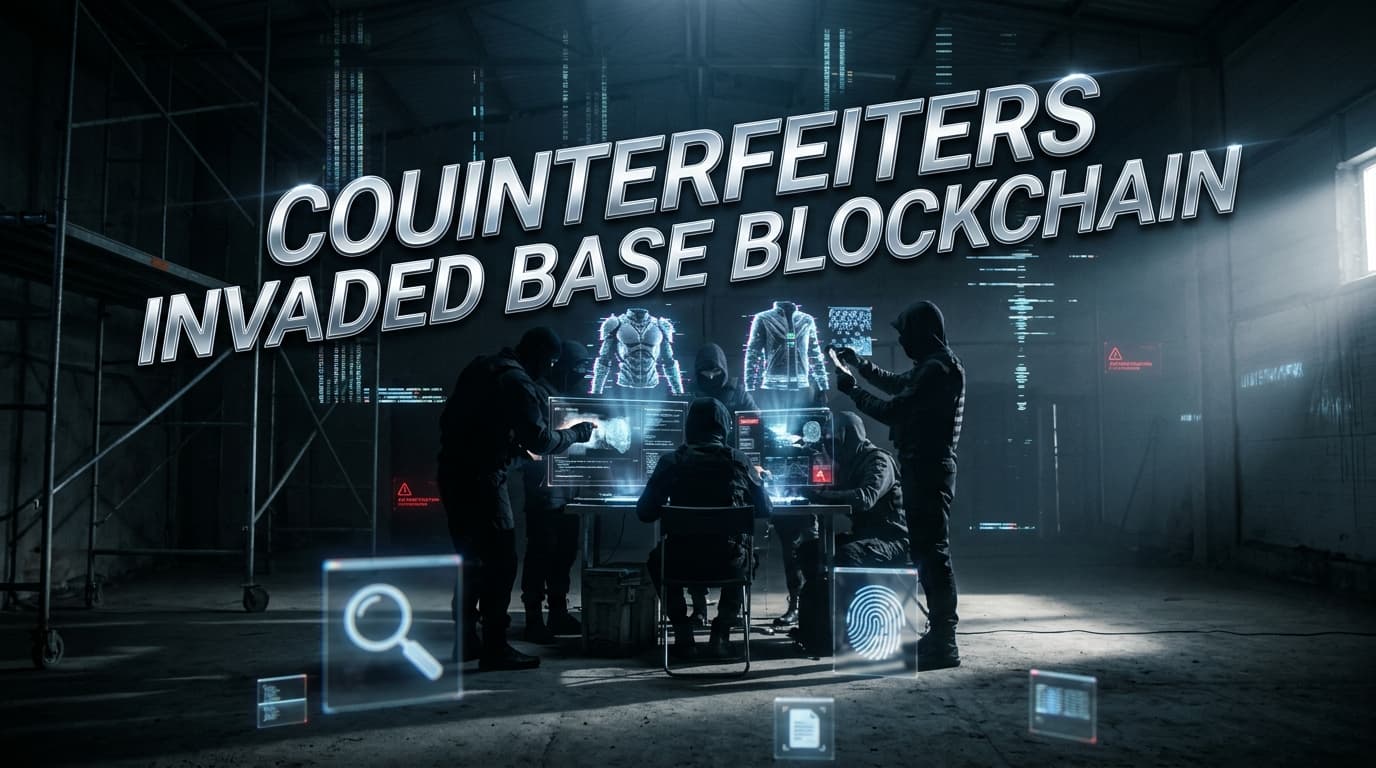

The Counterfeit Problem Has Found Crypto
In 2023, US Customs seized $659 million worth of counterfeit apparel alone, representing 24% of all intellectual property-infringing seizures that year. The American Apparel and Footwear Association compounded the picture: 36% of counterfeit clothing and footwear it tested contained dangerous levels of arsenic, cadmium, phthalates, and lead. Counterfeiting is not an abstract brand problem. At $250 per costume, it is your money and, potentially, your health.
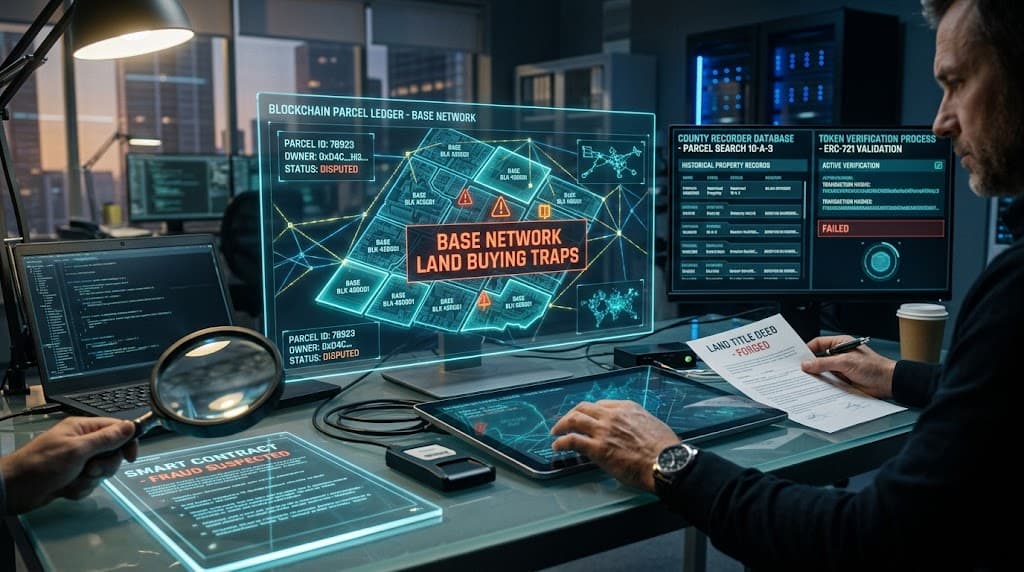
Crypto marketplaces built on networks like BASE blockchain have introduced a new layer of complexity to this problem. The promise of peer-to-peer transactions, stablecoin payments, and on-chain provenance is real. But counterfeiters are adaptive. They follow the money into new distribution channels, and decentralized listings are no exception. The good news is that blockchain infrastructure also provides verification tools that traditional e-commerce cannot match, if you know how to use them. Here are five checks to run before you confirm any $250 costume purchase on the BASE network.
Item 1: Verify Seller KYC Status On-Chain
Know Your Customer verification is the first firewall between you and a fraudulent listing. In regulated blockchain marketplaces, sellers complete identity verification before they can list items. This confirmation is accessible on-chain or through the platform's seller profile system.
Before you look at a single photo of the costume, find out whether the seller is KYC-verified. A platform that surfaces this information transparently is telling you something important: it has done work to confirm this person is who they claim to be. An anonymous wallet address attached to a $250 listing, with no verification badge and no transaction history, is a serious red flag. Cross-reference the seller's wallet address against the platform's verified seller registry if one exists. Check transaction history on the BASE blockchain explorer; a seller who has completed dozens of legitimate transactions leaves a traceable record that a fraudulent account typically cannot replicate.
Item 2: Read the Smart Contract Conditions Before You Pay
This is the step most buyers skip, and it is the most consequential one. Every legitimate sale on BASE should route your payment through a smart contract that holds funds in escrow until defined conditions are met. The conditions are not boilerplate. They are the entire protection mechanism.
A properly structured escrow contract locks your USDC and releases it only when the seller fulfills delivery obligations, a timer expires with no dispute, or you manually confirm receipt. If conditions are not met within the specified timeframe, the contract refunds your payment automatically. Read these conditions before you pay. What constitutes "delivery"? Is photo proof of shipping sufficient, or does the contract require confirmed receipt? Are there dispute windows built in?
Platforms like Fisheez build this structure directly into their SmartShell Escrow system, where USDC is held on the BASE blockchain until all parties satisfy the contract or a community dispute process resolves the outcome. If a seller is pushing you to pay wallet-to-wallet with no escrow layer, that is not a blockchain advantage. That is a traditional wire transfer with no recourse.
Item 3: Inspect the Physical Authentication Markers
Blockchain verification covers the transaction. It does not verify the fabric. Before you commit, request multiple high-resolution photos and examine these specific markers on every $250 costume or dancewear piece.
Start with the label. Authentic performance and dancewear labels are stitched cleanly into seams with consistent font sizing, proper brand name spelling, and matching country-of-origin information on all tags. Interior labels on counterfeit items are frequently screen-printed rather than woven, and the information on interior hem tags often does not match the outer hang tag. Next, examine stitching density and evenness. Premium dancewear at the $250 price point uses reinforced seam construction, especially at high-stress points like straps and waistbands. Loose threads, puckering, and uneven stitch spacing are immediate disqualifiers. Check the logo placement. Authentic brand logos are placed with precision; even a few millimeters off-center is worth questioning. Finally, request a photo of the costume laid flat on a hard surface. Counterfeit pieces often show uneven hemlines and inconsistent fabric sheen because they are cut from lower-grade materials.
At $250, you are paying for engineering, not just aesthetics. If the seller cannot or will not provide detailed photos of these markers, treat that refusal as evidence.
Item 4: Cross-Reference the On-Chain Token or NFT Record
A growing number of authentic costume and apparel brands are issuing NFT-based product certificates alongside physical items. These digital records function as product passports, containing manufacturing origin, ownership history, and certifications recorded on the blockchain as immutable entries. The $2 trillion annual counterfeiting problem is exactly why brands are moving this direction.
If the listing claims an NFT certificate or on-chain record of authenticity, verify it directly. Go to the BASE explorer and look up the token contract address provided. Confirm the minting address matches the brand's publicly announced contract. Check the token's transaction history; authentic certificates are minted once and transferred in a clean chain of custody. Multiple rapid transfers, re-minting events, or mismatched contract addresses are signs of a fraudulent token designed to mimic a real one. A token that cannot be verified against a publicly known brand contract address is not authentication. It is decoration.
Item 5: Run a Market Price Sanity Check
Price anomaly is the oldest counterfeit signal in retail, and it is still reliable. EU consumer research found that 71% of people who knowingly purchased counterfeits cited high original prices as their justification. Counterfeiters understand this psychology and price their fakes just below the discomfort threshold: close enough to real to seem credible, low enough to attract buyers looking for a deal.
At $250, a costume sits in a range that is plausible for authentic mid-tier dancewear and performance apparel. Do a market comparison before you buy. Search the same item on the brand's official channels and authorized retailers. If the BASE blockchain listing is priced 30% to 50% below the consistent market rate with no credible explanation (overstock, sample sale, verified secondhand condition), the discount is the product. Crypto listings can obscure price context because buyers often compare within the platform rather than against the broader market. Step outside the listing and do the comparison. If the price still seems right after that check, proceed. If the gap is unexplained, it is the gap that should concern you.
What the Blockchain Actually Guarantees (And What It Does Not)
BASE achieving Stage 1 rollup status in 2025 was a meaningful milestone. With $11.72 billion locked across the network and a security council of ten independent global entities, the infrastructure has real institutional credibility. What it does not do is verify the physical contents of a package before it ships.
The blockchain guarantees transaction integrity: who paid, how much, when, and under what conditions the funds release. It does not inspect fabric density. It does not authenticate a label. It does not confirm that the item in the listing photo is the item in the shipping box. That gap is exactly where counterfeiters operate, and it is why the five checks above matter. Escrow is a powerful backstop when a seller delivers a fake: you can dispute the transaction, submit photographic evidence, and a community resolution process can rule in your favor. But that outcome is slower and more stressful than catching the problem before you pay.
The industry direction is clear. More brands will issue on-chain certificates. More marketplaces will require seller identity verification. More escrow systems will build conditional logic around item verification rather than just delivery confirmation. For buyers in niche apparel markets today, the checklist is the technology. Use it before the smart contract closes.