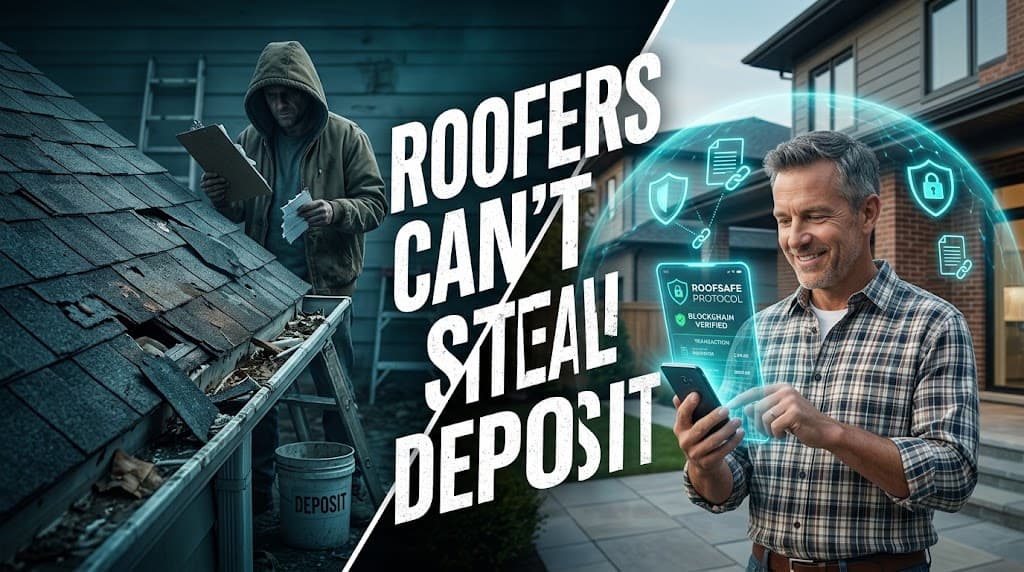


Why a $150K Land Deal on BASE Network Demands a Different Kind of Due Diligence
Deloitte projects tokenized real estate will grow from under $0.3 trillion in 2024 to $4 trillion by 2035, a 27% compound annual growth rate that is reshaping how capital moves into physical assets. Within that projection, undeveloped land sits at roughly 0.80% penetration, a segment expected to reach $50 billion by 2035. That number means you are genuinely early. It also means the rails are not yet mature, the standards are not yet universal, and the bad actors know it.
The FBI's Internet Crime Complaint Center documented that 97% of all 2022 cryptocurrency theft targeted DeFi protocols, up from 30% in 2020. The examples are not hypothetical: a $320 million bridge exploit, a $35 million price manipulation, a $3 million flash loan attack. These are not yield farm edge cases. They are structural attack surfaces that exist wherever smart contracts hold real money.
A $150K land plot on the BASE network is not a yield farm. It is a property transaction with legal title implications, county recorder dependencies, and fraud vectors that sit both on-chain and off. The following eight-point checklist is a minimum-viable verification protocol. It does not replace an attorney. It does not replace a title company. It is where you start.
The 8-Point Checklist
1. Verify the Smart Contract Deployment on BASE
Every legitimate land tokenization on the BASE network will have a verifiable contract address. Start at BaseScan, confirm the contract creation date, examine the deployer wallet's history, and trace the full transaction record. Unverified bytecode, meaning source code that has not been published and matched to the deployed contract, is a hard stop. If the platform cannot point you to a verified, readable contract, that alone is sufficient reason to walk away.
2. Audit the Contract's Release Logic
Reading a smart contract does not require being a developer. Most verified contracts on BaseScan render in a human-readable format that shows the conditions under which funds are released. Legitimate escrow logic should release USDC or other stablecoins only when documented milestones are confirmed on-chain, not when an admin sends a single transaction. Pay particular attention to any admin override functions: know exactly who controls those keys, under what conditions they can be invoked, and whether that authority is held by a multisig wallet or a single private key.
3. Demand an Off-Chain Legal Wrapper
Transferring a token on the BASE network does not transfer legal title to land in any US jurisdiction that has not passed specific enabling legislation. The American Land Title Association has stated plainly that "removing established real estate transaction formalities could have catastrophic consequences." Ask any platform for a Deed-to-Token legal framework, a documented structure that ties the token to a recorded deed through a legal entity. If the platform cannot produce that documentation, the token represents a claim, not ownership.
4. Check County Recorder Cross-Reference
Any credible land tokenization should be accompanied by a parallel filing with the relevant county recorder's office. Pull the parcel number, verify the owner of record, and check for any outstanding liens or encumbrances. On-chain data is immutable, but it is not legally authoritative in the United States. County records are. A discrepancy between who holds the token and who is named on the recorded deed is not a technicality; it is a title defect.
5. Confirm Title Insurance Coverage
Standard ALTA title insurance policies cover fraud, forgery, undisclosed liens, and errors in public records. A token transfer alone does not carry those protections. Before committing capital, identify an insurer willing to underwrite the specific tokenized transaction structure you are entering. Justin Lischak Earley of First American Title framed the risk precisely: "The more liquid an asset becomes, the more prone it becomes to fraud and theft." Tokenization increases liquidity by design. That means title insurance is more important in this context, not less.
6. Verify the Escrow Model
A BASE network smart contract holding USDC with milestone-release logic is structurally more transparent than a wire transfer, but only if the milestones are substantive and independently verifiable. The milestones worth requiring include: identity verification completed for both parties, deed recording confirmed with the county, a current survey attached to the transaction record, and closing attorney signoff documented on-chain or in an attached legal exhibit. Figure Technologies has processed over $13 billion in on-chain HELOCs and documented savings of $850 per $100K mortgage by removing manual reconciliation steps. Those savings are real, but they depend entirely on execution quality.
7. Cross-Check Seller Identity
Know-your-customer verification is standard practice on regulated on-chain real estate platforms. Propy, for example, has processed over 200,000 verified wallet mints and eliminated roughly 40% of manual transaction labor through AI-assisted processing. Ask any seller or platform for the KYC status of the selling wallet, review its prior transaction history on BaseScan, and determine whether the wallet has minted or burned tokens in contexts unrelated to the current transaction. A wallet with no verifiable identity attached and no transaction history outside this single deal warrants serious scrutiny.
8. Price Your Fees Transparently
Fee structures vary meaningfully across on-chain real estate platforms, and the difference matters at the $150K level. Some platforms charge both parties; others charge only the buyer. Fisheez, a BASE-based platform using SmartShell Escrow with USDC settlement, charges 0% to sellers and a tiered buyer fee ranging from 0.5% to 8% depending on transaction size. Whatever platform you use, calculate the total cost of the transaction before funding the escrow, including gas fees, platform fees, legal wrapper costs, and title insurance premiums. A fee structure that looks minimal at 0.5% on a $150K deal still represents $750 in costs, and the upper tier of an 8% buyer fee represents $12,000.
The Minimum Is Not the Guarantee
Tokenized land remains the smallest segment within a market that Deloitte projects will reach $4 trillion by 2035. At 0.80% penetration today, the infrastructure is still being built, the legal frameworks are still being drafted, and the fraud patterns are still evolving. The FBI's documentation of DeFi exploit methods is not a reason to avoid the BASE network. It is a reason to verify every layer of a transaction that carries real legal and financial weight.
The eight points above are not a checklist that, once completed, guarantees a clean transaction. They are a floor. Projects like T-RIZE's $300 million tokenized residential development in Canada and Kin Capital's $100 million real estate debt fund on Chintai demonstrate that institutional capital is moving into this space with rigorous verification infrastructure. First-time investors operating at the $150K level deserve the same discipline applied to the same questions.
Blockchain real estate will scale. The data supports that conclusion. What it cannot tell you is whether the specific contract, the specific seller, and the specific parcel in front of you have been properly structured. That verification is yours to do, and this checklist is where it begins.