
The Cedar Chest Problem
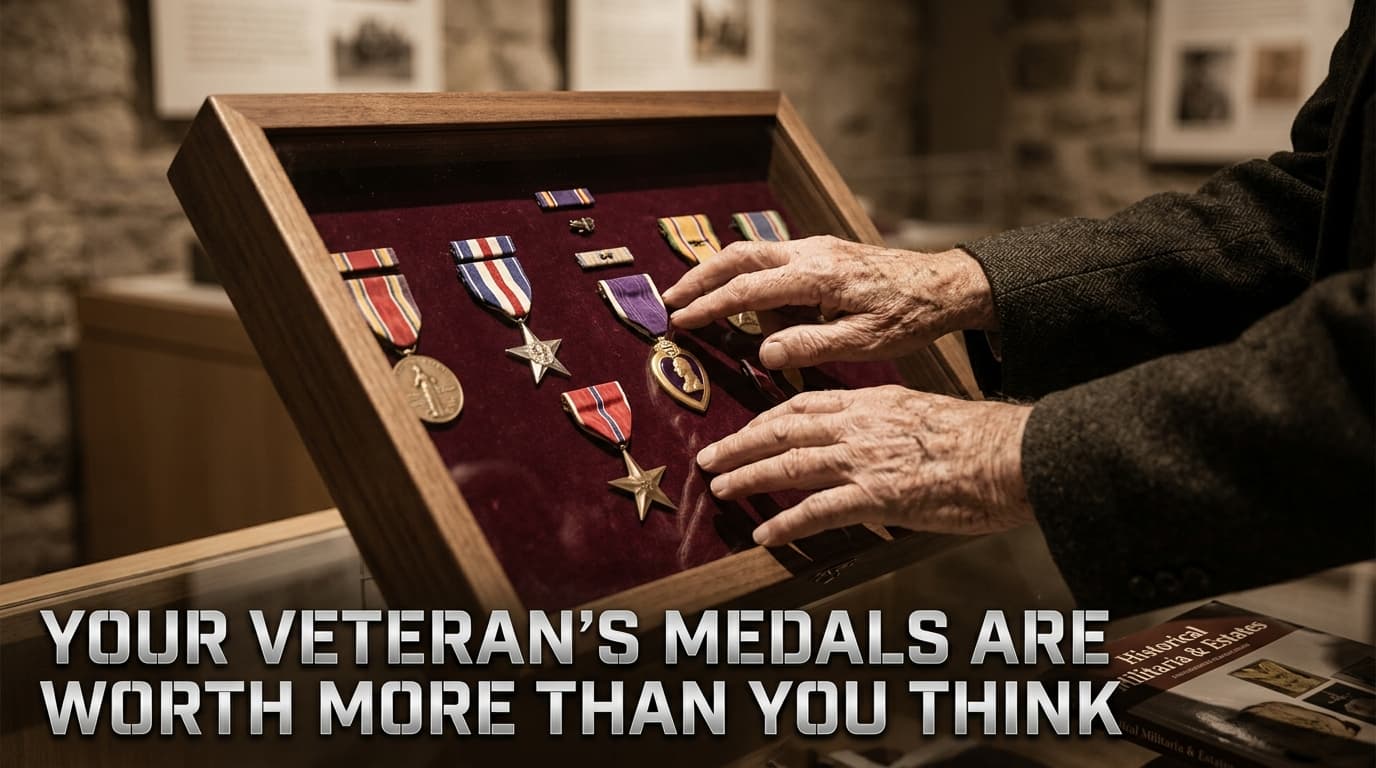
The cedar chest is usually at the back of a closet, or tucked under a bed in the spare room. When a family finally opens it, they find things they weren't expecting: a folded uniform, a small cardboard box of medals, discharge papers in a manila envelope, photographs of a young man they barely recognize. The weight of it settles over the room quickly. Nobody wants to get this wrong.
That feeling, the sense of obligation to do right by the person who earned these things, is exactly the right instinct. What most families don't realize is that acting on it well requires knowing something about the market they're stepping into. EstateSales.NET puts it plainly: handling military medals calls for sensitivity, an understanding of historical context, and knowledge of the legal considerations involved. The practical and the emotional aren't separate here. They're the same conversation.
There's also something worth sitting with before any sale begins. The reason militaria values are rising right now is partly because veterans are aging and their collections are entering the market. That's a hard truth, but it reframes what selling means. Dispersing a collection carefully, with research and intention, is an act of stewardship. The alternative, letting it sit in a cedar chest until it's forgotten, honors no one.
Why the Market Is Moving Right Now
This is not a garage-sale category. Milestone Auctions' first Premier Military Auction of 2025 brought in $725,000 across 705 lots, spanning items from the Revolutionary War through the modern era. That's a single auction, one Saturday in January, in Willoughby, Ohio. The market for militaria historical collectibles community impact is serious, active, and growing.
The buyer demand side is just as strong. Militaria ranks in the top 20 most-searched categories every month among EstateSales.NET's 4.4 million monthly users. There are nearly 18 million veterans in the United States, and almost half are over 65. As their collections enter the estate market, they're meeting a collector base that has been waiting for exactly this material. Certain categories, swords among them, have been appreciating at up to 20 percent per year. The window for maximum value is open right now, and it won't stay open indefinitely.
The Story Is the Value
Here is the single most important thing a seller can know before listing anything: the story behind an item is worth more than the item itself. Not metaphorically. Literally, in dollars.
At that January 2025 Milestone sale, a WWII A-2 flight jacket worn by a named soldier from the 1st Combat Cargo Group sold for $5,535 above its high estimate. A Japanese National Flag hand-signed by roughly 100 members of the 124th Field Artillery Battalion, estimated at $500 to $800, sold for $3,567. A Confederate officer's sword, estimated at $10,000 to $15,000, sold for $22,000. In every case, the premium came from documentation, identification, and the human story attached to the object. Miles King, co-owner of Milestone Auctions, said after the sale that his team is "committed to leaving no stone unturned in digging up the fine details," and that bidders specifically praised the depth of the catalog descriptions.
The other thing that surprises most sellers is this: militaria behaves the opposite of most collectibles. With stamps or coins, you maximize value by isolating the rarest single piece. With militaria historical collectibles community impact, grouping a soldier's items together multiplies value in a way that no individual item achieves alone. A medal, the discharge papers, a photograph, the uniform, the unit citation, all from the same person, becomes something greater than its parts. Selling them separately for speed is almost always the wrong move.
What to Watch Out For Before You List
Before anything goes online, there are a few things you need to know, and one of them is federal law. Under 18 U.S. Code § 704, it is illegal to sell or possess the Medal of Honor without authorization. The penalties are real. If a cedar chest contains one, the path forward involves legal counsel, not a listing page.
Beyond that specific prohibition, some military-issued equipment may still technically be government property if it was never officially decommissioned, even if a veteran brought it home decades ago. Modern equipment in particular can fall into this ambiguous territory, and the safest move is to verify before selling. On the valuation side, many families assume a WWII uniform is where the money is. It usually isn't. Uniforms were produced by the hundreds of thousands, which keeps their base value low. The patches, insignias, and unit awards sewn onto that uniform are often where the real premium lives, and a seller who doesn't know that could easily leave significant money on the table.
A professional appraisal is not an optional step here; it's the foundation everything else rests on. Prestige Estate Services, an ISA-member firm operating under USPAP standards, offers both online photo evaluations and on-site appraisals for military memorabilia. Getting an independent, credentialed opinion before you price anything protects you from underselling and from the legal exposure that comes with not knowing what you have. It's also worth giving family members a genuine opportunity to retain items of personal or emotional significance before any sale proceeds.
Channeling the Proceeds: Turning a Sale Into a Legacy
Once you know what you have and what it's worth, the question becomes where the proceeds go. For many families selling a veteran's collection, the answer involves directing some or all of the money toward causes the veteran cared about: veterans' organizations, community programs, historical preservation. That's a meaningful act. The platform you choose determines how much actually arrives.
Take a $1,200 medal sale. On eBay, the seller pays 10 to 15 percent in fees, which means $120 to $180 leaves the transaction before a charity ever sees it. That's not a technicality; it's real money that doesn't reach its destination. Fisheez charges sellers 0 percent. A $1,200 sale stays at $1,200 for the seller, with the buyer paying a modest tiered service fee on their end. The full proceeds are yours to direct.
The charitable dimension of Fisheez goes further than the fee structure. The Fishlanthropy Foundation is a separate 501(c)(3) that receives 5 percent of Fisheez revenue, and its Community Assistance Program provides direct financial assistance to individuals and causes in need. Sellers working with veterans' organizations can also use the Promoter Program, which allows community advocates, history clubs, veterans' groups, anyone with an audience, to promote a listing and earn automatic commission through SmartShell, without the seller paying platform fees. The organization becomes a participant in the sale, not just a beneficiary of it.
Selling With Protection on a Platform Built for It
High-value militaria historical collectibles community impact transactions carry a specific fear that most sellers don't talk about openly: the fear of being scammed. You're selling something irreplaceable, to a stranger, often for more money than you expected. That's a real vulnerability, and it deserves a real answer.
Facebook Marketplace and Craigslist are free, but they offer nothing between you and a bad actor. Fisheez uses SmartShell Escrow, which locks buyer funds in a smart contract in USDC on the BASE blockchain the moment payment is made. Those funds don't move until the deal is confirmed. No bank, no middleman, no one can reach in and redirect the money. If a dispute arises, it goes to Peacemakers, trained community volunteers who have no financial stake in the outcome and are eligible for prize pools through their participation, not paid per dispute. Their independence matters when the object being disputed once belonged to someone who served their country.
When the cedar chest is finally empty, and the sale is complete, and the proceeds have gone where you directed them, something has happened that's larger than a transaction. The veteran's story didn't end when the medal changed hands. It continued in the cause the sale funded, in the organization that now has resources it didn't have before, in the collector who will preserve and document what you carefully researched. That's what stewardship looks like. You did the work, you got it right, and the things that mattered to that person are still mattering, in a different form, to the world they left behind.