
Why Traditional P2P Trading Fails Buyers and Sellers in 2026
You find a mint-condition MacBook Pro on Facebook Marketplace for half the retail price. The seller has great reviews and a convincing story about moving overseas. You agree to meet at a coffee shop, bring the cash, and wait. After thirty minutes, you text them — no reply. An hour later, you're still there with $1,200 in your pocket, realizing you just wasted your afternoon for a deal that never existed.
Maybe it's the vintage guitar you saw on Craigslist that turned out to be a cheap knockoff when it arrived. Or the contractor who asked for a 50% deposit on a bathroom renovation, then disappeared after you sent the money. You've probably lost count of how many times you've been ghosted by sellers, received items that didn't match the description, or watched helplessly as platforms like eBay took 15% of your hard-earned money for doing nothing but processing a payment.
These aren't just annoying one-off experiences — they're systemic failures baked into how peer-to-peer trading works in 2026. The platforms that connect us still rely on the same broken trust mechanisms they've used for decades: hope that the other person is honest, faith that a ratings system with fake reviews will protect you, and prayer that the platform's customer support will actually help when things go wrong.
By the end of this, you'll understand exactly why traditional marketplaces are designed to fail you, and how a new approach using blockchain smart contracts and native USDC on Base is creating a system where trust isn't something you hope for — it's something the technology guarantees from the moment you start a transaction.
How Peer-to-Peer Blockchain Networks Eliminate Middlemen
At its core, a peer-to-peer network connects people directly without a central server controlling everything. Think of it like a neighborhood swap meet where everyone trades directly, instead of driving to a big-box store where a corporation sets prices, takes 40% off the top, and decides what you're allowed to buy or sell. When you send payment through Venmo or PayPal, your money actually travels through their centralized servers — they act as the middleman who could freeze your account, delay transfers, or take fees they never disclose upfront.
Blockchain takes this P2P concept and makes it trustless by design. Instead of needing PayPal's servers to verify that you sent $500, a blockchain network like Base lets thousands of computers (nodes) validate transactions simultaneously through cryptographic proof. This distributed verification means no single entity can block your payment, change terms, or charge hidden fees after the fact.
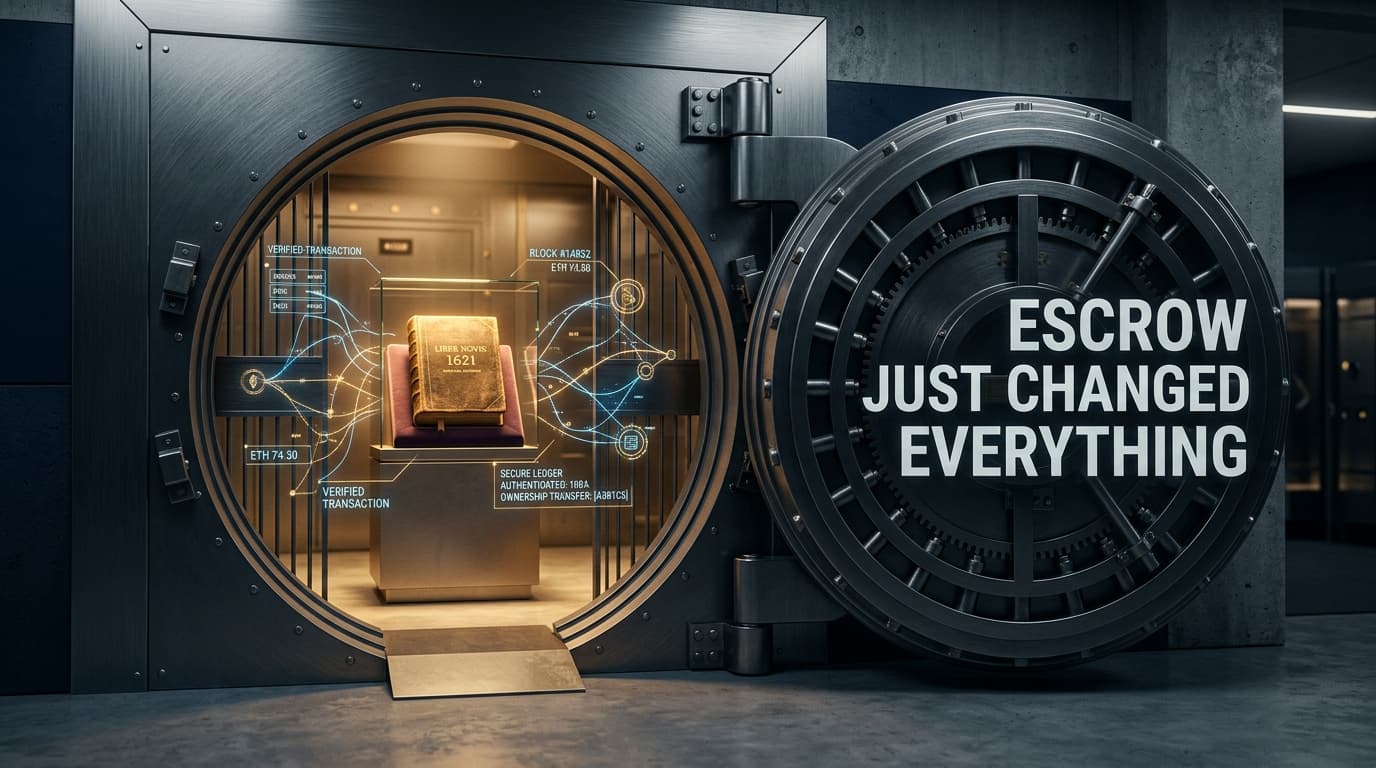
The real breakthrough for marketplaces comes when you combine this P2P structure with smart contract escrow. In traditional classifieds, the platform just facilitates the connection — once you and a seller agree on terms, you're on your own. With blockchain-based systems, the connection and protection are built into the same layer. Your payment goes into a smart contract that automatically holds funds until both parties confirm delivery, or releases money back if the seller ghosts.
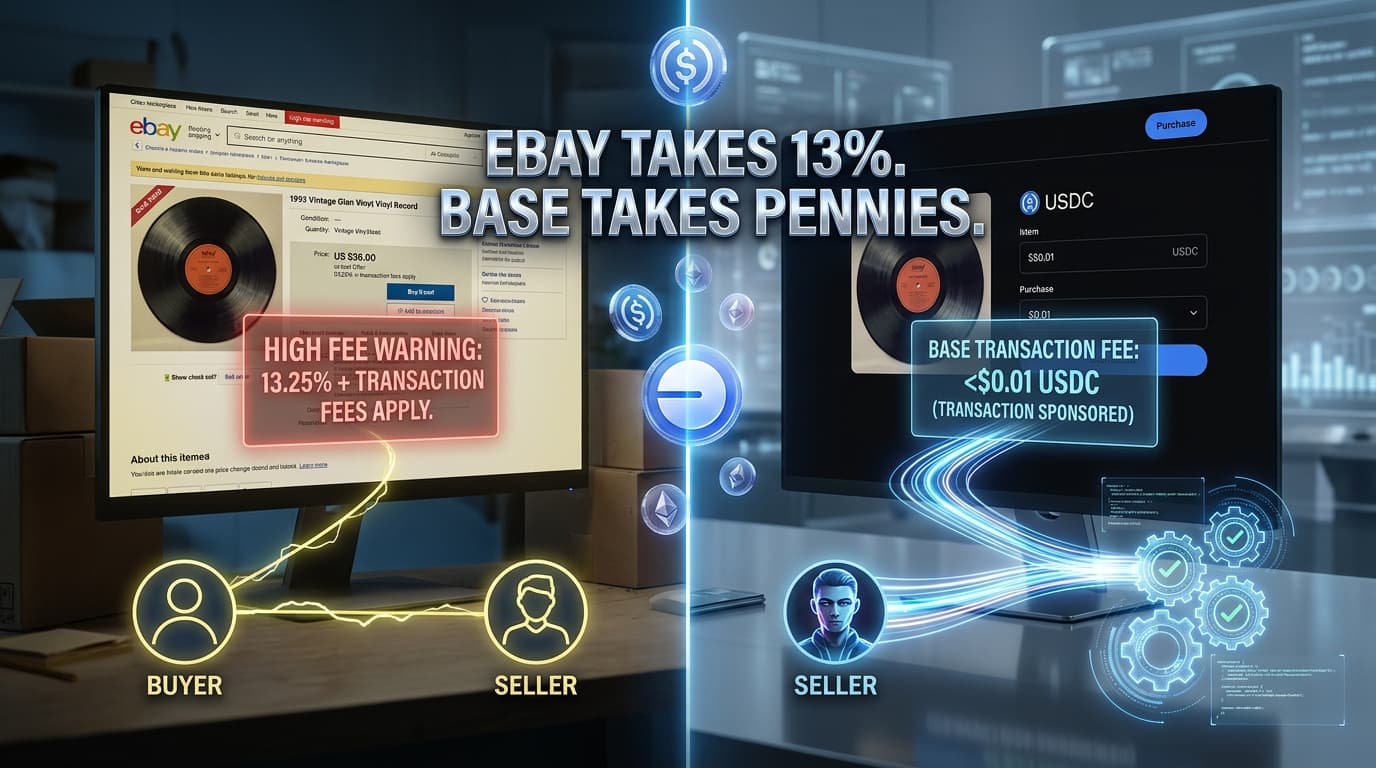
This architecture creates "disintermediation" — cutting out unnecessary middle players who add cost without adding value. When eBay takes 12.9% plus $0.30 per transaction, that's pure intermediation cost. When a blockchain-based marketplace runs on Base with native USDC, transaction fees drop to pennies because you're paying network validators rather than corporate shareholders.
Smart Contract Escrow: The Secure Backbone of P2P Deals
Picture this: you're buying a used car for $8,000 from someone three states away. With traditional payment methods, you either send the money and hope they actually ship the car, or you use an expensive third-party escrow service that charges 3-5% and takes weeks to release funds. Smart contract escrow solves this by turning trust into mathematical certainty. The buyer's USDC gets locked in a programmatic contract that nobody can touch — not the seller, not the platform.
Here's how it works in practice. When you agree to buy that $8,000 car, you send USDC to the smart contract address. The seller sees the funds are locked and can now safely ship the vehicle. Once you receive and inspect the car, you click "release funds" and the USDC transfers instantly. If the car never arrives or arrives damaged, you click "dispute," triggering community arbitration where neutral Peacemakers review evidence.
The security comes from the contract's non-custodial design. Unlike a bank or PayPal holding your money in their account, smart contract escrow uses cryptography to ensure funds can only move according to the rules both parties agreed to. This eliminates single points of failure and prevents exit scams.
Using USDC for these escrow contracts adds stability. As Circle's native implementation on Base explains, USDC maintains a 1:1 peg to the US dollar with full reserves backing, meaning your $8,000 stays exactly $8,000 throughout the transaction — no crypto volatility while you wait for delivery.
Step into Safe P2P Trading with USDC on Base in 2026
This is where everything we've discussed becomes real — not just theory, but actual working protection you can use today. Fisheez brings native USDC on Base and smart contract escrow together into a single platform that lets you trade anything from used furniture to freelance services with built-in security. While traditional marketplaces leave you vulnerable, Fisheez builds protection into every transaction by default.
Think about that used car scenario again. On Facebook Marketplace, you'd be exchanging cash in a parking lot or hoping a Zelle payment doesn't get reversed. On Fisheez, your $8,000 in USDC gets locked in SmartShell Escrow — a programmatic contract that can't release funds until either you confirm delivery, the seller refunds, or community Peacemakers vote after reviewing evidence. The seller keeps 100% of their asking price, while you pay a small tiered fee that starts at 8% for purchases under $50.
The practical steps are simpler than you'd expect. You sign in with email, connect a wallet or use Stripe to buy USDC, then create or browse listings like any classifieds site. When you find what you want, you lock payment into escrow with a timer you and the seller set together. If everything goes smoothly, you release funds instantly. If not, the community-based Peacemaker system steps in.
This isn't just another marketplace — it's a fundamental shift in how peer-to-peer trading should work. Native USDC on Base means stable dollar value with near-zero transaction fees, while smart contract escrow replaces blind trust with mathematical certainty. What used to be scary cross-country deals now feel as safe as buying from a local store.