
Miniatures Mania: How Blockchain Platforms Are Reshaping the Niche Collectibles Market
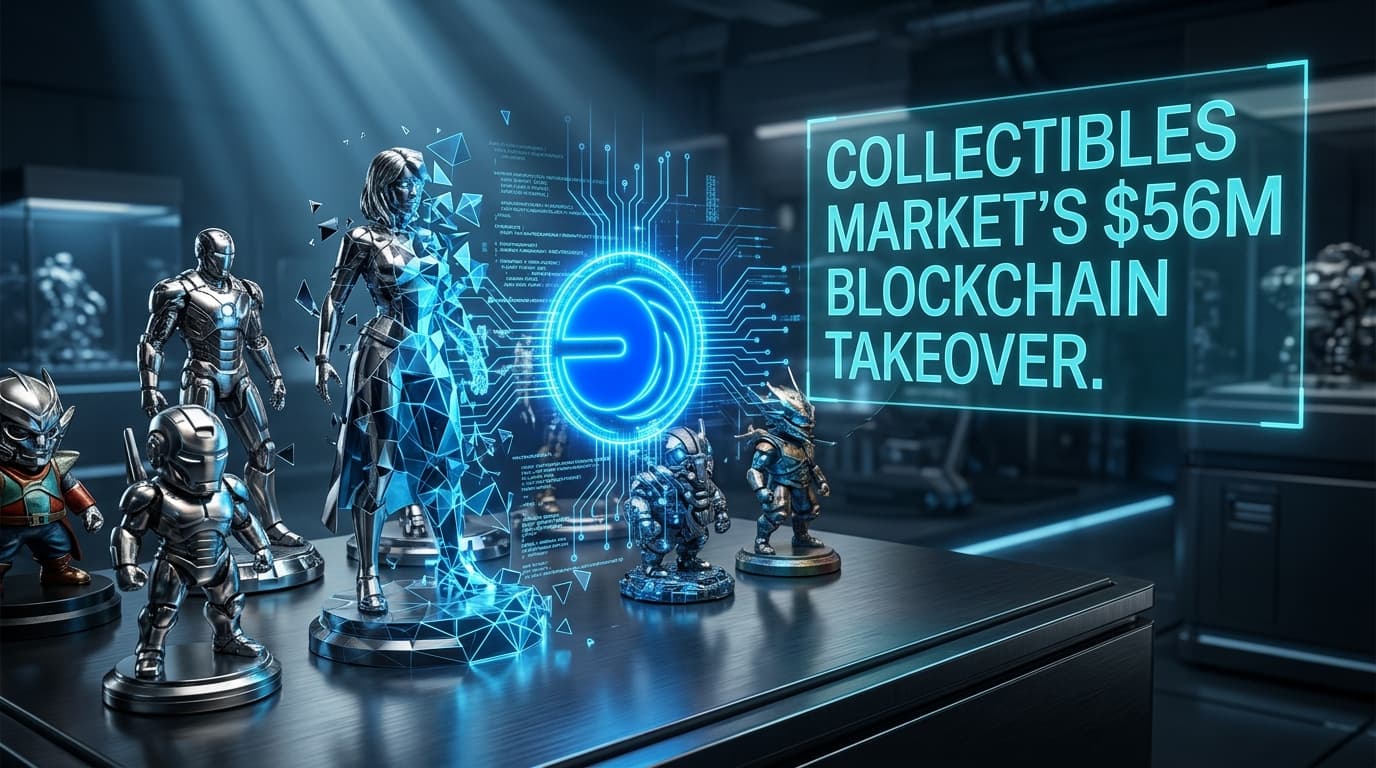
Onchain physical collectibles marketplace sales volume surged from $10.5 million in December 2024 to $56.4 million in March 2025, a more than 400% jump in just three months. That kind of velocity does not happen in a sideshow. It signals structural change. For collectors tracking market shifts in dolls, miniatures, figurines, and other niche physical goods, the emergence of blockchain-native trading infrastructure is no longer a speculative experiment. It is a live market with real volume, real settlement, and real price discovery.
Why Niche Collectibles Have Always Been Broken
The collectibles market sits at roughly $500 billion in total value globally, with more than one-third of Americans identifying as active collectors. But the infrastructure serving that market has remained stubbornly primitive. Trades happen across fragmented channels: WhatsApp groups, Facebook Marketplace, specialty forums, and auction houses. Settlement takes days or weeks. Authentication is inconsistent, and fraud is endemic. For niche categories like miniatures and dolls, where provenance and condition are everything, this fragmentation has meant that genuinely motivated buyers and sellers routinely fail to find each other at fair prices.
Blockchain-enabled collectibles marketplaces are engineered specifically to address these gaps. The three core advantages are instant settlement via stablecoins, physical custody solutions that remove personal storage burdens, and on-chain authentication records that build persistent trust around individual items. Analysis from Multicoin Capital identifies authentication and custody as the two highest-value problems for this sector to solve: establishing a reliable chain of provenance around a physical object transforms it from a trust-dependent informal trade into something that can settle like a financial asset.
BASE Network as the Infrastructure Layer
The rapid growth in onchain collectibles activity is not happening across blockchain infrastructure uniformly. BASE, Coinbase's Ethereum Layer 2 network, has emerged as the dominant settlement layer for this category of commerce. By mid-2025, BASE held 46% of the entire L2 market's total value locked, with $9.1 billion across DeFi protocols, and was processing 299 million monthly transactions with a 305% year-over-year increase. The network captured 54.8% of all L2 revenue, generating $72.1 million against $131.5 million combined from all other L2s.
What makes BASE specifically relevant to collectibles commerce is its USDC infrastructure and merchant reach. The network holds $3.6 billion in outstanding USDC, enabling stablecoin-denominated settlement without price volatility. BASE's partnership with Shopify brought roughly 2 million merchants across 34 countries into the USDC payment ecosystem with 1% cashback and zero foreign transaction fees. For a collector purchasing a limited-edition miniature from a seller in another country, the combination of instant finality, stablecoin pricing, and a merchant-grade settlement layer is qualitatively different from anything traditional secondary markets have offered.
Smart Contracts and the Settlement Problem
The most transformative capability blockchain brings to collectibles trading is programmable settlement. In traditional collectibles commerce, the buyer-seller trust problem is partially resolved by platforms or escrow intermediaries, but these introduce their own costs, delays, and failure points. Smart contracts eliminate the counterparty trust requirement entirely. Funds lock in a contract on payment, release automatically on delivery confirmation, and disputes are resolved through defined on-chain processes rather than platform arbitration.
For the miniatures and doll collector community, this matters at a practical level. A vintage resin figure listed at $800 sits precisely in the price range where blockchain settlement provides its clearest value proposition: high enough to justify friction reduction, not so high that buyer pools become vanishingly thin. Multicoin Capital's analysis of blockchain collectibles markets identifies the $1,000 to $100,000 band as the sweet spot, and a significant portion of specialty miniatures, designer vinyl figures, and limited-edition dolls falls squarely there. Platforms on the BASE network that combine USDC escrow with physical custody and on-chain authentication records are building the technical foundation for a genuine liquid market in these categories. Fisheez, a BASE-native peer-to-peer marketplace, deploys a smart contract escrow model called SmartShell Escrow for exactly this type of transaction: buyer funds lock in USDC until delivery terms are met, with no bank or intermediary in the settlement chain.
Reading the Market Signals
For collectors who want to track buying and selling opportunities, the 2024 and 2025 data carries several readable signals. The overall NFT market recorded $8.8 billion in total sales volume in 2024, up slightly from the prior year. By 2025, aggregate NFT revenue declined to an estimated $5.63 billion, a 37% drop, even as the total number of NFTs in circulation grew 25% to 1.34 billion units. The surface-level reading is bearish. The more useful reading for physical collectibles collectors is different: speculative digital art and profile picture projects drove much of the 2022 to 2024 cycle, and their correction has created space for utility-driven, physically-backed tokenized assets to establish credibility without competing against irrational exuberance.
The phygital NFT segment, which directly covers tokenized physical collectibles, reported 60% transaction volume growth in this period, led by luxury brands deploying NFT-backed authentication certificates. Tokenized luxury product authentication gained 22% traction across 20-plus countries. This is the signal worth watching: the speculative froth has cleared, and the categories showing volume growth are precisely those where blockchain solves a real problem rather than simply creating a new speculative vehicle. Miniatures, dolls, and designer collectibles fall squarely in this category.
What This Means for the Industry
The onchain collectibles market is still small relative to the $500 billion total collectibles economy, but its growth trajectory is real and its structural advantages are durable. For collectors, the practical implications are already visible: price discovery improves when liquidity concentrates on-chain rather than fragmenting across private forums. Provenance becomes auditable. Settlement risk drops toward zero on platforms that hold funds in escrow until both parties confirm completion. The 400%-plus sales volume growth in Q1 2025 among onchain physical collectibles platforms is not a marketing headline. It is a market structure shift, and collectors who understand the underlying mechanics will be better positioned to act on the opportunities it creates.
The broader significance is that blockchain infrastructure is finally doing for physical collectibles what digitization did for music and equity trading: reducing the cost of trust. For niche collector communities that have always operated on reputation and informal networks, that is a fundamental change. As more niche goods find their way onto on-chain platforms, the question for serious collectors is not whether to pay attention to the BASE network and blockchain collectibles data, but how quickly they can develop the literacy to read those markets accurately.