
The Hidden Risks of P2P Trades and How Escrow Solves Them
You found a Nintendo Switch OLED on Facebook Marketplace for $200 — half the retail price. The photos look perfect, and the seller says they can meet in an hour. You agree to meet at a coffee shop, cash in hand. They never show up. You message them, but the profile disappears. That afternoon, you spot the same photos on Craigslist with a different number. You've just been ghosted.
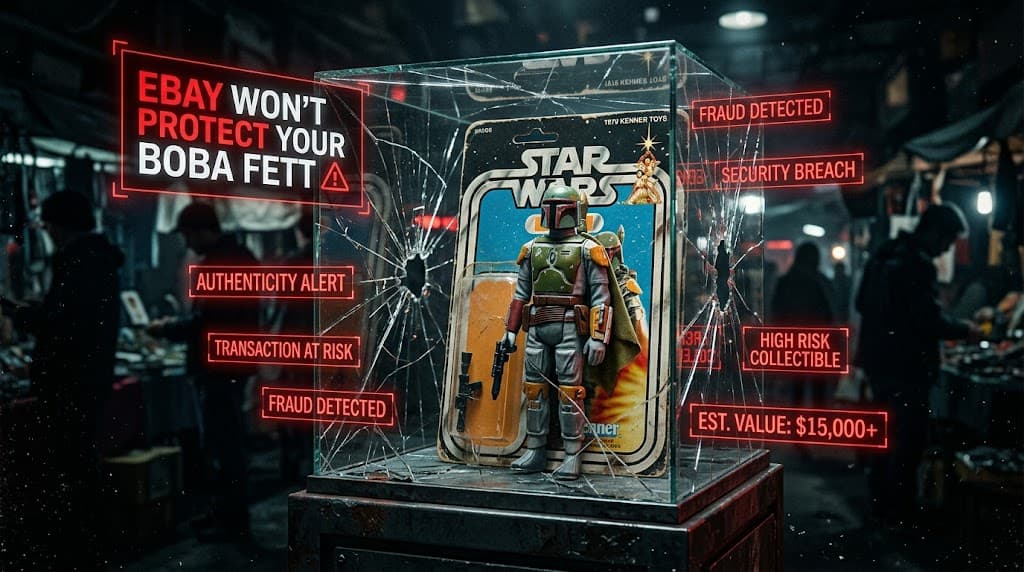
Or maybe you're the seller. You sold your camera gear on eBay, shipped it carefully, and delivered on time. Three days later, the buyer opens a "not as described" case, claiming scratches that weren't there. You know it's a lie, but eBay sides with the buyer automatically, refunds their money, and leaves you without your camera or payment. You've lost your item and $500.
These stories happen thousands of times daily. The problem is simple: someone has to go first, and whoever goes first takes all the risk. Buyers risk getting scammed. Sellers risk chargebacks and false claims long after the deal is done. It's a system built on blind trust where only the liar usually wins.
But what if you could trade with strangers and know, mathematically, that neither of you can get scammed? What if money locked in place until both parties are satisfied, with no company deciding who's telling the truth? That's what crypto escrow does — and in 2026, it's changing how people buy and sell everything from concert tickets to cars.
Step-by-Step: How Crypto Escrow Works on Blockchain
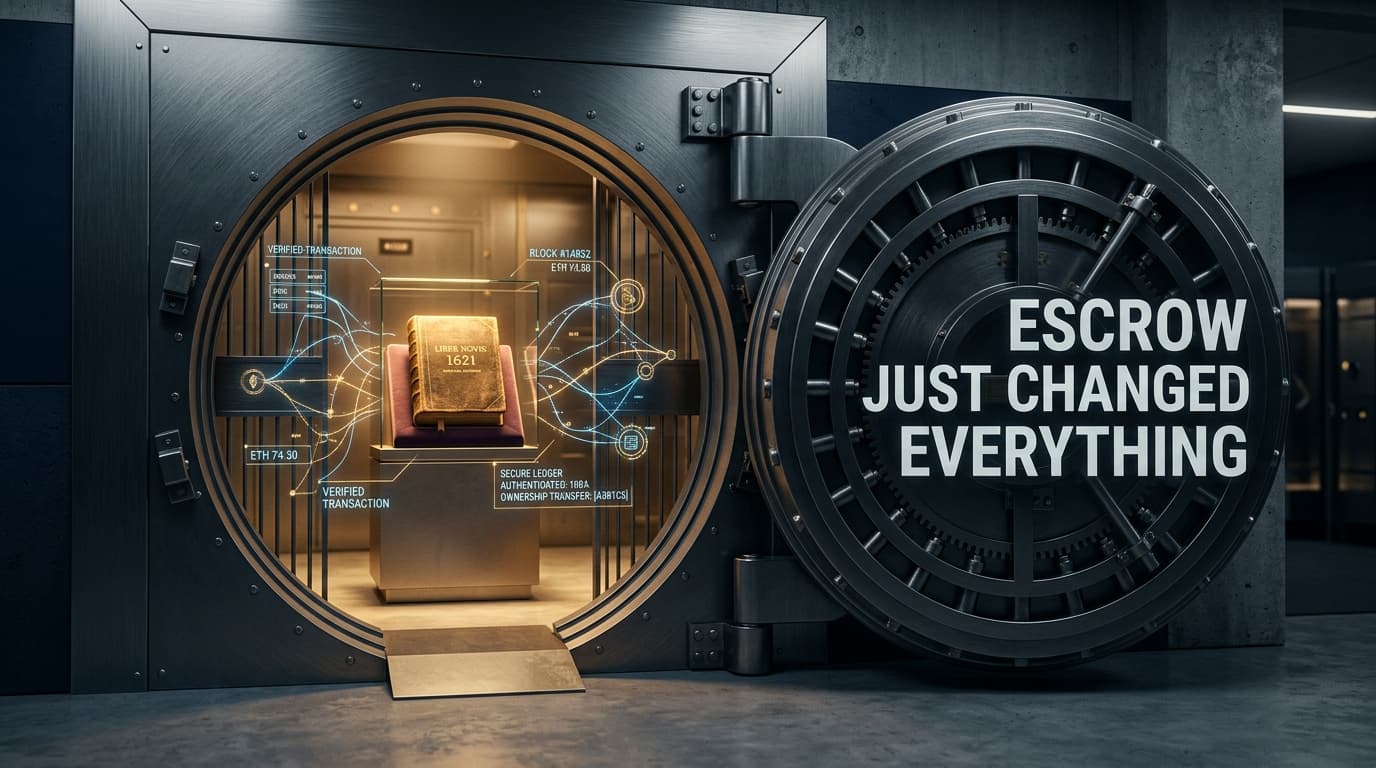
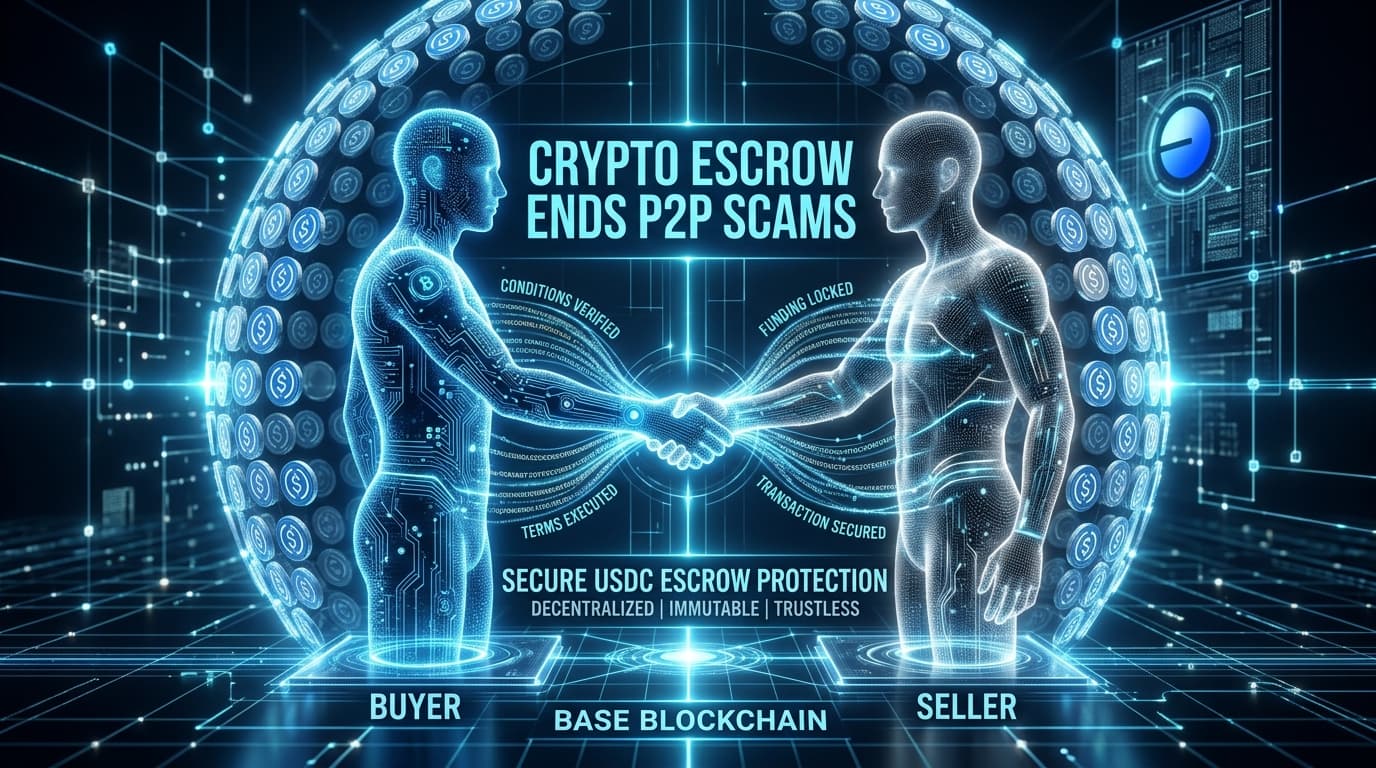
Think of crypto escrow as a digital safety deposit box that only opens when both parties agree. When you buy a laptop from a stranger, your money goes into a smart contract on the blockchain — not to the seller, not to a company's bank account, but into a piece of code that executes automatically based on pre-set rules.
First, you and the seller agree on terms directly: price, delivery timeline, and what happens if there's a problem. The buyer deposits USDC (a dollar-pegged stablecoin) into the escrow smart contract. On networks like Base, this transaction reaches finality in seconds for less than a penny — meaning the payment is permanently recorded and can't be reversed by anyone except through the agreed-upon conditions.
Once funds are locked, the seller knows they'll get paid if they deliver. They ship the laptop or complete the service. When it arrives, you inspect it. If everything's good, you trigger the release function. The smart contract instantly sends the USDC to the seller. If there's an issue, you can dispute — but the money stays locked until resolution.
Compare that to eBay's process: you pay eBay, they hold your money for days, the seller ships, you can open a dispute that takes weeks to resolve, and eBay's algorithm decides who's right. With crypto escrow, the logic is transparent and automated from the start. You're not trusting a company — you're trusting math that executes exactly as written.
Why Base and USDC Deliver Unmatched Security and Speed
When you're trading with strangers, two technical details become incredibly important: how quickly your payment is truly secure, and whether the money you're using holds its value. That's where Base and USDC come together to create a foundation you can actually rely on.
Base is a Layer 2 blockchain built on Ethereum that achieves transaction finality in stages that protect you at each step. According to Base's official documentation, transactions hit "flashblock" finality in about one second — enough for you to safely hand over an item at a meetup. They reach full economic finality in minutes when the data batches settle on Ethereum. Only a single Base block has ever reorged in history, representing 0.0000003% of transactions. Compare that to credit card chargebacks that can happen 30 days later or PayPal disputes that reopen weeks after delivery.
USDC, meanwhile, is a stablecoin backed 1:1 by dollar reserves held in U.S. regulated financial institutions. When Circle launched USDC in 2018, they designed it specifically for marketplace use cases like yours — it doesn't fluctuate like Bitcoin or Ethereum, so you're not gambling on price swings between deposit and release. You can verify every USDC transaction on-chain instantly, and CoinDesk's 2025 blockchain report shows stablecoins now handle over 70% of all crypto transaction volume for exactly this reason.
The real innovation comes when disputes happen. Smart contract escrow can integrate decentralized dispute resolution where real community members review evidence and vote — not corporate employees following rigid policies. This approach, similar to what Zenland's crypto escrow guide describes, ensures fair outcomes based on actual evidence rather than which party spends more on customer service calls.
Secure Your Next Trade: Platforms and Getting Started in 2026
Now that you understand how crypto escrow works technically, let's talk about where this actually happens. Platforms using this technology are emerging, but they build on the same principles: money locked in smart contracts, settlement in stablecoins like USDC, and decentralized dispute resolution.
Fisheez is one such marketplace built on Base that implements SmartShell Escrow. Your funds lock into the smart contract until the agreed-upon timer expires — money releases when the timer ends, not when someone decides to release it, unless both parties agree earlier. This prevents either side from holding funds hostage indefinitely. If there's a dispute, it goes to Peacemakers: real community members who review evidence and vote on outcomes through structured arbitration.
Getting started is simple even if you've never touched crypto before. You sign up with email, deposit funds via Stripe (which converts your dollars to USDC automatically), and create a listing. The buyer pays the service fee — it scales from 8% for items under $50 down to 0.5% for transactions over $10 million — while you as the seller keep 100% of your listing price. Compare that to eBay's 10-15% seller fees and you see why this model is catching on.
The real shift happening in 2026 isn't just about technology — it's about changing who controls the transaction. Instead of trusting Facebook's algorithm or eBay's support team, you're trusting transparent code and community consensus. Your next trade can happen without wondering if you'll get ghosted or chargebacked.