
Community Voting on Charity: Sellers Gain Real Power Over Donations
You donated to disaster relief after the last hurricane, only to discover months later that 85% of your money went to administrative costs and executive salaries. The family who lost everything got maybe fifteen cents of your dollar, while charity executives took home six-figure bonuses. When you tried to track where your money actually went, you hit a wall of vague annual reports and stock photos that could have been taken anywhere.
Every online seller knows the frustration of watching traditional charities swallow donations into bureaucratic black holes. You want to help people directly, but the current system treats you like an ATM instead of a stakeholder. There's no transparency, no accountability, and zero input on who gets helped or how your money gets used. Your hard-earned profits disappear into organizational overhead instead of reaching the people who desperately need assistance.
What if every transaction you made automatically funded real help, but you got to decide who received it? What if the community of sellers and buyers collectively voted on which causes got funded, with complete transparency about where every dollar went? Instead of trusting distant charity boards to make decisions behind closed doors, you'd have direct influence over which single mother gets rent assistance or which community garden gets seed funding.
This is exactly what's happening in seller-driven philanthropy through community voting systems. By the end of this article, you'll understand how platforms are putting donation decisions directly into sellers' hands, creating visible impact while building stronger marketplace communities around shared values and mutual support.
Traditional Charity Pitfalls: Opaque Funds and Middleman Cuts
The charity industry's financial reality is staggering in the wrong direction. Major organizations routinely spend 20-30% of donations on administrative costs, with some nonprofits like Wounded Warrior Project hitting 40% before public scandals forced changes. The American Red Cross faced criticism when only 25% of Haiti earthquake donations directly reached victims, while the rest disappeared into organizational infrastructure and salaries. This isn't exceptional—it's systematic across traditional charitable giving.
Board-driven decision making creates another fundamental disconnect. Charity executives in New York boardrooms decide which communities in rural Texas deserve flood relief, often without understanding local needs or cultural dynamics. When Hurricane Harvey hit, national charities distributed identical emergency kits to areas with completely different requirements—blankets to communities that needed water pumps, canned food to areas without can openers or working stoves. Top-down philanthropy consistently misallocates resources because decision-makers are geographically and economically isolated from recipients.
The donor experience compounds these problems through deliberate opacity. Annual reports showcase carefully curated success stories while burying actual financial breakdowns in dense footnotes. When the American Institute of Philanthropy analyzes major charities, they find consistent patterns: inflated program percentages, misleading expense categorizations, and executive compensation that rivals Fortune 500 companies. Donors have zero recourse when their contributions get mismanaged.
Small business owners and online sellers feel this disconnect most acutely because their donations represent significant percentages of their profits. When you're choosing between reinvesting in inventory or giving to charity, discovering that most of your contribution funded someone else's luxury office lease creates lasting cynicism about organized philanthropy.
How Community Voting Works: Submissions, Seller Tiers, Monthly Impact
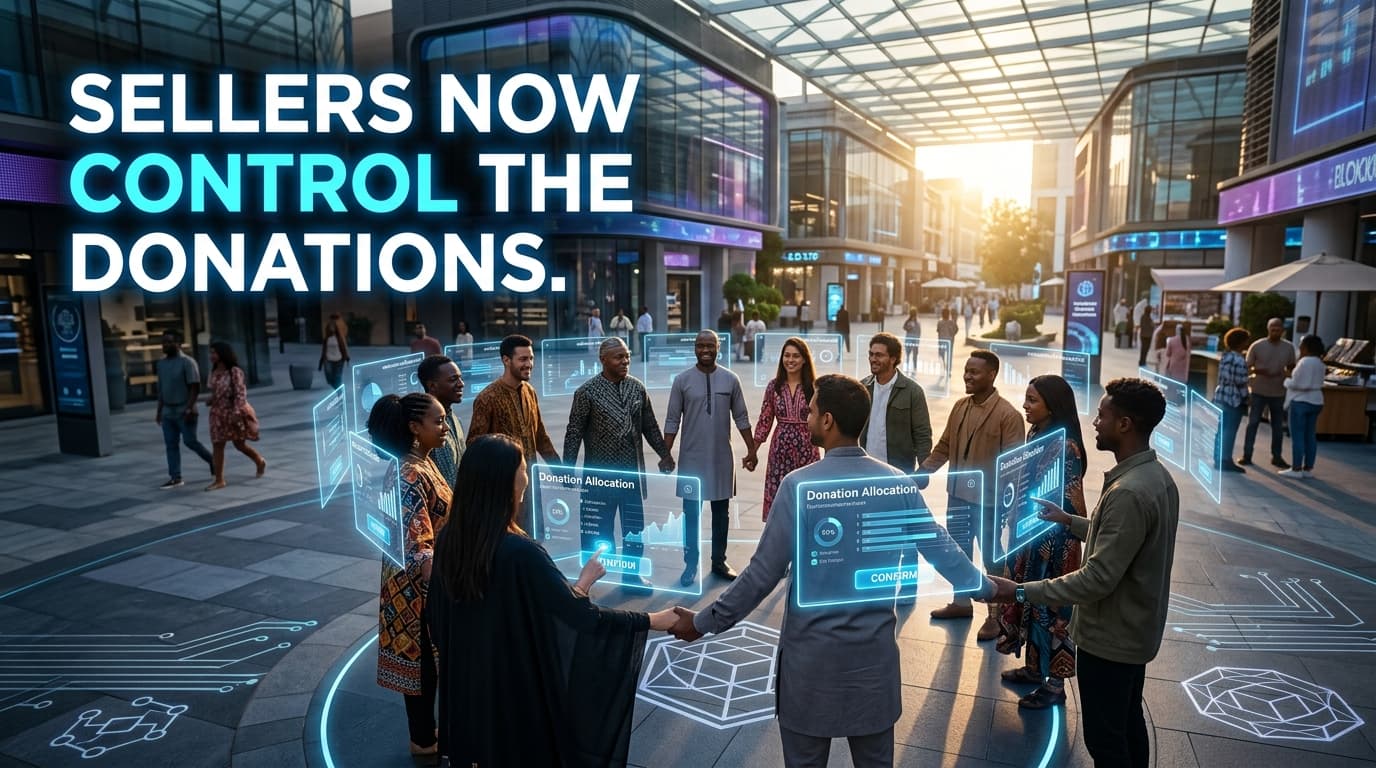
Community-driven philanthropy operates through a transparent three-step process that puts sellers in direct control. Anyone can submit requests for assistance through public platforms, describing genuine financial hardships like medical emergencies, housing crises, or community needs. These submissions get categorized into areas like food insecurity, transportation needs, or disaster relief, creating an organized pipeline of real people seeking help rather than abstract causes competing for attention.
The voting power structure rewards platform participation and investment through tiered systems. Sellers earn voting influence based on their marketplace activity levels, with Shell Tier sellers receiving 1-8 votes depending on their engagement and sales volume. TideTurner NFT holders get enhanced voting power—Seahorse holders cast 2 votes, while Whale NFT owners command 6 votes per decision cycle. This creates a merit-based democracy where the most invested community members have proportionally greater influence over fund allocation.
Monthly voting cycles create predictable impact rhythms that build trust through consistency. Platform revenue automatically allocates 5% to charitable funds, which then get distributed based on community votes across two categories: major giving for substantial causes like disaster relief or education programs, and micro giving for individual emergency needs and local grassroots initiatives. Winners receive direct transfers to verified digital wallets, eliminating intermediary fees and administrative overhead.
The transparency extends beyond just voting to post-distribution tracking. Community members can follow funded projects through completion, seeing exactly how their collective decisions created tangible results. When a single mother receives rent assistance or a community garden gets established, the voting community receives detailed updates showing their democratic philanthropy in action rather than wondering where their influence went.
Why It Matters for Sellers: Empowerment, Rewards, and Steps to Participate
This approach transforms selling from pure profit extraction into community building with measurable social impact. Every transaction you complete automatically contributes to causes you personally chose through democratic voting, creating a direct line between your business success and real-world change. Instead of wondering whether your separate charitable donations actually helped anyone, you see exactly which families received emergency assistance or which local programs got funded because your sales generated the revenue that made it possible.
The reward structure creates powerful incentives for deeper platform engagement. TideTurner NFT holders receive significant fee discounts—Whale NFTs eliminate transaction fees entirely while providing 6x voting power over charitable distributions. This means your most successful sellers pay less in platform costs while gaining more influence over community impact, creating a virtuous cycle where platform growth directly funds more charitable assistance chosen by the people generating that growth.
Getting started requires only basic platform participation. Fisheez sellers automatically earn Shell Tier voting power based on their transaction volume and community engagement, starting with one vote per funding cycle and scaling up to eight votes for the most active participants. You can nominate causes directly through submission forms, whether for personal hardships or community initiatives you've discovered in your local area.
The verification system rewards real-world participation beyond just voting. Sellers who participate in funded community cleanups, food distributions, or other charitable activities can verify their involvement to unlock additional NFT rewards and platform perks. This creates accountability loops where digital voting leads to physical community engagement, building stronger local networks while generating trackable charitable impact that goes far beyond traditional marketplace transactions.