
Disputes in Decentralized Marketplaces: Protecting Small Sellers from Unfair Resolutions
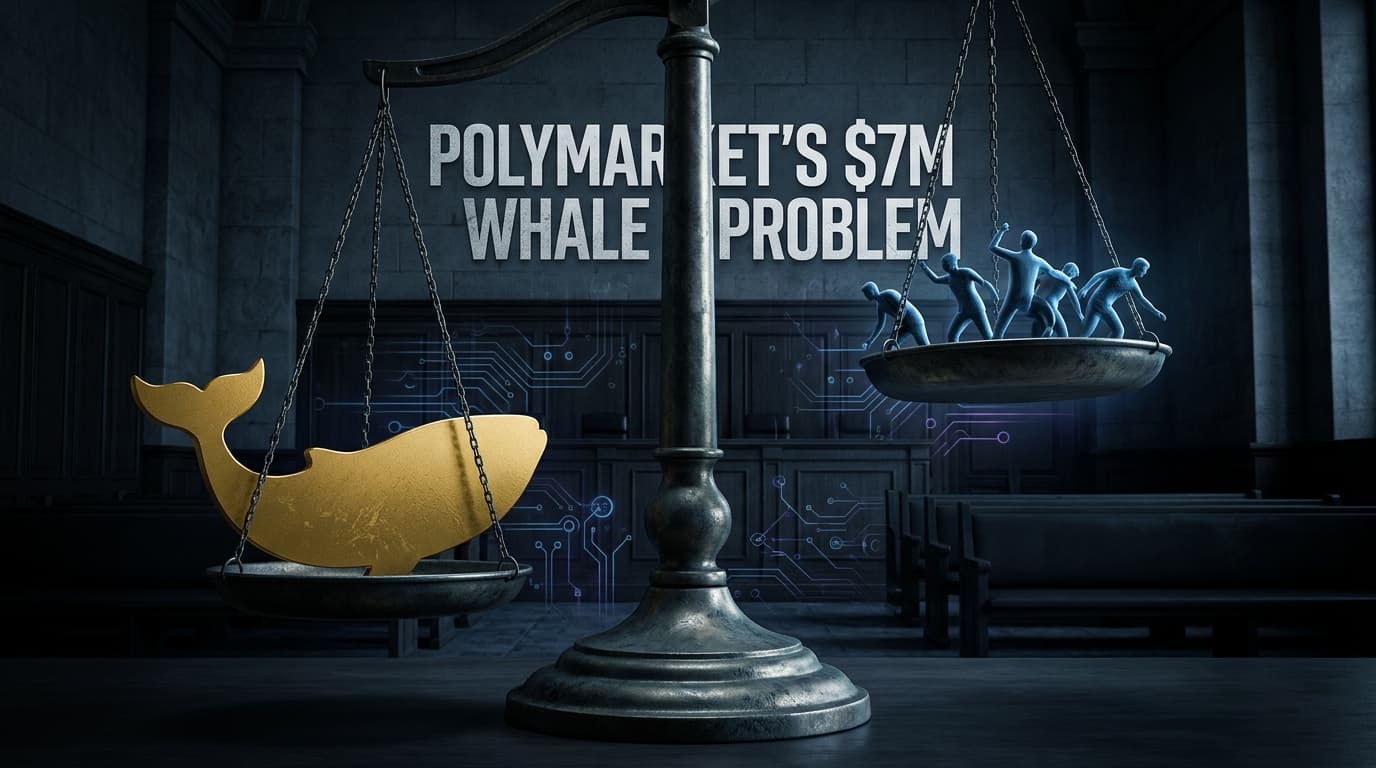
Decentralized marketplace disputes often disadvantage small sellers. The Polymarket UMA dispute over a $7 million Ukraine election bet exemplifies this. UMA's oracle resolved it controversially, siding with large holders amid community uproar. Smaller participants felt governance favored whales, undermining trust.
Metaverses and NFT platforms amplify issues. Small creators face IP theft, non-delivery, or refund scams resolved via token-weighted DAO votes. Decentralized governance disadvantages small sellers, as voting power concentrates among top holders.
Cross-border e-commerce blockchain challenges persist. Artisans in fair trade supply chains, like Bolivian quinoa producers, endure intermediary biases without recourse. Jurisdictional gaps expose them to fraudulent claims.
Common pain points include:
- Whale-dominated voting skewing outcomes against minorities.
- Absent verifiable evidence, enabling aggressors.
- Costly, slow processes excluding under-resourced sellers.
- Opaque resolutions eroding platform credibility.
Blockchain dispute resolution counters these. UMA oracle dispute resolution employs optimistic verification: transactions proceed unless disputed, with staked incentives for truthful challenges. Smart contracts automate escrows, releasing on consensus.
Blockchain fair delivery for digital assets ensures atomic exchanges sans intermediaries. Transparent supply chain governance via blockchain traceability verifies origins, reducing conflicts in fair trade networks.
Protecting small producers with blockchain integrates hybrid models: DAO votes plus expert arbitration. Platforms like Polymarket can refine mechanisms for equitable decentralized marketplace disputes.
Result? Fair outcomes empower independents, building sustainable ecosystems from prediction markets to global trade.
What is Blockchain-Based Dispute Resolution?
Blockchain-based dispute resolution leverages smart contracts and decentralized oracles to handle conflicts transparently without central authorities. Core to this is the UMA oracle dispute resolution system, which powers platforms like Polymarket.
UMA oracles provide external data to smart contracts. Transactions proceed optimistically—assuming validity—unless challenged. Disputers stake tokens on their proposal. If contested, UMA token holders vote, with rewards for correct positions and slashing for incorrect ones. This incentivizes honesty in UMA oracle dispute resolution.
Optimistic rollups extend this efficiency. Disputes settle off-chain first, escalating to on-chain only if needed, reducing costs for small participants.
Smart contract arbitration automates resolutions. Escrow holds funds until conditions met, like delivery proof via blockchain traceability. In fair trade blockchain supply chain, oracles verify product origins from farm to buyer.
Key components include:
- Optimistic verification: Default trust with bonded challenges.
- Token-curated registries: Communities curate trusted data providers.
- Hybrid models: DAO votes combined with expert juries for complex cases.
In decentralized marketplace disputes, these enable small sellers to challenge whales equally. Cross-border e-commerce blockchain uses them for fair trade without intermediaries. Blockchain fair delivery digital assets protocols ensure atomic swaps, preventing non-delivery scams.
Protecting small producers blockchain relies on transparent supply chain governance. Immutable logs prove compliance, shifting power from biased courts to verifiable facts.
This framework delivers rapid, cost-effective resolutions, fostering trust in prediction markets and global trade.
Real-World Example: Polymarket's $7M Ukraine Bet Controversy
In March 2025, the Polymarket UMA dispute erupted over a $7 million prediction market bet on Ukraine's Zelenskyy appearing in a video. Traders bet heavily on "Yes," but UMA's decentralized oracle controversially resolved it "No," citing technicalities in video verification.
Whales dominated: top holders, controlling vast UMA tokens, proposed and voted for "No," securing payouts while small bettors lost millions. Community backlash exploded on social media and Discord, accusing UMA of whale capture in decentralized governance small sellers face daily.
Polymarket users decried the Polymarket UMA dispute as rigged, with smaller participants—often retail traders—voiceless against token-weighted voting. Governance skewed toward liquidity providers, mirroring NFT marketplace disputes where creators lose to bulk buyers.
Key events:
- Bet amassed $7M volume; "Yes" shares peaked at 98%.
- Dispute filed; whales staked aggressively for "No."
- UMA voters ratified "No," sparking forums revolt.
Lessons for decentralized marketplace disputes: Token concentration amplifies inequality. Small sellers need quadratic voting or soulbound tokens to balance influence. Transparent supply chain governance principles—immutable audit trails—could verify oracle data.
The Polymarket UMA dispute underscores UMA oracle dispute resolution flaws: optimistic mechanisms falter without diverse participation. Reforms like minimum dispute bonds protect minorities, ensuring fair trade blockchain supply chain parallels where traceability empowers producers.
Outcome? Polymarket volumes dipped temporarily, but highlighted blockchain's evolution toward equitable decentralized governance small sellers demand.
Blockchain in Cross-Border E-Commerce and Fair Trade Supply Chains
Blockchain revolutionizes cross-border e-commerce blockchain by providing immutable transparency. In fair trade blockchain supply chain contexts, it bridges geographical gaps, directly connecting Global South producers to Northern consumers.
A Brill study examines Bolivian quinoa real production. Producers store harvests securely; labs test for organics. Blockchain digitizes this, uploading seals, transport logs, and factory processes to a semi-private ledger. Consumers scan QR codes for full provenance, creating "long-short" supply chains—geographically extended yet intimately linked.
Blockchain traceability fair trade verifies every step: soil prep, harvest, certification, milling. This protects small producers blockchain from counterfeit claims or price disputes, as data remains tamper-proof.
ResearchGate analysis on cross-border e-commerce blockchain governance stresses dispute automation. Smart contracts escrow payments, releasing on oracle-confirmed delivery, akin to UMA oracle dispute resolution.
ScienceDirect proposes blockchain fair delivery digital assets extended to physical goods: atomic swaps ensure simultaneous exchange, eliminating non-delivery risks for artisans.
Transparent supply chain governance fosters trust. Fair trade networks like ANAPQUI gain efficiency; paper trails become digital twins, slashing retrieval time from weeks to seconds.
For decentralized marketplace disputes, this model scales: metaverse sellers prove asset origins, countering IP theft.
Key advantages:
- Verifiable fair wages and origins build consumer loyalty.
- Reduces intermediary biases, empowering smallholders.
- Hybrid DAOs arbitrate edge cases democratically.
By mirroring prediction market oracles, fair trade blockchain supply chain ensures equitable resolutions, safeguarding independents globally.
Step-by-Step Guide to Fair Blockchain Dispute Mechanisms
Implement fair mechanisms starting with optimistic oracles for decentralized marketplace disputes.
Step 1: Integrate UMA Oracle for Optimistic Verification
Deploy a smart contract using UMA oracle dispute resolution. Transactions execute by default. Any party stakes tokens to dispute within a window. If unchallenged, it settles. Contested cases escalate to UMA voters, who stake on outcomes. Correct voters earn rewards; losers get slashed. This handles UMA oracle dispute resolution efficiently for small sellers.
Step 2: Set Up Escrow and Atomic Delivery
Use smart contracts for escrow in cross-border e-commerce blockchain. Funds lock until oracles confirm delivery via blockchain traceability fair trade proofs. For digital assets, enable blockchain fair delivery digital assets with atomic swaps—no release without fulfillment.
Step 3: Establish DAO Voting with Quadratic Mechanisms
Create a DAO for governance. Use quadratic voting to mitigate whale dominance in decentralized governance small sellers suffer. Token holders propose resolutions; community votes proportionally to squared stakes, empowering minorities.
Step 4: Layer Hybrid Arbitration
For ambiguities, invoke off-chain experts via Kleros-like juries. Randomly selected arbitrators review evidence from transparent supply chain governance logs. On-chain enforcement follows majority decisions.
Step 5: Monitor and Iterate with Analytics
Track dispute rates, resolution times, and participation. Adjust bond sizes or voter incentives based on data. Integrate fair trade blockchain supply chain traceability for evidentiary strength.
Step 6: Test in Sandbox
Simulate disputes in testnets, mimicking Polymarket UMA dispute scenarios. Refine before mainnet.
This blueprint protects small producers blockchain-wide, ensuring transparent, equitable resolutions.
Challenges, Best Practices, and the Road Ahead for Small Sellers
Blockchain dispute systems offer promise but pose challenges for decentralized governance small sellers.
Primary pitfalls include oracle manipulation risks, evident in the Polymarket UMA dispute's subjective resolution that favored whales. Data immutability prevents easy corrections for honest mistakes, potentially entrenching errors. Surging gas fees on Ethereum make small disputes uneconomical, sidelining micro-transactions common in fair trade blockchain supply chain. Regulatory fragmentation across jurisdictions hampers cross-border e-commerce blockchain enforcement, with unclear smart contract legality.
Scalability strains emerge during dispute surges, clogging networks. Low technical literacy among small producers blocks UMA oracle dispute resolution adoption.
Best practices address these effectively:
- Deploy quadratic voting or delegation to dilute whale power in decentralized governance small sellers navigate.
- Combine multiple oracles with zero-knowledge proofs for ironclad evidence from blockchain traceability fair trade.
- Run subsidized low-volume pilots to build experience without high costs.
- Offer plug-and-play toolkits and tutorials for transparent supply chain governance integration.
- Adopt hybrid arbitration: on-chain automation for routine cases, expert panels for complexities in protecting small producers blockchain.
Troubleshooting: Implement sybil resistance via proof-of-humanity. Regular security audits. Incentivize broad voter participation.
Looking ahead, Layer 2 solutions like optimistic rollups will minimize fees, accelerating UMA oracle dispute resolution ubiquity. AI-driven data validation promises unbiased oracles. Emerging global standards could standardize fair trade blockchain supply chain protocols.
These developments position decentralized governance small sellers for dominance in fair, scalable marketplaces encompassing metaverses and international trade.