
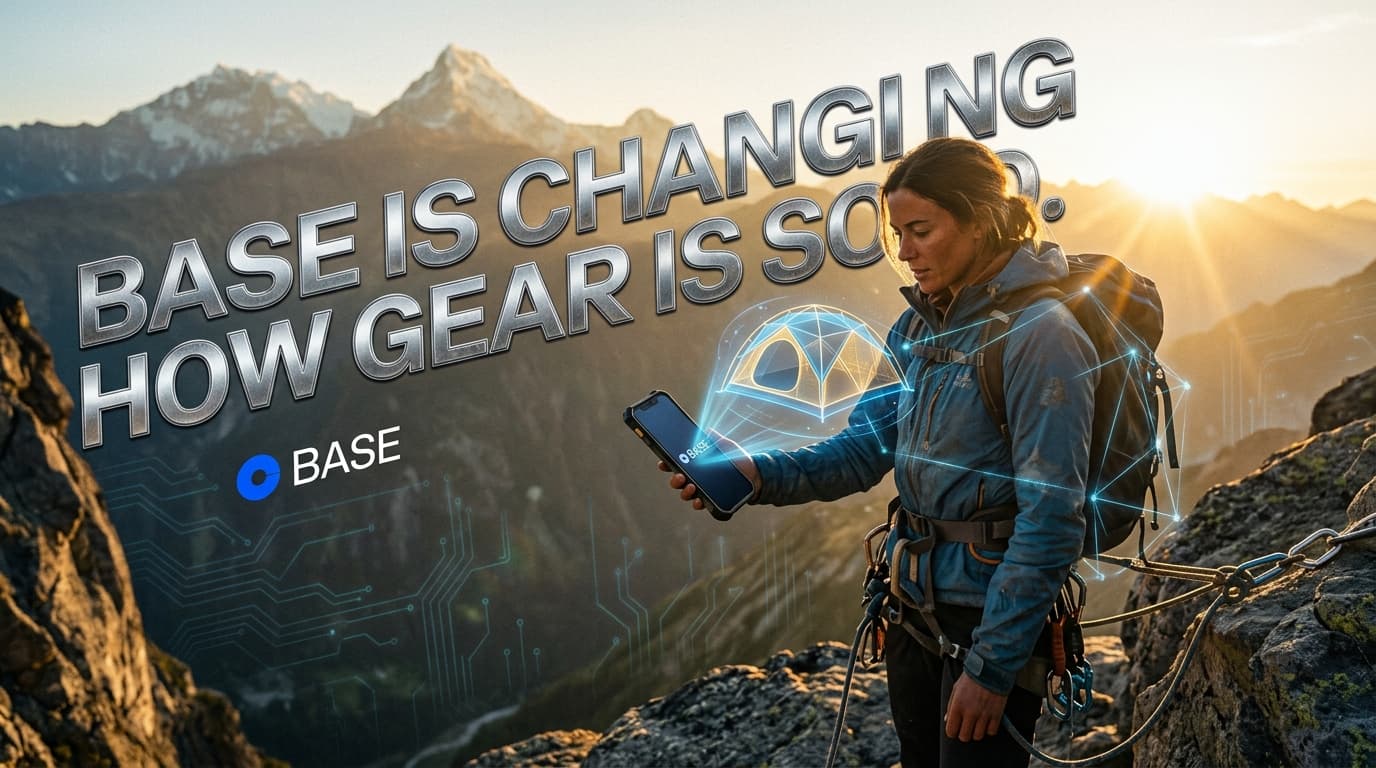

BASE Hits $47 Billion in DApp Volume as Outdoor Gear Finds a Blockchain Home
Coinbase's Layer-2 network BASE processed $16 billion in decentralized application volume in a single 30-day window in August 2025, hit a 70% surge in NFT trading volume to $47.67 million, and now ranks third globally for NFT activity. Transaction fees on the network run as low as $0.08, compared with Ethereum's historical range of $50 to $100 per transaction. Those numbers matter to anyone tracking where secondhand commerce is heading, because they describe the infrastructure conditions that make blockchain-based gear listings economically viable for the first time.
The broader P2P resale market has been expanding fast regardless of chain activity. GearTrade, one of the largest dedicated outdoor gear resale platforms, reported 80% growth in 2024. SidelineSwap, which focuses on sports equipment, now counts over 2 million participants and has attracted investment from eBay Ventures. According to a 2025 OfferUp report, 75% of resale activity does not occur in fashion categories, meaning the bulky, high-value physical goods market, including tents, harnesses, and climbing hardware, is already the majority of what changes hands in secondhand commerce.
The Physical Goods Tokenization Wave
The headline story for 2025 is not just resale volume; it is the rapid move toward tokenizing physical goods on blockchain infrastructure. Courtyard.io, a platform that vaults physical collectibles and issues corresponding NFTs, grew its monthly sales volume from $10.5 million in December 2024 to $56.4 million in March 2025, a roughly 440% increase in three months. The model is straightforward: items are submitted to a vault, a non-fungible token is minted on-chain representing ownership, and buyers trade those tokens on secondary markets without touching the physical object until they choose to redeem it.
This approach solves a specific problem in high-value physical goods markets: verification and trust. A $500 tent or a premium climbing harness carries real resale risk. Buyers cannot inspect remotely, and platforms that rely on reputation scores alone expose both sides to disputes. When ownership and condition verification are built into the transaction infrastructure through smart contracts and escrow mechanics, the friction that has historically kept expensive gear on garage shelves instead of resale markets starts to come down.
What the BASE Data Actually Shows
BASE's growth trajectory is relevant context for any gear marketplace built on the network. The chain's Total Value Secured reached $16.28 billion in Q2 2025, growing at a 42% quarter-over-quarter rate. Daily transaction counts have surpassed 4.2 million, placing BASE ahead of both Arbitrum and Ethereum mainnet on that metric. Cumulative users across the network have crossed 200 million, a figure that reflects Coinbase's direct pipeline of onboarded retail participants.
For adventure hobbyists watching market signals, those numbers translate into liquidity. A marketplace requires buyers and sellers to find each other efficiently; a network processing millions of daily transactions at sub-dollar fees is a materially different environment than one where every action costs $50 in gas. The Dencun upgrade (EIP-4844), implemented in early 2024, reduced BASE gas fees by 90 to 98%, which is when blockchain-based listings for mid-range physical goods stopped being economically irrational.
The Secondhand Outdoor Market Is Not Waiting for Crypto
Traditional resale platforms are not standing still. The overall secondhand market is projected to reach $306.5 billion by 2030, according to OfferUp's 2025 Recommerce Report, growing at roughly 12.5% annually through 2029. New outdoor gear sales tell a contrasting story: the U.S. outdoor retail market totaled $28 billion in 2024, growing just 1% after a 3% decline in 2023, according to the Outdoor Industry Association. Equipment specifically declined 1.3% to $5.6 billion in new sales, even as footwear grew 4.3% on a 10.3% price-per-unit increase.
That pricing pressure is a direct driver of secondhand volume. When the cost of new gear rises faster than consumer budgets, buyers migrate to resale channels. The 81% of resale buyers that eBay identifies as primarily cost-motivated are making rational economic choices, and platforms that reduce friction in that transaction will capture the migration.
Spotting the Entry Points: A Buyer's Framework
For market-oriented outdoor enthusiasts, the data suggests a few actionable patterns. First, gear categories with significant unit price increases in the new market create the strongest resale demand. Footwear with a 10.3% price jump is one example. High-end technical equipment, including climbing systems, avalanche safety gear, and load-bearing packs with retail prices in the $300 to $800 range, represent segments where secondhand pricing inefficiency is highest and therefore where informed buyers find the clearest opportunities.
Second, platform infrastructure matters for pricing accuracy. Centralized resale platforms with large user bases tend toward efficient pricing because competition among sellers narrows spreads. GearTrade's 80% growth in 2024 suggests rapid inflow of inventory alongside demand, which typically creates short windows of underpricing as sellers list before price discovery stabilizes. Watching volume spikes on category listings is a practical signal.
Third, blockchain-native platforms add a layer of transaction transparency that traditional resale sites do not offer. Smart contract escrow, where buyer funds are held in USDC until deal conditions are satisfied, removes counterparty risk from high-value transactions. Platforms like Fisheez, built on BASE, use this mechanic through their SmartShell Escrow system, which locks funds at the point of payment and releases them only when the transaction completes to the buyer's satisfaction. For a $500 tent purchase from an unknown seller, that structural guarantee changes the risk calculus meaningfully compared to a standard PayPal-style transfer.
The Fee Structure Debate
One underreported angle in blockchain marketplace growth is fee compression. Traditional resale platforms typically charge sellers between 10% and 15% of transaction value. For a $500 harness, that represents $50 to $75 extracted from the seller, which gets priced into listing costs and ultimately paid by buyers through inflated asking prices.
Blockchain-based marketplaces built on low-fee infrastructure change that math. When gas costs $0.08 and smart contract execution replaces manual dispute resolution, the economic model shifts. Some platforms on BASE have moved to buyer-paid fee structures, which keeps seller incentives clean and may attract more inventory as a result. More inventory and more competitive pricing is the outcome that benefits buyers tracking market opportunities.
What This Infrastructure Shift Means for the Industry
The convergence of BASE's low-cost infrastructure, rapid growth in physical goods tokenization, and a secondhand outdoor market that expanded 80% on leading platforms in a single year points toward a structural change rather than a speculative cycle. The key distinction is utility: the growth in platforms like Courtyard.io is driven by collectors and resellers executing real transactions on physical goods, not by speculative token trading.
For the outdoor gear market specifically, the relevance is clearest in the high-value equipment segment. A $56.4 million monthly tokenized collectibles market demonstrates that buyers will trust blockchain-based ownership records for physical items when the infrastructure supports verification and custody. Extending that model to technical outdoor gear, where provenance and condition history matter significantly for safety-critical equipment, is a logical next step that several projects are already building toward. The infrastructure is ready; the category is next.