
7 in 10 Homeowners Who Engage a Bad Contractor Lose Money
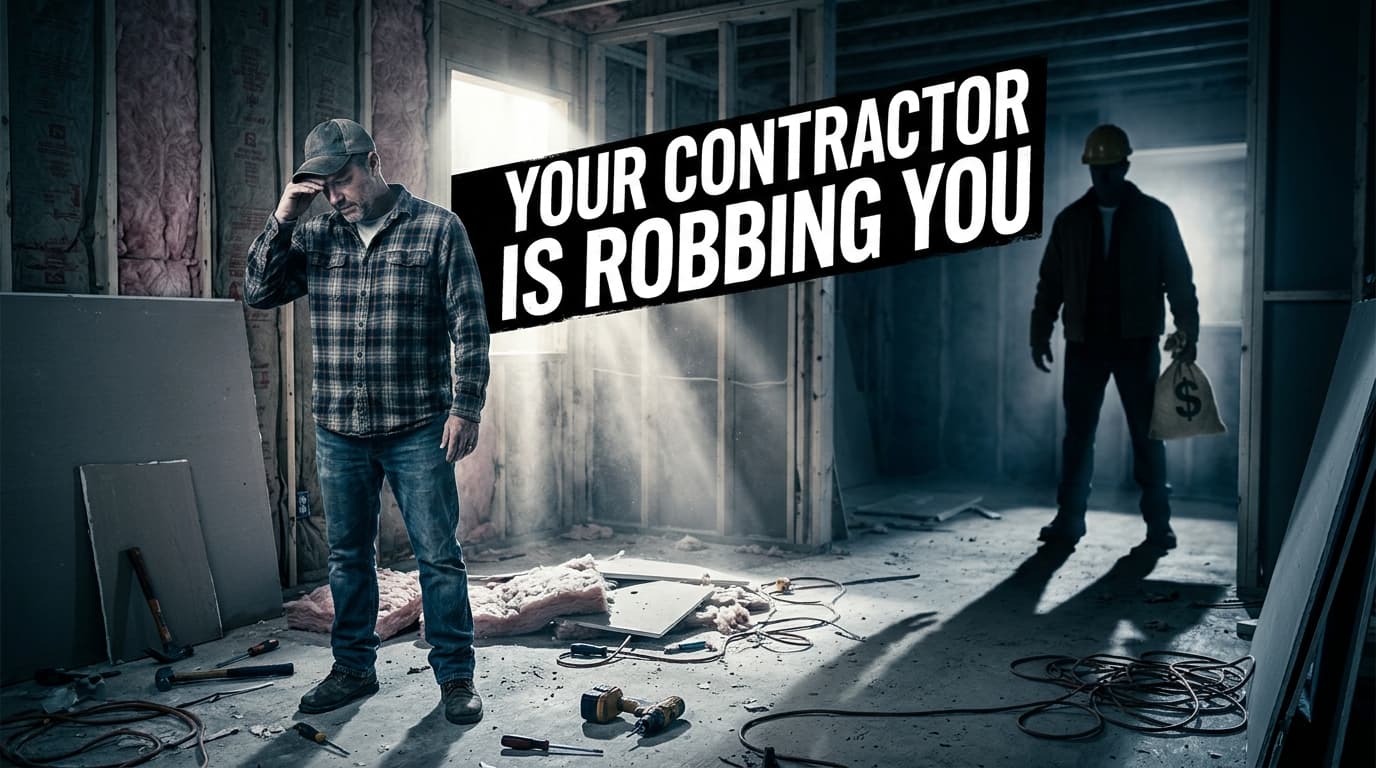
Seven out of ten. That is not a worst-case scenario pulled from a horror story forum. That is the BBB's documented susceptibility rate for home improvement scams: 70.1% of people who engage with a bad contractor lose money. Not a coin flip. Not a small risk you manage with good instincts. A loaded gun pointed at your renovation budget, and the odds favor the person holding it.
The FTC recorded nearly 82,000 fraud reports in the home improvement, repair, and solar category in 2024 alone. The median dollar loss sits at $1,800, which sounds manageable until you understand that medians are dragged down by small losses and say nothing about the ceiling. One South Florida homeowner paid over $75,000 to a contractor who vanished before a single cubic foot of foundation was poured. No escrow. No recourse. Just a check register and a vacant lot. For anyone planning an $8,000 basement remodel, that number should reframe what "doing your homework" actually means. The problem is not that homeowners are careless. The problem is that neither the local contractor nor the national chain comes with built-in payment protection, and that structural gap is where the money disappears.
Local Contractor vs. National Chain: What Each Actually Gives You
The local-versus-national debate is real, and it is worth having honestly. A local contractor typically brings genuine community accountability, direct knowledge of your municipality's building codes, and a personal reputation that lives or dies by word of mouth in a ten-mile radius. Pricing is often more flexible, and you are usually talking to the person who will actually swing the hammer. Those are real advantages, not marketing copy.
National chains offer something different: more standardized processes, documented procedures, and the institutional weight of a brand that has legal and reputational exposure across multiple markets. The tradeoff is less flexibility, less direct local accountability, and a customer service layer that can insulate you from the person actually doing the work. Neither path is inherently safer. The Denver couple whose general contractor now faces criminal charges, whose home was deemed unlivable by the city after a stop-work order, hired locally. The South Florida homeowner who lost $75,000 before a foundation was poured was not failed by a national chain's bureaucracy. Both disasters share the same root cause.
What the BBB data makes uncomfortably clear is that in-person contact carries a 73.2% susceptibility rate when it results in a monetary loss. The contractor you meet face to face, shake hands with, and invite into your home for an estimate is nearly as dangerous a trust signal as a social media ad. For anyone weighing basement remodeling service hiring trust decisions, the warm handshake is not a safety net.
The Real Pattern Behind Every Botched Remodel
Strip away the details and every botched remodel story has the same skeleton. The South Florida homeowner had no escrow, so when the contractor vanished, the money went with him and the legal system offered nothing but expensive sympathy. The Denver couple had no structural payment controls, so work proceeded, corners were cut, the city condemned the construction, and criminal charges became the only available remedy after the fact. A third scenario from Build Safe Escrow's case files is less dramatic but equally instructive: a couple's remodel stalled halfway through because multiple change orders and loose payment management drained the budget before the project was done. No fraud. No criminal charges. Just a half-finished basement and an empty account.
That third case matters because it removes the "I would have spotted a scammer" defense. A legitimate contractor with good intentions can still financially ruin a project when there is no mechanism controlling how money flows against completed work. The BBB's engagement data sharpens this point further: 27.5% of people who lost money had been in a relationship with a bad contractor for more than a week, while 65.8% of those who did not lose money cut contact within 24 hours. The longer you stay in a bad situation without structural protection, the more it costs you. Escrow does not just protect you from fraud; it shortens the window in which any payment problem can compound.
How Milestone Escrow Changes the Math
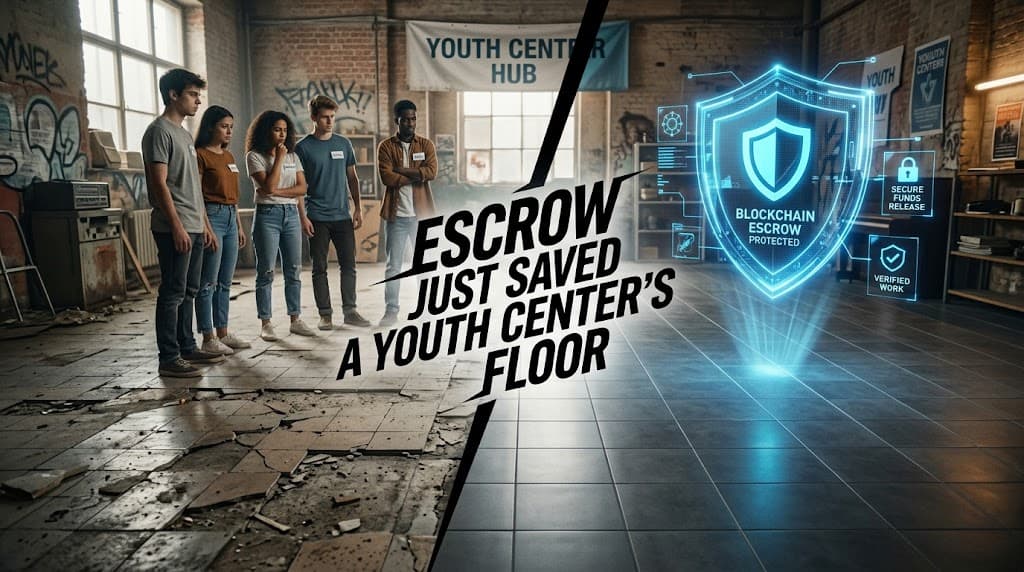
Milestone escrow is not a complicated concept. The homeowner deposits the full project budget with a neutral third party. The contractor cannot touch that money until specific, verified work is complete. Framing done: one draw releases. Plumbing and electrical rough-ins complete: the next draw releases. Final walkthrough approved: the remainder follows. Build Safe Escrow, which has been doing construction-specific escrow management for over ten years and describes itself as the nation's first escrow company dedicated exclusively to the construction and renovation industry, frames this not as an extra cost but as essential protection. Their language is precise: escrow creates "transparency, accountability, and trust from day one" for both parties.
That framing matters because contractors benefit too. A legitimate contractor working under milestone escrow never has to chase payment. The rules are set before the first nail goes in, and everyone knows them. The power dynamic shifts from "trust me" to "here is the verified work, here is the release." For basement remodeling service hiring trust, this is the structural fix that makes the local-versus-national debate secondary. It works regardless of who you hire, because it removes the payment layer as a point of failure entirely.
Vetting Before You Sign: The Verification Layer That Saves $43 Million a Year
Escrow protects you after you hire. Vetting protects you before. In 2024, BBB Scam Tracker drew 2.4 million visitors, and 30.6% of them reported that using it helped them avoid losing money. The estimated total in losses avoided: $43 million, based on a median savings of $130 per person. That is not a rounding error. That is a verification tool doing exactly what it promises.
The BBB's Restoring Trust program takes this further by connecting fraud victims with contractors who have demonstrated integrity. In its first year, the program completed six projects across four states, with a goal of ten in 2026. Chris Coleman, owner of A Perfect Plumber, donated $13,000 to $14,000 in labor for the Denver couple's recovery. Meghan Conradt, Director of the BBB Charitable Foundation, described the program's origin simply: connecting people who lost trust in contractors with contractors who genuinely want to give back. That is a small program with a large signal. Vetted, integrity-driven contractors exist, and finding them before you sign is the first layer of protection. Escrow is the second layer, the one that works even when vetting misses something.
Two groups worth naming specifically: older homeowners and veterans appear in the BBB's top three most-targeted demographics for home improvement scams. If you are in either group, or if you are helping someone who is, the baseline risk is higher and the case for both vetting and escrow is stronger.
For Your $8k Remodel: A Payment Structure That Protects You Either Way
Here is what the research actually tells you to do. Vet your contractor first, local or national, using BBB Scam Tracker and the Restoring Trust network. Check licenses, check references, and check how they respond when you ask about payment structure. A contractor who resists milestone payments is telling you something important.
Then protect the payment itself with escrow, regardless of who you hire. For an $8,000 basement remodel, Fisheez SmartShell is built for exactly this kind of transaction. It holds funds in USDC on the BASE blockchain in a smart contract, released only when milestones are met, a timer expires, or a dispute is resolved. Milestone-based nested contracts mirror the draw model that Build Safe Escrow describes: work complete, funds release, everyone moves forward with clarity. The buyer fee on an $8,000 project lands well below 8%, a fraction of what you stand to lose without any protection. Sellers pay nothing.
If something goes sideways, Fisheez's Peacemaker dispute resolution connects you with community-trained volunteer arbitrators who are not paid per dispute and have no financial incentive to favor either side. That matters because the alternative, without escrow, is lawyers, which cost more than the dispute and take longer than the remodel. Fisheez is also a Public Benefit Corporation with the Fishlanthropy Foundation, a separate 501(c)(3) that receives 5% of Fisheez revenue, with NFT holders voting on how those funds are allocated. Using a platform with that kind of structural accountability baked in means your transaction is part of something larger than a single job.
The 70.1% susceptibility rate is not going to change because you hired someone local, or because you chose a national brand, or because you read reviews carefully. It changes when the payment structure removes the opportunity for harm. That is the one fix that actually works for basement remodeling service hiring trust, and it is available right now, before you sign anything.