
$12.5 Billion Lost to Fraud in 2024: Why Smart Contracts Are Moving Into Family Marketplaces
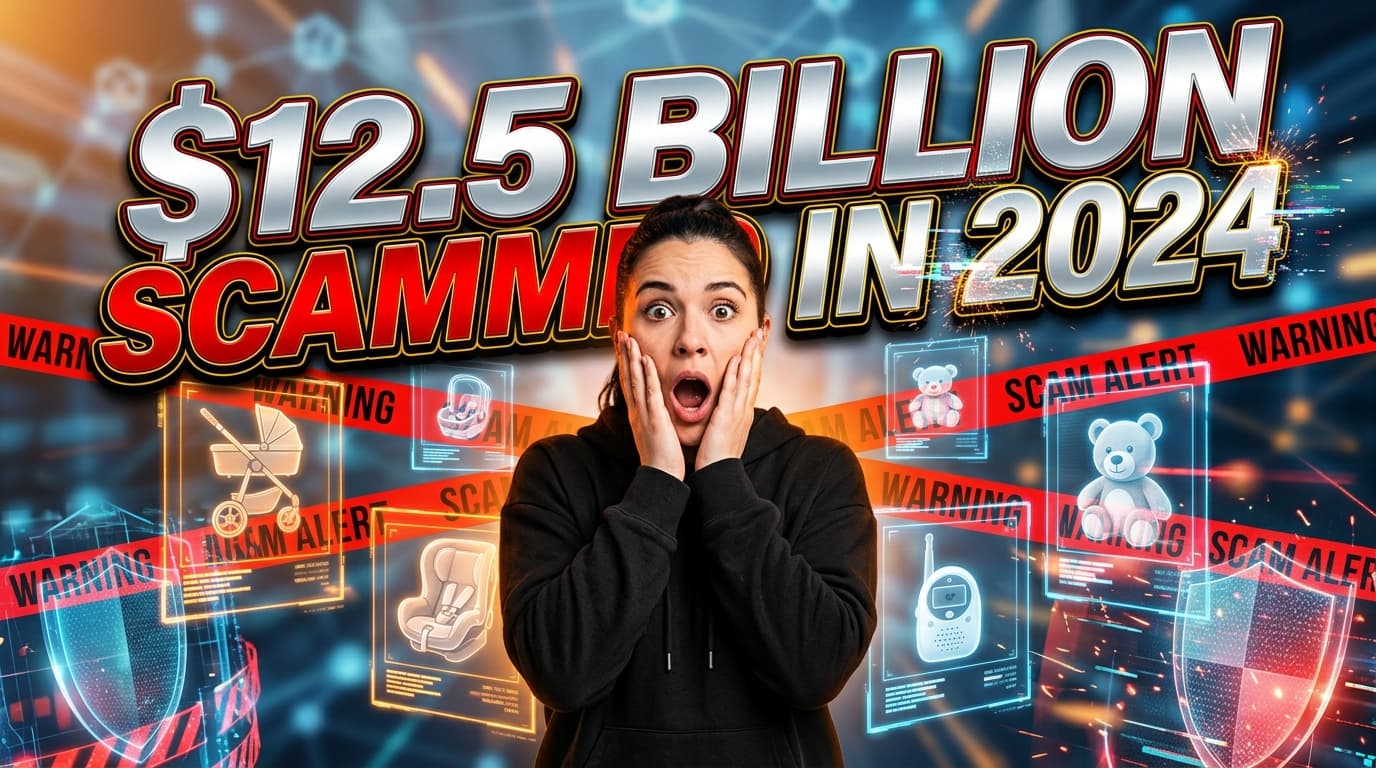
American consumers reported losing $12.5 billion to fraud in 2024, a 25% jump over the prior year, according to the Federal Trade Commission. The number of reports held roughly steady at 2.6 million, but the percentage of people who actually lost money when they filed a complaint surged from 27% in 2023 to 38% in 2024. Scammers are not getting more numerous; they are getting more effective. Online channels now account for nearly 70% of all fraud reports, and peer-to-peer secondhand markets, the places where parents buy strollers, cribs, and car seats to stretch a tight budget, sit squarely in that danger zone.
The story playing out in family marketplaces is a microcosm of a broader technological shift. Smart contracts on blockchain networks are moving beyond institutional finance into the everyday transactions that ordinary buyers and sellers complete on their phones. The technology promises something traditional payment rails have never delivered: a trustless exchange where no one can walk off with the money before the deal is verified.
The $350 Car Seat and the Problem It Represents
Consider a composite case that reflects dozens of real transactions now happening on blockchain-enabled platforms. A single mother, shopping on a peer-to-peer marketplace, finds a convertible car seat listed for $350, roughly half the retail price of a comparable new model. The seller looks legitimate. The photos appear genuine. The description checks out. But she has been burned before on Venmo transactions that ended with the seller going silent after payment cleared.
This time, the transaction runs through a smart contract escrow. She transfers $350 in USDC into the contract. The funds lock. The seller ships. She inspects the seat, confirms it matches the listing, and the contract releases payment automatically. If the seat never arrives or arrives misrepresented, the locked funds do not go anywhere until the dispute is resolved. She gets her money back; the fraudulent seller gets nothing. The nightmare scenario, which plays out thousands of times a week in conventional P2P transactions, simply does not happen.
That scenario is no longer theoretical. It describes the mechanics now available on BASE-network platforms serving consumer marketplaces, and the volume of such transactions is rising.
Why Baby Gear Carries Unusual Financial and Safety Risk
The used baby gear market is not a minor niche. Parents buying secondhand face two compounding risks that do not apply in most P2P categories. The first is the standard fraud risk: pay, never receive. The Better Business Bureau found online shopping fraud reports surged more than 125% year-over-year, with a susceptibility rate reaching 87% in 2024, meaning that when consumers encountered these scams, the overwhelming majority lost actual money.
The second risk is more specific to baby products: counterfeit and recalled gear that passes for legitimate through the secondhand channel. Counterfeit car seats that circulate through online listings lack the crash-performance certifications, buckle-strength standards, and labeling requirements that every legal U.S. car seat must carry. A product that fails during a collision does not generate a fraud report to the FTC; it generates something far worse. Investigative reporting from multiple local news outlets has documented scammers operating sophisticated listing schemes that substitute substandard or counterfeit seats into otherwise credible-looking product pages.
Smart contract escrow addresses the financial fraud piece of this directly. The product description, condition, and photos attached to an on-chain listing become part of the documented record of the transaction. Disputes resolved against that record give buyers a structured mechanism for recovery that a Venmo "goods and services" claim or a Facebook Marketplace complaint does not reliably provide.
How the Escrow Mechanism Actually Works
The mechanics of a smart contract escrow are straightforward, even if the underlying cryptography is not. When a buyer agrees to a purchase, they transfer the payment into a smart contract deployed on the blockchain. The contract holds those funds according to rules written into the code: release on buyer confirmation, release after a set timer expires with no dispute, or hold pending dispute resolution.
No party can unilaterally withdraw the locked funds. The seller cannot take the money and disappear. The buyer cannot walk away with both the goods and a refund by gaming a chargeback system. All interactions and conditions record on-chain, providing a transparent evidence trail for any dispute. This is structurally different from traditional escrow, which requires a trusted third-party institution, manual review processes, and fees that historically range from 1% to 3% of the transaction value. Smart escrow implementations on blockchain reduce that overhead by 80% to 90%, with settlement that operates 24 hours a day rather than within banking windows.
For a $350 car seat transaction, the math on that fee differential is meaningful. For a first-time buyer unfamiliar with blockchain technology, the more meaningful factor is simpler: the money does not move until the deal is done.
The Market Behind the Mechanism
The expansion of smart contracts into consumer marketplaces is not anecdotal. The global smart contracts market was valued at $2.02 billion in 2024 and is projected to reach $3.69 billion in 2025, on a trajectory toward $815 billion by 2034. That CAGR of over 82% reflects adoption accelerating well beyond the financial services sector that originally drove development.
The decentralized e-commerce platforms market sits alongside that trend with its own momentum: valued at $12.01 billion in 2024, projected to reach $191 billion by 2034 at a 32% CAGR. North America leads current market share, but Asia-Pacific is the fastest-growing region, reflecting a global pattern in which buyers who have less reason to trust legacy payment infrastructure are adopting blockchain-based transaction tools faster than their Western counterparts.
The institutional adoption rationale, which centered on trade finance and insurance claims processing, is well-documented. The consumer rationale is newer and, in many ways, more compelling: hundreds of millions of people are transacting with strangers every day in secondhand markets with no structural protection. Smart contracts close that gap without requiring a bank, a payment processor, or a platform with a customer service department willing to intervene.
What This Means for Family Commerce and the Broader P2P Market
The direction of travel in peer-to-peer marketplaces is toward embedded escrow as a standard feature, not a premium add-on. Platforms that build on public blockchain infrastructure can offer this protection at a cost structure that was previously impossible for low-value consumer transactions. Fisheez, a peer-to-peer marketplace built on the BASE network, represents one implementation of this model: buyer funds held in USDC via smart contract, released only when the transaction completes, with sellers paying nothing into the fee structure.
The broader implication extends beyond any single platform. As BASE network transaction volume grows and stablecoin adoption increases among ordinary consumers, the infrastructure for trustless P2P commerce reaches a wider audience. A parent buying a car seat from a stranger across the city operates on the same rails as an institutional buyer managing a letters-of-credit workflow. The technology does not distinguish by transaction size or category; it simply enforces the terms.
Fraud in online marketplaces is a $12.5 billion annual problem in the United States alone, and the secondhand family goods market is among its most vulnerable segments. Smart contracts do not eliminate every risk, and they do not address the safety certification problem of counterfeit goods. But for the financial fraud piece, the mechanism works. The single mom who found the $350 car seat and completed that transaction via escrow is not a story about cryptocurrency adoption. She is a data point in a structural shift that is rewriting how trust gets built into commerce at every price point.