
Your Rare Figures Are Worth More Than eBay Is Paying You
The toy collectibles market hit $52.2 billion in 2025, growing at a blistering 24.6% annually. Adult collectors, the so-called "kidult" segment, now drive roughly 34% of that revenue. These are not casual buyers browsing a bargain bin. They are people who know exactly what a mint-in-box vintage Star Wars figure is worth, and they will pay for it. The question is whether you are giving them a chance to compete for it, or whether you are leaving that value sitting on a static listing page, waiting for one buyer to hit a button.
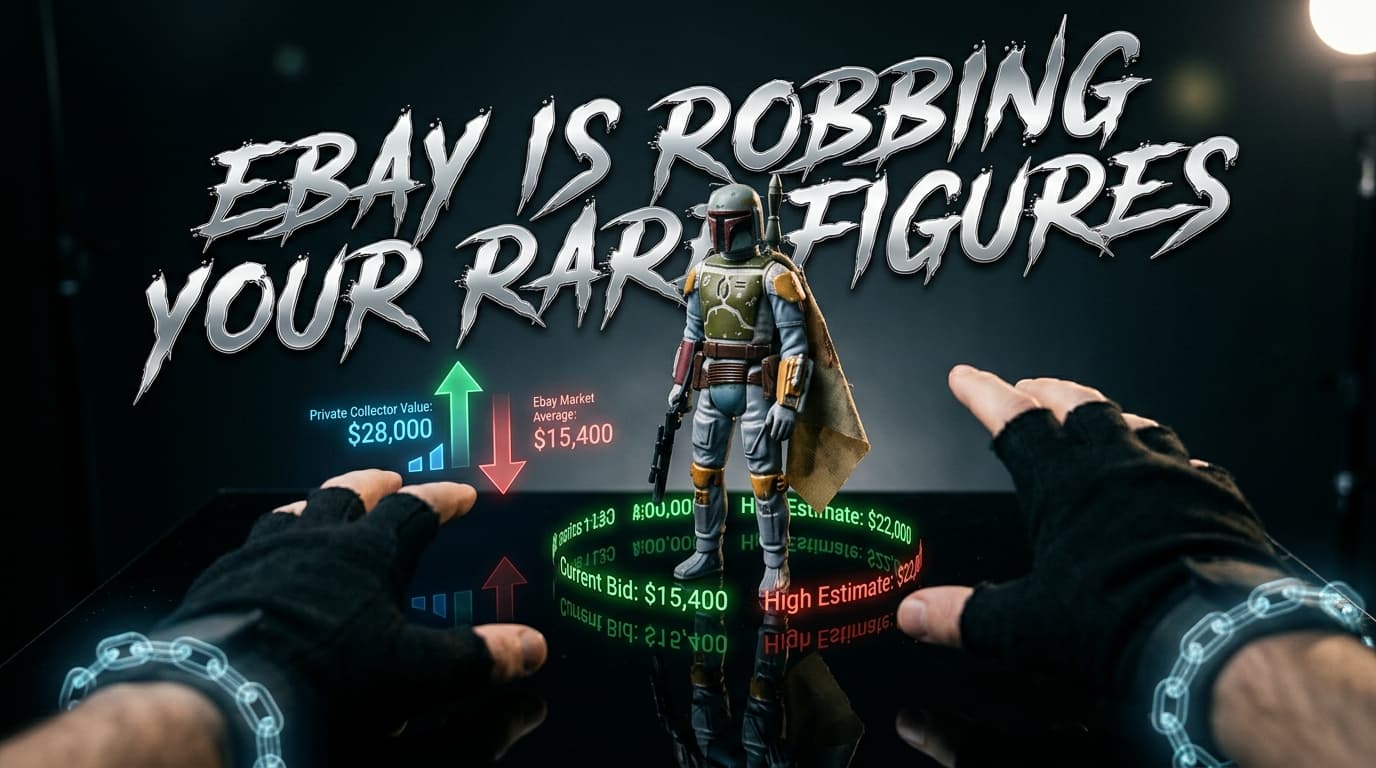
If you are selling rare action figures through eBay or a fixed-price listing on any platform, you are almost certainly underselling. Not because those platforms are bad for everything, but because rare and desirable items do not behave like ordinary products. Their value is determined by competition, and competition only happens at auction.
Why Fixed Prices Punish Sellers of Rare Pieces
When you set a fixed price on a rare figure, you are making a bet. You are guessing what one buyer is willing to pay, and then capping your upside at exactly that number. If you guess too high, it sits. If you guess too low, someone grabs it fast and you never know what it could have fetched if two collectors had been competing.
Auction theory is clear on this: when multiple bidders want the same scarce item, prices rise above what any single buyer would have offered in isolation. Fear of missing out, competitive drive, the visible fact that someone else wants what you have, these forces work in your favor as a seller. A vintage Kenner collection that might sit for weeks at a fixed price can generate a bidding war in minutes when the right audience is watching. That is not speculation. Auction houses running estate sales and toy lots regularly see collectors push prices to levels the sellers did not anticipate, precisely because the format creates urgency that no listing description can replicate.
eBay does offer auction format, but the math still hurts you. eBay charges toy sellers around 12.9% in final value fees on the total sale amount, and that is before optional promoted listing fees that can add another 1% to 10%. On a $500 figure, you are handing over $65 to $100 before you have even bought a box to ship it in. On a $2,000 lot, the fees become genuinely painful. The platform takes its cut regardless of whether the format served you well.
What Live Auction Changes About the Dynamic
The format is fundamentally different from a standard timed online auction in ways that matter enormously for high-value collectibles. A live auction runs in real time, with a visible audience, a countdown, and bids arriving as the session unfolds. Sellers can see engagement. Buyers can see they are competing. That combination triggers the exact psychological mechanics that push prices higher: anchoring from the opening bid, herd momentum as activity signals value, and the urgency of a closing timer that cannot be paused.
Collectors who specialize in vintage Star Wars, G.I. Joe, Transformers, and similar lines already know how to participate in these sessions. They have already trained themselves to show up and bid. You do not have to build the audience from scratch. What you do have to do is show up with the right format, because presenting a rare figure in a live session signals to serious collectors that you take the item as seriously as they do. A valuable figure buried on page six of search results does not get that signal across.
There is also a practical reality around collectibles valuation: condition and provenance matter enormously, and live auction gives you the chance to describe both in real time. Mint figures in original packaging can command double or more compared to loose examples of the same character. Being able to show that packaging, walk through the details, answer questions live, and let bidders see each other's interest drives that premium home in a way that photographs and bullet points never will.
The Problem Nobody Talks About: Getting Paid
Live selling has a serious trust gap. When you go live on Facebook or TikTok and a buyer commits to a figure in the chat, you are essentially running on good faith. You take the order, you invoice them, you wait. Sometimes the payment comes quickly. Sometimes it does not come at all. Chargebacks happen. Disputes happen. You are left chasing down a buyer who was very excited during the session and significantly less excited when the credit card bill arrived.
This is the part of live selling that burns experienced sellers. The format is powerful, but without a payment infrastructure built for it, you are exposed. The energy of a great live auction session can evaporate the moment a buyer ghosts on payment, or worse, disputes the transaction after receiving the item.
What the Next Generation of Live Selling Looks Like
The future of this channel for collectors is not just about better streaming quality or bigger audiences. It is about closing the gap between the excitement of the session and the security of the transaction. Platforms are beginning to build smart contract escrow directly into the live selling flow, so that when a buyer commits during a session, the funds are locked immediately, not after an invoice, not after a follow-up message.
Fisheez is building exactly this. Their SmartShell Escrow system holds buyer funds in USDC on the BASE blockchain the moment a deal is made, and releases them only when the transaction is complete. There is no bank, no middleman, and no window for a buyer to disappear after the live session ends. Sellers pay nothing in fees; the platform charges buyers a tiered service fee that scales down as transaction value rises, which means your high-value figures attract buyers who are not being nickeled on fees at exactly the moment they should be most motivated to bid. The Peacemaker dispute resolution system, staffed by trained community volunteers rather than paid arbiters, handles any disagreements transparently. For collectors dealing in items worth hundreds or thousands of dollars, that level of protection changes what live auction can credibly offer.
Stop Treating Rare Figures Like Commodity Inventory
The market has already shown you where the ceiling is. Rare, mint, boxed figures from classic lines regularly achieve multiples of what casual sellers expect, but only when the format matches the item. You would not sell a rare first-pressing vinyl record through a garage sale table, and you should not sell a mint-on-card vintage figure through a static listing where one buyer clicks buy-it-now before two others even see it.
Live auction is the format your rare pieces deserve. The competitive energy, the real-time audience, the visibility of other collectors wanting the same thing you are selling: these are forces that work entirely in your favor. The infrastructure to make that format safe and financially sound is finally catching up to what sellers have always needed. The collectors are already out there. They have the money and the desire. Your job is to give them a room to compete in.