
The Wire Transfer That Wiped Out a Season
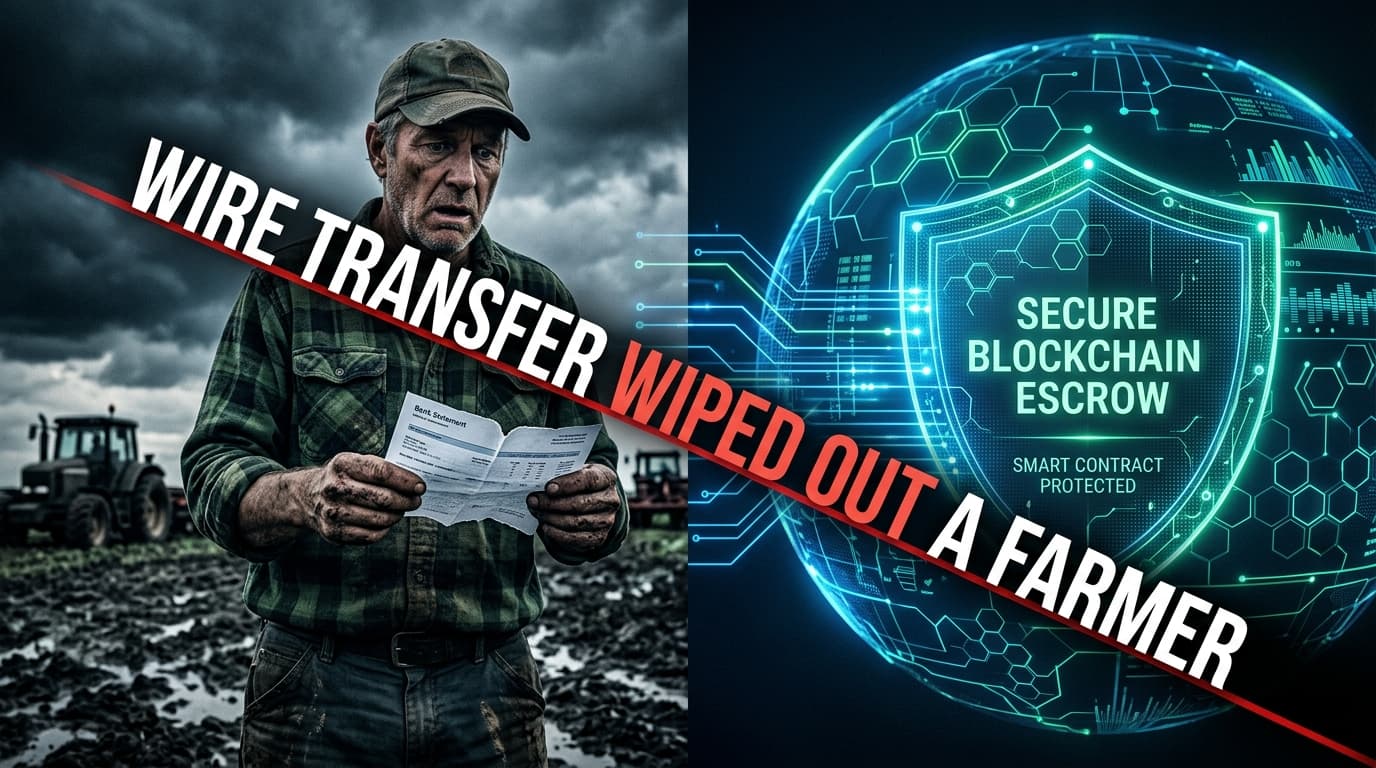
The tractor listing checked out. The seller had a website, a phone number, and a company name that appeared in Google results. The price on a late-model John Deere utility tractor was $80,000, which was a few thousand under market but not suspiciously so. Marcus, a grain and hay farmer in central Iowa, wired the funds on a Tuesday morning. By Thursday he knew something was wrong. By the following week, the phone number was dead, the website was gone, and his $80,000 was gone with it.
Marcus's story is not an isolated case. In 2025, the Better Business Bureau tracked over $223,000 in reported losses from a single online heavy equipment fraud scheme, with individual victims losing between $28,000 and $45,000 each. Scammers had built a fake version of a legitimate Missouri equipment company, complete with copied branding and believable listings. Victims wired money for skid steers, excavators, and trailers that never existed. Some drove to the real company's address looking for equipment that had been purchased from an impersonator. The BBB's St. Louis president Michelle L. Corey put it plainly: prices well below market value signal danger, and buyers shopping online for heavy equipment must research thoroughly. But thorough research did not save Marcus, because the listing was convincing enough. What would have saved him is a payment structure that does not release funds until delivery is confirmed.
Why Wire Transfers Break Down on Big Purchases
The fundamental problem with wiring money for a large equipment purchase is that the transaction has no reversible state. Once funds leave your account, they belong to whoever received them. There is no dispute window, no hold period, no condition attached to the transfer. You are relying entirely on the seller's integrity, and on the internet, you often have no reliable way to verify that integrity before you commit.
Traditional escrow services exist to solve this, but at a cost. Banks and escrow agents typically charge between 3% and 7% of the transaction value for their services. On an $80,000 purchase, that is up to $5,600 in fees just to add a trust layer to the deal. Processing moves through manual review cycles that can stretch 8 days or more, and the escrow agent's hours and jurisdiction may not align with yours or the seller's. For a small farm operation already managing tight margins, that overhead adds real friction to every large purchase.
The equipment fraud problem has grown because the gap between what buyers need (a safe, conditional payment mechanism) and what most of them use (a direct wire transfer with no conditions) is enormous. Farmers buying used tractors, combines, and skid steers online are operating in exactly the risk zone that fraud thrives in: high dollar amounts, unfamiliar counterparties, and payment tools built for a world where you knew who you were dealing with.
What On-Chain Escrow Actually Does
Smart contract escrow on a blockchain like BASE works differently from the moment funds leave your wallet. Instead of being sent directly to the seller, your payment is locked in a smart contract. The seller can see the funds are committed and real. You can see they have not gone anywhere. Neither party can access them until the agreed conditions are met, whether that is confirmed delivery, inspection sign-off, or a timer expiring without a dispute.
This is not a theoretical concept. The smart contracts market was valued at $2.14 billion in 2024 and is projected to reach $12.07 billion by 2032, driven in large part by exactly this use case: high-value peer-to-peer transactions where strangers need to trust a mechanism instead of each other. Agricultural platforms that have adopted on-chain transaction frameworks have reported measurable results. FarmTrust saw a 30% decrease in transaction times and a 25% increase in sales after implementing blockchain-based payment flows, attributing both to the transparency that on-chain records provide to all parties.
For a farmer considering an $80,000 equipment purchase from a seller two states away, smart contract escrow changes the risk equation fundamentally. The seller cannot disappear with your money because your money is not yet theirs. You cannot refuse to pay after taking delivery because the contract's conditions are defined in code, not in a handshake. The dispute resolution mechanism is baked into the contract structure rather than requiring you to hire a lawyer or file a police report after the fact.
BASE and the Stablecoin Layer That Makes It Usable
One objection to on-chain payments for equipment purchases is volatility. If you pay in a cryptocurrency that swings 20% in a week, neither buyer nor seller knows what the deal is actually worth. That objection disappears when the transaction runs in USDC, a stablecoin pegged to the U.S. dollar and backed by short-dated Treasuries and cash equivalents.
USDC crossed $60 billion in circulating supply by early 2025, with 87 million unique wallet addresses globally by Q1 2025. BASE, Coinbase's Layer 2 network, has grown to hold 6.1% of USDC usage share as of early 2026. Those numbers reflect a payment rail that is no longer experimental. On-chain stablecoin transaction volume globally exceeded $8.9 trillion in the first half of 2025, with September 2025 marking the first month that monthly stablecoin volume crossed $1 trillion. This is institutional-scale infrastructure being used for everyday commerce.
For a farmer, the practical implications are straightforward. You fund an on-chain escrow in USDC. The seller sees $80,000 locked and confirmed on a public ledger. The contract terms specify what triggers release: delivery confirmation, a set number of days without a dispute, or both parties signing off. If something goes wrong, a structured dispute process engages rather than leaving you to chase a disconnected phone number. Smart contract escrow can cut the cost of this trust layer by 60% to 80% compared to traditional escrow services, and settlement happens in minutes once conditions are met rather than days.
How the Story Ends Differently
Return to Marcus for a moment. If his $80,000 had been locked in a smart contract escrow on BASE rather than wired directly to the seller, the fraud scenario becomes impossible at the point of payment. The scammer cannot receive the funds without fulfilling the delivery condition. If no equipment arrives within the agreed window, the contract returns the funds automatically. Marcus does not spend a week realizing something is wrong. He does not need to file a police report in a jurisdiction where the scammer likely does not exist. The funds come back.
That is the actual value proposition of on-chain escrow for high-value equipment deals. It does not require you to be better at spotting fraud. It does not rely on seller reputation or platform reviews. It restructures the payment itself so that theft of the wire-and-disappear variety is structurally unavailable to the scammer. Platforms built on BASE that incorporate smart contract escrow, like Fisheez, which holds buyer funds in USDC until deal conditions are confirmed, are extending this protection to peer-to-peer commerce that traditionally had none.
What This Means for Equipment Markets Going Forward
The BBB fraud alert is a symptom of a payment infrastructure problem that predates the internet. High-value private sales have always required trust in strangers, and the tools available to build that trust, escrow agents, attorneys, certified checks, have always been expensive and slow. Online marketplaces moved the sales channel into digital space without updating the payment layer to match.
Blockchain escrow does update the payment layer. It does not eliminate the need to verify equipment condition before buying, or to do basic due diligence on a seller's identity. What it eliminates is the specific failure mode that cost U.S. farmers hundreds of thousands of dollars in documented 2025 losses: the irreversible transfer of funds to a seller who has no intention of delivering. For agriculture, where equipment purchases can represent a season's revenue or a decade of savings, that protection is not a nice-to-have feature. It is the baseline that buyers should be demanding from every platform they use for high-value deals. Understanding how smart contract escrow protects buyers on BASE is a practical first step before you commit to your next large purchase.