
The $75/Hour Ceiling Is About to Shatter
You're mid-session with a client, coaching them through a deadlift, and your phone buzzes. Another trainer just closed a 10-session package in 47 minutes without leaving their apartment. They didn't post a promotion, didn't run an ad, and didn't cold-email a single person. They went live, ran a real-time auction for their training slots, and watched serious buyers compete for access. That is not a fantasy scenario. That is where live selling fitness is heading in 2026, and the trainers who position now will look back at $75/hour as the floor, not the ceiling.
The global live commerce market hit approximately $1 trillion in 2024 and is projected to expand to $3.7 trillion by 2030, growing at 24% annually. The United States is the fastest-growing region at 47% annual growth, on track to reach $680 billion by 2030. For years, that wave belonged to sneakers, beauty products, and collectibles. Services are next. Fitness training packages are a near-perfect fit for the live auction format, and the trainers who understand this shift will double their effective hourly rate inside 18 months.
Why Live Auctions Work for Training Packages
The economics of a live auction are fundamentally different from posting a rate card on your website. When you list sessions at $75/hour, you anchor buyers to that price and cap your upside there. But when you go live with five spots and 200 people watching, scarcity and social proof do the pricing work for you. A 5-session package you might sell at $375 in a DM negotiation can clear at $550 or higher when real-time bidders are in the frame.
This is not speculation. It is the same behavioral dynamic that has driven live commerce conversion rates three to ten times higher than standard e-commerce listings. Buyers trust what they can see in real time: your energy, your expertise, your responsiveness to questions. You cannot fake that on a static webpage.
The fitness category has a specific structural advantage here. Personal training is a relationship purchase. Buyers want to know if your personality matches theirs before they commit money. A live session answers that question better than any testimonial page ever could. You demonstrate your coaching style, handle objections openly, and close with an auction that rewards the most committed buyers in the room.
What the Rate Data Actually Tells You
Personal trainers in the United States currently charge between $50 and $100 per hour for one-on-one sessions, with specialized trainers in urban markets reaching $80 to $120. The average annual salary across the profession sits around $67,000, but that number masks a wide spread. Top-tier trainers with strong personal brands and specialized credentials routinely clear six figures.
The gap between median and top-tier is not primarily about certifications. It is about perceived scarcity and demand signals. When buyers sense that a trainer's slots are genuinely limited and genuinely coveted, they pay more and ask fewer questions about the price. Live selling fitness formats manufacture exactly that signal, turning your calendar into a limited-edition product rather than an always-available service.
Four in five trainers report that finding new clients has become harder or plateaued, according to recent industry surveys. That is a client acquisition problem, and the live format solves the top-of-funnel issue directly. You are not hunting for leads; you are drawing an audience, building trust in real time, and converting in the same session.
The Buyer Vetting Advantage Nobody Talks About
Here is what most trainers miss about the live auction format: it is not just a sales tool. It is a screening tool. When a buyer goes through a live Q&A before committing to a package, you learn more about their goals, their history, and their seriousness than you would from any intake form. Buyers who are not a good fit self-select out. The ones who bid are the ones who are ready to work.
This matters enormously for retention. The biggest source of trainer burnout is not physical; it is the psychological drain of clients who are disengaged, inconsistent, or misaligned with your methods. The live format lets you filter for commitment before money changes hands. Someone who competes in a live auction for a training spot is not the same person who quietly cancels their third session in a row.
The session guarantee question also gets answered in the live setting. When buyers ask directly about rescheduling policies and delivery terms, and you answer in front of an audience, you build a layer of accountability that protects both sides. Platforms that back this up with escrow protection take that accountability from verbal to contractual.
How to Build Your First Live Auction Session
Start smaller than you think you need to. Your first live selling fitness event does not require a professional studio or a massive following. You need a clear camera angle, decent audio, and a defined package to sell. Three to five training slots at a fixed starting bid works better than an open-ended offer. Scarcity is the engine.
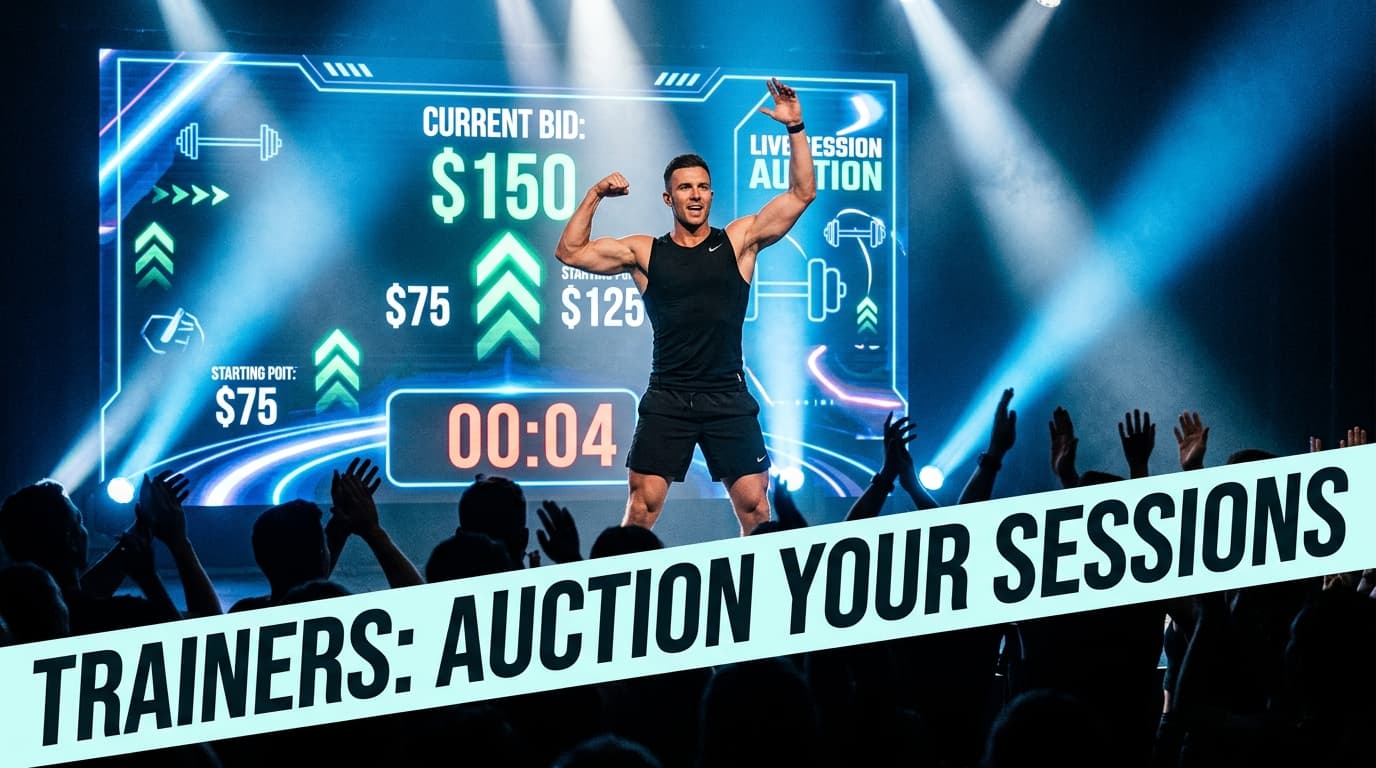
Structure the session in three phases. Open with a 10 to 15 minute demonstration that shows your method without giving everything away. Move into a live Q&A where you handle objections about your approach, availability, and pricing rationale. Close with the auction itself: explain what each slot includes, what the starting bid is, and how long bidding stays open. Keep that closing window tight, around five to ten minutes. Urgency from a countdown behaves differently than urgency from vague scarcity language.
On the payment side, the biggest friction point for service-based live auction selling is buyer confidence. When you sell a physical product, the buyer either receives it or they do not. Services are different. The buyer is committing money to a future series of interactions, and they are taking your word that you will show up, deliver quality, and honor the terms. Platforms that use smart contract escrow address this head-on: buyer funds lock at payment and release on delivery confirmation rather than landing immediately in your account before a single session has happened. That structure turns a trust-based transaction into a contract-backed one, and it makes serious buyers far more willing to commit at premium price points.
The Window Is Open Now
The live commerce market in the United States is growing at 47% annually. The fitness industry is simultaneously dealing with a client acquisition crunch and a surge in demand for specialized, personalized coaching. These two trends intersect at live auction selling for training packages, and that intersection is almost entirely underserved right now.
Early movers in any live commerce category capture audience share before the format becomes crowded and attention costs rise. Fitness trainers who run their first live event in 2026 are not competing against thousands of others doing the same thing yet. They are building an audience in a space that is still wide open.
The path forward is practical. Pick a package. Set a starting bid that reflects your real value. Schedule your first live event, promote it to your existing audience and one adjacent community, and run it. Use a platform that puts escrow protection on the transaction so buyers feel safe committing at a premium price. Fisheez is built exactly for this: a peer-to-peer marketplace where SmartShell Escrow locks buyer funds in a smart contract until you deliver, sellers pay nothing in platform fees, and disputes are handled by trained community volunteers rather than a faceless support queue. Buyer funds are held in USDC on the BASE network, protected by smart contract logic, so neither side carries unnecessary risk into a new coaching relationship. It is the difference between going live on Facebook with a payment app handle and building real commercial infrastructure around your expertise.
Your $75/hour rate is not a ceiling unless you treat it like one. Run the experiment. The data will surprise you.