
Ecommerce Trends 2026: Why Traditional Platforms Are Failing Sellers
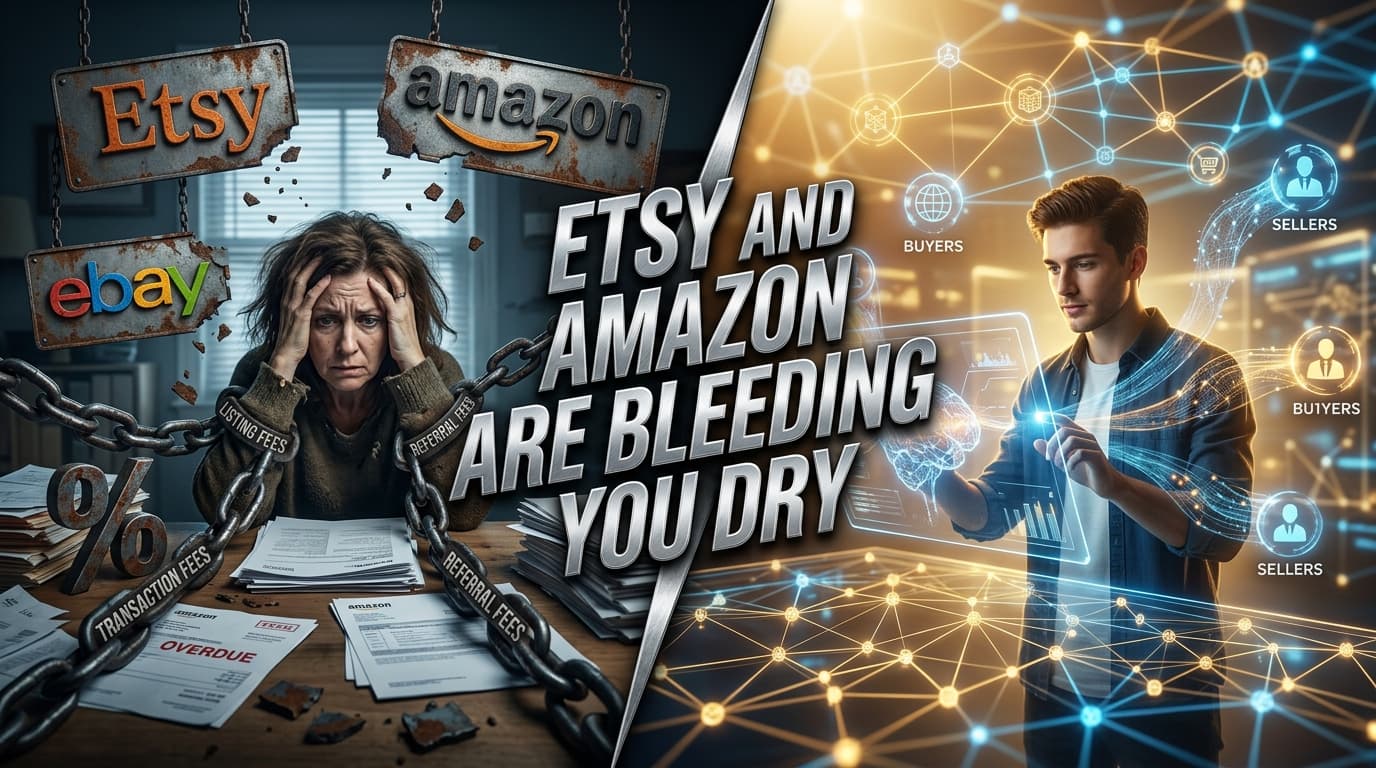
You just sold a $2,000 custom piece on Etsy. After their 6.5% transaction fee, 5% payment processing fee, and listing charges, you're left with about $1,750—$250 gone before the item even ships. Meanwhile, you're watching TikTok Shop creators selling similar items directly to followers with zero middleman fees, and Amazon just announced they're taking up to 45% from certain categories. The frustration isn't just about the money—it's the realization that the platforms you built your business on are now working against you.
This isn't a hypothetical grievance. Ecommerce trends for 2026 show a massive shift toward direct-to-consumer and peer-to-peer models, fueled by AI personalization tools that let sellers connect with buyers without billion-dollar corporations taking huge cuts. Traditional marketplaces built their empires on seller fees, but now those same fees are pushing entrepreneurs toward alternatives that didn't exist a few years ago.
The problem runs deeper than percentages. When a buyer has a dispute on eBay, you're at the mercy of a faceless customer service team that often sides with the buyer regardless of evidence. When you want to offer services alongside physical goods on Amazon, you can't—their rigid categories force you into boxes that don't fit your actual business. And when you try to build your brand on these platforms, you're constantly battling algorithms that prioritize paid advertising over genuine customer relationships.
By the end of this, you'll understand exactly which 2026 trends matter most for sellers like you, and how to leverage emerging models that put control—and profits—back in your hands. We'll look at real alternatives to the fee trap, explore AI tools that actually help rather than hinder, and show you how the smartest sellers are already building businesses that thrive outside the traditional platform ecosystem.
AI Personalization and Automation: Scale Smart Listings Easily
The promise of AI in ecommerce has always been that it would make selling easier, but until recently, most of those benefits went to the platforms themselves, not the sellers. Traditional marketplaces use AI to optimize their ad revenue, prioritize listings from paying advertisers, and push you toward promotions that benefit their bottom line. Now, emerging platforms are flipping that script—putting AI-powered personalization and automation tools directly into sellers' hands.
What does this actually look like? Instead of spending hours crafting perfect listing descriptions, AI tools now analyze your products and automatically generate optimized content that resonates with your target buyers. Rather than manually tagging items with dozens of categories, smart systems can suggest the most relevant tags based on buyer search patterns. According to Shopify's analysis of 2026 trends, this shift toward AI-powered tools is enabling smaller sellers to compete on equal footing with major brands for the first time.
The real breakthrough, though, is in personalization. When a buyer searches for "vintage desk," platforms using legacy algorithms show them whatever listings have paid for visibility or match broad keywords. Modern AI-driven platforms analyze buyer behavior, past purchases, and even conversational cues to surface exactly the right items—whether they're physical goods, services, or custom commissions. This isn't just about showing relevant products; it's about creating connections that lead to actual sales rather than endless scrolling.
For sellers, this means your carefully crafted listings actually get seen by people who want what you're offering, not buried under promoted content. It means you can offer bundles, services, and digital products alongside physical goods without fighting rigid category systems. And perhaps most importantly, it means you're spending less time on admin and more time doing what you love—creating, connecting, and selling.
Livestream and Social Selling: Engage Buyers Without Fees Eating Profits
You've probably seen those TikTok or Instagram live streams where creators showcase products, answer questions in real-time, and watch orders pour in. It looks effortless, but here's what they're not telling you: platforms like TikTok Shop and Facebook Marketplace take significant cuts—often 8-15%—even when you're doing all the marketing work yourself. You're putting on a show, building an audience, creating content, and still paying what essentially amounts to a "visibility tax" just for using their platform.
Livestream shopping exploded during the pandemic and has continued evolving into 2026, with experts predicting it will account for nearly 20% of all ecommerce by year-end. The appeal is undeniable: real-time engagement, immediate feedback, and that sense of community that traditional ecommerce can't replicate. But when you're giving up 10-15% of every sale just for the privilege of streaming on a particular platform, that community feeling starts to look expensive.
The smartest sellers are now taking that live engagement model and applying it to platforms where they control more of the economics. Instead of paying platform fees, they're using commission-based promoter programs where they only pay when someone actually sells their items. This flips the traditional model: you're not paying for eyeballs, you're paying for results. When someone shares your listing with their audience and it sells through their unique link, they earn a commission—but if nothing sells, you pay nothing.
This approach works perfectly with services and digital products too. A photographer could do a live Q&A about portrait sessions while someone promotes their booking link. A contractor could demonstrate home improvement techniques while a promoter shares their scheduling link. The key difference from traditional social selling? No platform taking 15% just for hosting the stream, no hidden ad costs, and transparent commission structures that reward genuine promotion rather than algorithm manipulation.
Subscriptions and Sustainability: Lock in Recurring Revenue Securely
If you sell vintage clothing, handmade goods, or professional services, you've likely considered subscription models as a way to build predictable revenue. The math is compelling: instead of chasing one-off sales, you create monthly recurring income that stabilizes your cash flow. But when you try to implement subscriptions on traditional platforms, you hit two immediate problems: rigid payment systems that take consistent cuts, and zero protection against chargebacks when a customer decides they don't want to pay for last month's subscription renewal.
The subscription trend for 2026 is evolving beyond simple monthly boxes. B2B ecommerce trends show businesses increasingly offering service subscriptions—monthly coaching packages, design retainers, maintenance agreements, and consultation hours. These require flexible payment terms, milestone-based releases, and protection against non-payment that traditional subscription platforms simply don't provide. When you're delivering ongoing services, you need to know you'll get paid for work completed, not just hope the customer's credit card doesn't decline.
Sustainability presents another recurring opportunity that most platforms miss. Consumers increasingly seek circular economy solutions—selling used items, buying refurbished, participating in rental or repair services. These aren't one-time transactions; they're ongoing relationships where trust and security matter as much as convenience. Traditional marketplaces treat every transaction as independent, forcing you to rebuild trust with each new interaction rather than leveraging your established reputation.
Smart contract escrow systems solve both problems elegantly. For subscription services, you can set up automated, milestone-based payments where funds release only when work is verified as complete—no more chasing invoices or worrying about chargebacks. For sustainable goods, you can create secure resale agreements with built-in protection for both parties, knowing that escrow ensures everyone gets what they agreed to. This transforms subscriptions and circular economy sales from high-risk propositions into reliable revenue streams.
Composable Commerce and Omnichannel: Sell Everywhere Flexibly
Composable commerce sounds like technical jargon, but it represents something remarkably simple: the ability to mix and match different tools and platforms to create your perfect selling ecosystem. Think of it like building with LEGO blocks—you take the best payment processor from one company, the best inventory management from another, and the best checkout experience from a third. For sellers, this means escaping the "walled garden" approach of traditional marketplaces where you're locked into their tools, their fees, and their limitations.
The omnichannel reality is that modern buyers move seamlessly between platforms—they might discover your vintage furniture on Pinterest, research reviews on Reddit, message you on Instagram, and eventually purchase from your website or marketplace listing. Traditional platforms punish this natural behavior by demanding you keep everything within their ecosystem. If a buyer finds you on social media but buys through your Shopify store, the platform that facilitated the discovery gets nothing—except they still want their cut if you try to sell the same items there.
According to experts analyzing 2026 ecommerce trends, this fragmented approach is accelerating, with sellers using an average of 4.7 different platforms and tools to reach customers across channels. The problem isn't selling everywhere—it's managing inventory, pricing, and payments across all those channels without creating operational chaos. You don't want to oversell an item because your Etsy store shows stock that's actually reserved through your website.
Emerging platforms solve this by embracing the fragmented reality rather than fighting it. They provide the secure transaction layer that works across channels—whether someone finds your item through a promoter's TikTok video, sees it on a local marketplace, or discovers it through a Google search. The transaction happens through a single smart contract, but the discovery happens wherever buyers naturally congregate. This means you can maintain consistent pricing and inventory while still leveraging every possible channel for exposure without platform lock-in.
2026 Selling Success: Switch to Escrow-Protected P2P Marketplaces
All these trends point toward the same conclusion: the future of selling is peer-to-peer with smart protection, not platform-dictated terms. You've seen how AI personalization, livestream engagement, subscription models, sustainability, and omnichannel strategies all work better when you're not fighting platform fees, rigid categories, and faceless dispute resolution. Now imagine a marketplace built specifically for this reality—one where sellers keep 100% of their asking price, and where every transaction is protected by SmartShell Escrow.
This is exactly what Fisheez delivers. When you list goods or services on Fisheez, your buyers pay a transparent, tiered fee (starting at 8% for items under $50 and scaling down to 0.5% over $10M), while you keep every dollar of your listing price. That $2,000 custom piece? You get the full $2,000, not $1,750 after fees. Better yet, SmartShell Escrow locks the buyer's payment in a smart contract that releases only when both parties are satisfied, or when a predetermined timer expires—giving you security against chargebacks while giving buyers protection against non-delivery.
The beauty of this model is how it directly addresses every trend we've discussed. For livestream sellers, the Promoter Program means you can recruit others to share your listings while only paying commission when they actually sell something. For subscription services, you can create nested SmartShell contracts that release payments at milestones, ensuring you get paid for work completed without chasing invoices. And because Fisheez handles both goods and services in one place, you're not fighting artificial category boundaries that prevent you from selling your full offering.
Moving forward means choosing platforms that align with where commerce is headed, not where it's been. Whether you're selling vintage furniture, offering design services, or building sustainable resale programs, the same principles apply: keep more of your earnings, operate across channels without penalty, and build relationships protected by technology rather than threatened by it. The trends are clear, and your turn to benefit starts now.