
2026 Ecommerce Trends: Why Brands Must Adapt Now
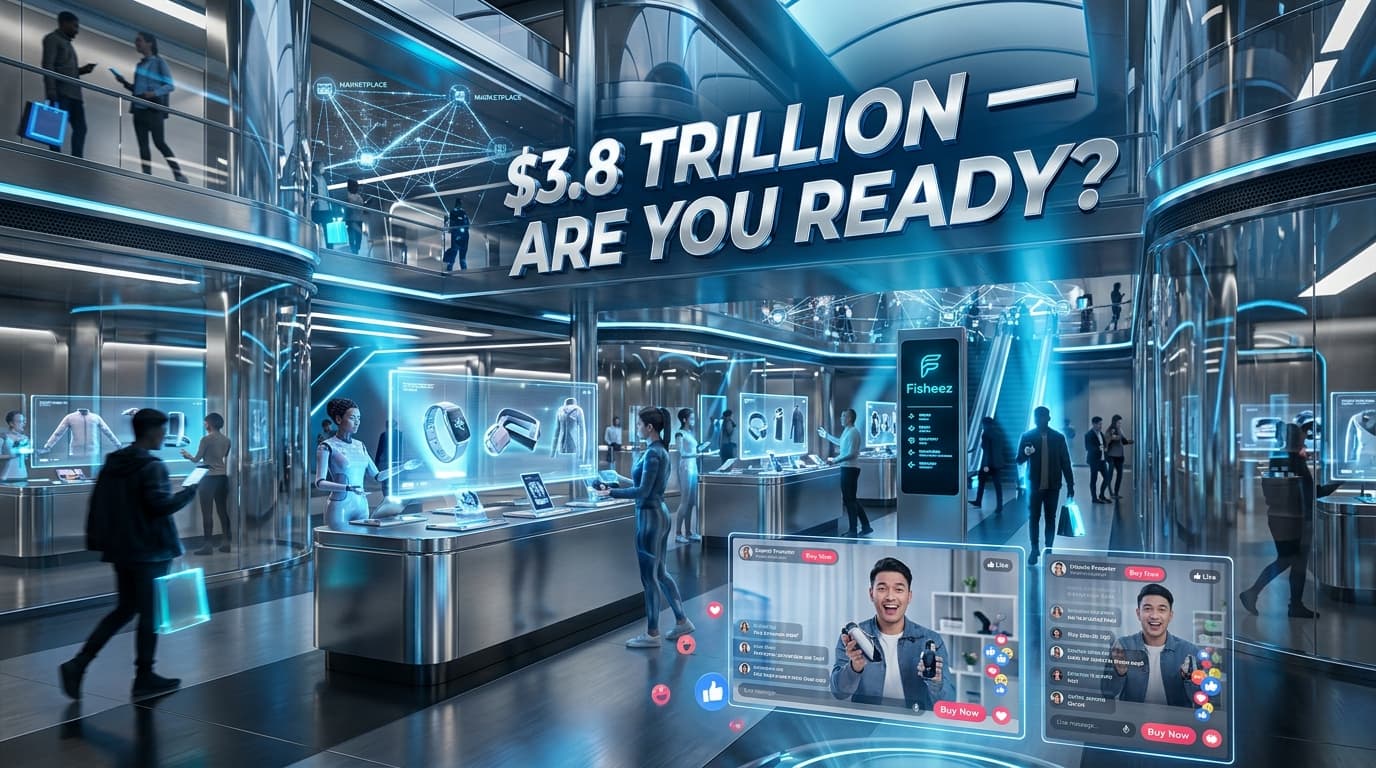
Global ecommerce sales will surpass $3.8 trillion in 2026, according to Statista projections featured in BigCommerce reports. This surge signals opportunity, but brands lagging on adaptation risk obsolescence as competitors harness agentic AI ecommerce and other innovations.
Shoppers seek seamless, value-driven experiences amid economic headwinds like inflation and debt. Platforms charging 10-15% fees, such as eBay and Amazon, erode seller profits. Fisheez counters this with a blockchain P2P marketplace on the BASE network for goods and services, secured by SmartShell Escrow—demonstrating how low-fee models outperform centralized giants.
Shopify highlights hyper-personalized rewards from Ouai and in-person events by Hedley & Bennett to combat digital fatigue. Agentic AI ecommerce, as BigCommerce notes, empowers autonomous agents for discovery, recommendations, and checkout, slashing friction.
Publicis Sapient envisions conversational generative AI search, while secondhand marketplaces 2026 boom with sustainability focus. Livestream shopping ecommerce eyes $68 billion in US sales, blending fun and urgency for 30% conversion boosts.
Key ecommerce trends 2026 include social commerce trends 2026, AR ecommerce experiences for virtual try-ons, flexible payments ecommerce like BNPL, B2B ecommerce trends emphasizing self-serve, sustainable ecommerce practices, omnichannel ecommerce strategy, and AI supply chain ecommerce for resilience.
Fisheez platforms like these prove P2P evolution drives efficiency. Ecommerce managers and brand leaders: follow this roadmap to elevate sales, engagement, and loyalty. Platforms like Fisheez show the path—adapt now to dominate 2026.
Hyper-Personalized Rewards and In-Person Experiences
Hair care brand Ouai is pioneering hyper-personalization ecommerce in loyalty programs. Former CEO Hannah Beals revealed plans to reward customers for social media comments, reviews, repeat buys, and even Instagram posts wearing their merch. This moves beyond generic points systems, using first-party data from Shopify Analytics to craft tailored tiers.
Loyalty rates fell from 34% in 2024 to 29% in 2025 per SAP data, forcing brands to innovate. Ouai targets superfans of specific scents with high-touch perks, boosting advocacy in group chats over polished feeds.
Kitchenware leader Hedley & Bennett counters digital fatigue with in-person events. Founder Ellen Bennett hosts classes bridging home and pro cooks, plus pop-ups blending food and brand storytelling. These tactile gatherings foster novelty AI can't replicate, as Shopify's Grace Clarke notes: in-person sparks irreplaceable electricity.
Consumers crave "slow content" and micro-events for genuine bonds, per Event Marketer insights. Brands blending hyper-personalization ecommerce online with offline immersion drive repeat business.
Platforms like Fisheez prove this hybrid model scales P2P. Sellers list custom experiences—photography sessions, contractor gigs—protected by SmartShell Escrow. Buyers earn personalized rewards via TideTurner NFTs for fee discounts, turning transactions into loyalty loops.
In a post-AI world, hyper-personalization ecommerce thrives on authenticity. Fisheez's low-fee structure lets sellers offer unique incentives without platform cuts, while Peacemakers ensure fair resolutions. Item Marketplaces amplify reach, recruiting affiliates for shared rewards.
Adopt hyper-personalization ecommerce: analyze data for bespoke perks, host local events, integrate P2P tools. Results? Deeper engagement, higher retention amid 2026's $3.8T boom.
AI Agents and Automation Transforming Ecommerce
Agentic AI ecommerce represents a paradigm shift, deploying autonomous agents that anticipate shopper needs, browse catalogs, compare options, and execute purchases. BigCommerce's Agentic Commerce Suite exemplifies this, connecting product data to AI for seamless discovery and agentic checkout—86% of consumers seek AI for product research.
Shopify warns of LLM optimization replacing SEO; authentic products rank organically as models aggregate reviews. Agentic AI ecommerce resolves pain points like decision paralysis, offering proactive support and personalized bundles.
McKinsey finds 73% use AI across purchase cycles: learning brands, comparisons, recommendations. This scales hyper-personalization ecommerce without manual effort.
AI-generated content accelerates: keyword-rich descriptions, tailored emails, SEO-optimized blogs created instantly. Feedonomics structures feeds for multichannel, auto-filling catalog gaps.
Operational automation streamlines: chatbots resolve queries, AI forecasts demand to optimize inventory, detects fraud in real-time, triggers dynamic pricing.
Amazon's AI recommendations contribute 11% of revenue; ecommerce brands replicate with inventory routing, return management.
No-code/low-code builders, per BigCommerce, enable non-devs for visual storefronts. AI coding tools scaffold projects, refactor legacy code, generate tests—cutting cycles.
Platforms like Fisheez pioneer agentic AI ecommerce in P2P. SmartShell Escrow automates fund locks on agreed timers, nested milestones release payments securely. Item Marketplaces auto-pay commissions via smart contracts.
Peacemakers add community arbitration to AI-driven flows. Fisheez's low-fee model outperforms 10-15% platforms, proving automation drives efficiency.
Implement agentic AI ecommerce: integrate suites, automate ops, personalize at scale for 2026 gains.
Social Commerce, Livestream, and Immersive Tech
Social commerce trends 2026 integrate shopping into feeds on Instagram, TikTok, and Facebook. Over 110 million Americans purchased directly via social in 2024, per Statista. In-app checkouts and shoppable posts eliminate redirects, boosting impulse buys.
Livestream shopping ecommerce surges to $68 billion in US sales by 2026, according to Statista via BigCommerce. Conversion rates hit 30%—five times traditional ecommerce—through real-time demos, Q&A, and limited drops. Platforms like TikTok Live and Whatnot blend entertainment with urgency.
Skin care brand Sonsie employs slow content: 1:39 TikToks of Pamela Anderson gardening captivate, encouraging shares without quick scrolls. Shopify's experts note longer views build resonance, driving purchases.
AR ecommerce experiences bridge online-offline gaps. Virtual try-ons for apparel and 3D room previews for furniture grow the market to $38.5 billion by 2030 (Grand View Research). UPLIFT Desk cut returns with AR visualizations.
Voice search claims 35% of US households with smart speakers. Optimize for natural queries like “flowy summer dress for beach wedding” to capture hands-free shoppers.
Fisheez elevates social commerce trends 2026 via upcoming live selling at Fisheez Hubs—physical spots for promoter-led demos earning fees. Unlike Facebook risks, SmartShell Escrow locks payments until fulfillment.
Platforms like Fisheez prove livestream shopping ecommerce thrives P2P, low fees beating 10-15% giants. Recruit via Item Marketplaces for viral reach.
Embrace these for interactive fun converting at scale in 2026.
Flexible Payments, Subscriptions, and Sustainability
Flexible payments ecommerce address cart abandonment rates averaging 70%, per Baymard Institute research. Buy Now Pay Later (BNPL) services like Afterpay, Klarna, and Apple's Pay Later allow interest-free installments, crucial amid persistent inflation and consumer debt. Publicis Sapient notes half of millennial and Gen X shoppers have used short-term financing in recent years, accelerating checkouts with invisible payments via digital wallets such as Apple Pay and Google Pay.
Subscription models deliver predictable revenue streams. Brands like Dollar Shave Club and HelloFresh bundle recurring essentials, slashing customer acquisition costs by 5-10 times compared to one-time sales. Shopify emphasizes flexible bundling in B2B ecommerce trends for rep-free buying.
Sustainable ecommerce practices resonate as deinfluencing rises. Publicis Sapient identifies "slow living" favoring durable, high-quality products over fast fashion. The top consumer priority? Long-lasting goods that reduce waste. Secondhand marketplaces 2026 surge, with 44% of UK shoppers buying more pre-owned items per Barclays surveys; Walmart's resale platforms exemplify B2C entry.
Transparency in supply chains builds loyalty—half of global consumers trust brands revealing sourcing methods.
Fisheez advances flexible payments ecommerce in P2P via SmartShell Escrow. Funds lock into timed escrow or nested milestone contracts, perfect for subscriptions or service phases—deposits first, balances later, all automatic.
Unlike eBay's 10-15% fees, Fisheez's low structure maximizes seller retention, with 5% revenue supporting the separate Fishlanthropy Foundation for community-voted local aid.
Platforms like Fisheez prove sustainable ecommerce practices scale through protected resale listings.
Implement flexible payments ecommerce: integrate BNPL, wallets, subs; highlight eco-efforts for 2026 loyalty.
Actionable Steps to Future-Proof Your Ecommerce + FAQs
Prioritize trends based on your data: start with agentic AI ecommerce if acquisition lags, hyper-personalization ecommerce for retention, or social commerce trends 2026 for traffic spikes.
Step 1: Audit and integrate AI tools. Assess platforms like BigCommerce for agentic suites. Pilot chatbots, demand forecasting. Measure uplift in conversion by 10-20%.
Step 2: Personalize loyalty and events. Use Shopify Analytics for tiered rewards. Host quarterly pop-ups. Track repeat purchase rates.
Step 3: Launch immersive social pilots. Test livestream shopping ecommerce on TikTok, AR ecommerce experiences via apps. Aim for 30% conversion benchmarks.
Step 4: Optimize payments and sustainability. Add BNPL, subscriptions. Certify eco-practices, list on secondhand marketplaces 2026. Monitor abandonment drops.
Step 5: Build omnichannel ecommerce strategy. Sync inventory across web, app, social, in-store. Use AI supply chain ecommerce for resilience.
Common pitfalls: chasing trends without baselines—set KPIs first. Overlooking privacy in AI personalization. Sticking to high-fee platforms amid P2P rises.
Platforms like Fisheez sidestep fees with SmartShell Escrow, enabling low-risk tests for services and goods. TideTurner NFTs cut costs further.
FAQs:
Q: How does agentic AI ecommerce differ from chatbots? A: Agents autonomously handle full journeys—research to purchase—beyond reactive support.
Q: What's the ROI on livestream shopping ecommerce? A: Up to 30% conversions, per Statista, with low production costs.
Q: How to start sustainable ecommerce practices? A: Source transparently, offer resale via platforms like Fisheez.
Test small, iterate fast. Measure with Google Analytics, Shopify dashboards. Future-proof now for 2026 dominance.