
Resale Market Explodes Past $200 Billion: Game-Changer for Online Sellers
You finally list that DSLR camera gathering dust in your closet. It sells in 48 hours for $400 — a pleasant surprise until you see the platform's cut: $80 in fees plus shipping, leaving you with barely $320. You think about the dozen other items you could sell, but the math keeps stopping you. Why bother listing when 20% of your hard-earned money disappears before you ever touch it? This isn't just your frustration; it's the exact moment the resale economy became a $200+ billion industry while leaving most everyday sellers counting pennies instead of building real wealth.
According to ThredUp's latest Resale Report, the U.S. secondhand apparel market alone will hit $74 billion by 2029, with online resale specifically growing at a staggering 14% annually to reach $40 billion. This surge isn't slowing down; it's accelerating as consumers prioritize value and sustainability, especially with new tariffs making brand-new goods more expensive. Yet traditional platforms continue to take bigger cuts, implement opaque algorithms, and impose random payment holds that freeze your funds for weeks.
If you are selling online today, you're operating in the fastest-growing retail segment of our lifetime, but you're likely using tools designed for a different era. The people making real money in 2025 aren't just lucky; they're the ones who have spotted the shift toward transparent, seller-first alternatives that don't treat your inventory like their revenue stream. You have more buyers than ever before, but the systems you're relying on haven't evolved to protect your margins or your sanity.
By the end of this, you'll understand exactly how to navigate the current online resale trends without getting crushed by legacy platform fees. We'll unpack the latest data on market growth, reveal the fastest-growing categories that are ripe for profit, and show you how to claim your share of this multi-billion dollar wave. The opportunity is massive — but you need the right strategy to capture it.
Resale Growth Surge: Tariffs, Gen Z, and $367B Global Projection
The ThredUp data reveals the scale isn't just national — it's global. The secondhand apparel market is projected to reach $367 billion worldwide by 2029, growing 2.7 times faster than the overall apparel market. This momentum isn't fueled by a single demographic, but rather by multiple converging forces that are reshaping consumer behavior. Gen Z and Millennials lead this charge, with 68% of them shopping secondhand in 2024 according to ThredUp's survey, but the shift extends far beyond age.
New trade tariffs and supply chain disruptions are creating a powerful economic tailwind for resale. When tariffs increase apparel prices, nearly 60% of consumers say they'll seek more affordable options like secondhand. This dynamic makes the secondhand market a counter-cyclical hedge against inflation; as new goods get more expensive, demand for quality used items increases proportionally. The result is a more stable and predictable supply for sellers, even when retail markets become volatile.
Online resale is growing even faster than the overall secondhand market, with projections showing an 18% annual growth rate. This acceleration is driven by technology platforms that reduce friction for both buyers and sellers. AI tools are streamlining listing creation, authentication, and dynamic pricing, making it easier than ever to turn inventory into cash. Social commerce is also playing a massive role, with nearly 40% of younger generation shoppers having made a secondhand purchase through platforms like TikTok Shop or Facebook Marketplace in the last year.
Branded resale programs have increased by roughly 300% since 2021 as retailers realize they can no longer ignore this channel. What began as a sustainability initiative is now a powerful customer acquisition and retention strategy. Brands like Lululemon, Patagonia, and Selfridges have created their own trade-in programs that keep customers within their ecosystem while capturing value from the secondary market. For independent sellers, this mainstream acceptance means more buyers are comfortable with pre-owned goods and see resale as a smart shopping strategy, not just a compromise.
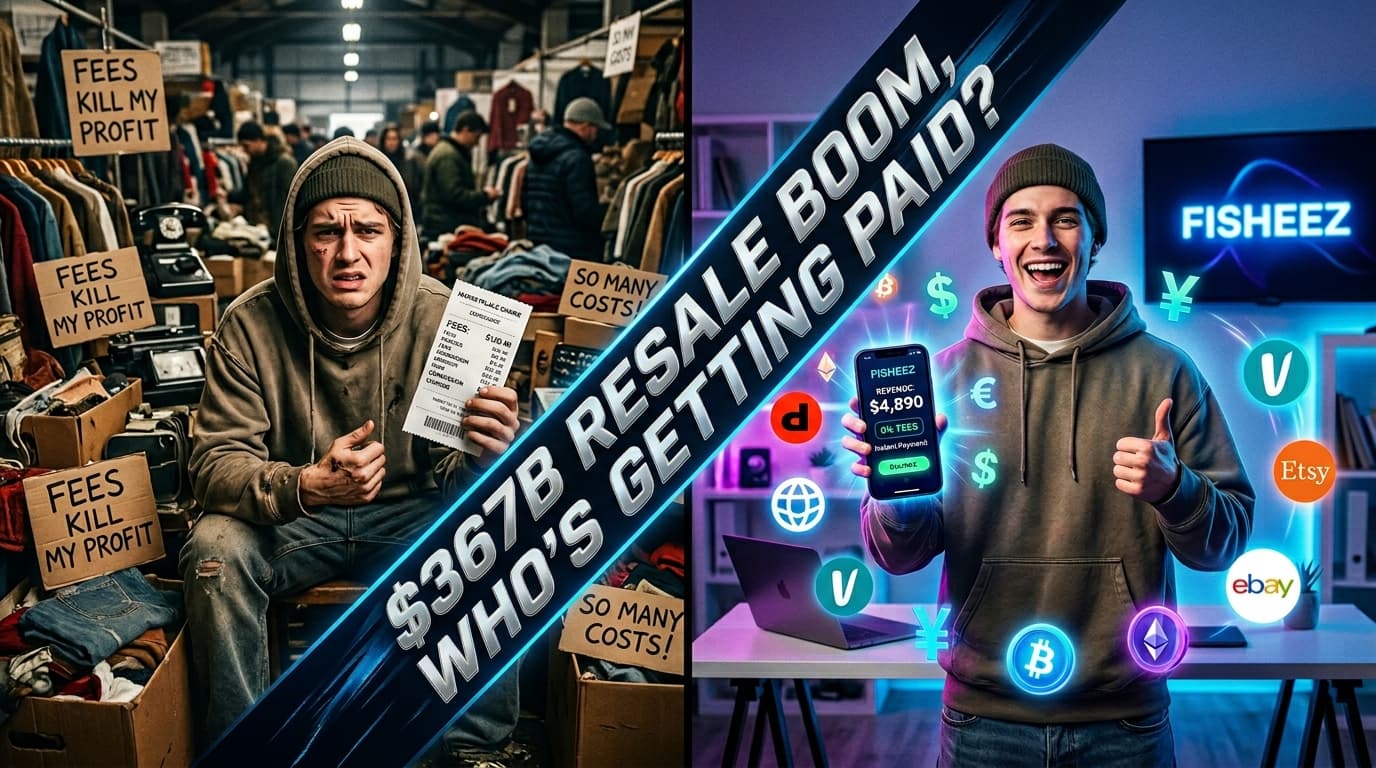
Big Platform Traps: Fees, Holds, and Bans Killing Seller Profits
You spend thirty minutes crafting the perfect listing with professional photos and a detailed description, only to have your item lost in an algorithm that favors promoted listings over quality. Even when your item sells, you face eBay's notorious 10-15% final value fees on the total sale price including shipping. That $400 camera sale becomes $340 after fees, and if you used promoted listings to get visibility, you could be looking at another 2-8% reduction.
Payment holds represent another major friction point that hurts sellers financially. Platforms like PayPal and some marketplace payment systems can hold your funds for 21 days or longer, especially for new sellers or high-value items. This creates cash flow problems when you need to purchase new inventory or cover expenses, effectively turning your successful sale into an interest-free loan to the platform.
Suspensions and account limitations happen without warning or clear explanation. One seller sold $8,000 worth of vintage clothing over six months, then woke up to a permanent ban with no specific violation cited. The appeals process took weeks, during which they couldn't access funds or list new items. This sudden disruption illustrates how little control sellers have over their own businesses when subject to opaque algorithms and automated enforcement systems.
Competition from professional sellers with deep pockets further complicates the landscape. On platforms like Facebook Marketplace, you're competing against scammers who undermine trust, while on eBay you're up against bulk sellers who can afford to undercut prices. The end result is a system where everyday sellers must either accept diminishing returns or exit the market entirely, despite the overall growth in the resale economy for sellers.
Profit in $200B Resale: Low-Cost P2P Escrow and Promoter Strategies
SmartShell Escrow on Fisheez creates a fundamentally different economic model for sellers. Instead of paying 10-15% in platform fees, sellers keep 100% of their listing price while buyers pay a transparent, tiered service fee that ranges from 8% under $50 down to 0.5% for items over $10 million. This means your $400 camera sale nets you the full $400, while the buyer pays a fee that reflects the actual service value rather than a fixed percentage taken from your revenue.
This blockchain-based escrow system operates on the BASE network, using USDC stablecoins for settlement to avoid the volatility concerns of traditional cryptocurrency. When a buyer initiates a transaction, funds lock into the SmartShell smart contract with a preset timer. You get paid when the timer expires automatically, or the buyer can release funds early if they receive the item and are satisfied. If there's a dispute, Fisheez's Peacemaker system—community arbitrators who review evidence—handles resolution rather than opaque platform support teams that often favor buyers.
The Promoter Program offers another revenue stream for sellers who build networks around their inventory. When you open your listing to promoters, they can share it with their audiences and earn commission automatically paid through the SmartShell from your proceeds. This creates a scalable way to move inventory without paid advertising or algorithmic promotion games. For sellers who focus on specific niches—vintage watches, designer handbags, rare collectibles—this allows you to build a network of advocates who earn while helping you sell.
This combination of fee structure and promotion flexibility directly addresses the market trends we've covered. As tariffs push more consumers toward secondhand and online resale grows 18% annually, you need tools that protect your margins while leveraging social commerce dynamics. Fisheez provides that through its P2P escrow system that eliminates payment holds and its promoter network that taps into the same social commerce growth driving the broader resale market.