

The Spread Is the Strategy
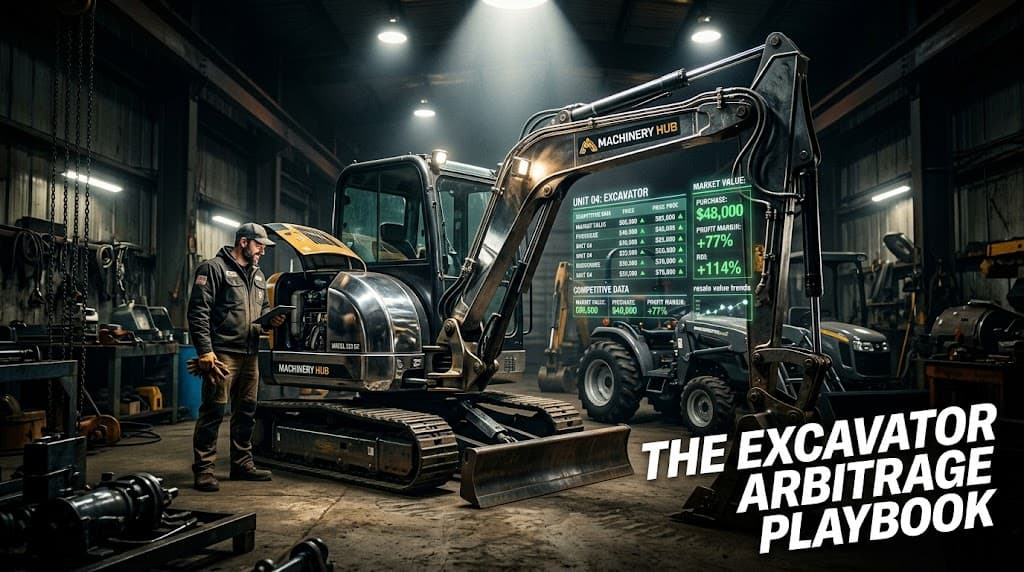
Picture a $200,000 excavator sitting at a regional auction. The hammer falls 17.13% below retail. You know what it should bring in the right market, to the right buyer, listed at the right time. That gap is not a problem to solve. It is a position to take. In 2026, construction equipment values are moving through one of the most exploitable spreads in recent memory, and experienced traders who understand how to read the data are capturing margins north of 40% on individual transactions.
The numbers backing this are not theoretical. Auction markets are currently pricing heavy iron at roughly a 10-point spread below retail, reflecting a 7.27% average retail decline against that steeper auction discount. Meanwhile, available inventory has contracted 11.03% year-over-year, which means the pool of competing units is shrinking faster than buyer demand. Days-to-turn have compressed from 55 to 36, signaling that properly positioned equipment moves quickly when it hits the market. The 2026 environment rewards traders who buy at distressed auction prices and sell into a tighter retail supply chain. The math is there. The question is execution.
Know Which Iron Moves and Why
Not all equipment categories perform equally in this spread environment, and buying without category intelligence is how margins get eaten. Compact tractors are leading the efficiency story right now, with inventory down 25.86% while values have actually appreciated 4.22%. Loader backhoes tell a similar story, with inventory contraction of 25.66% creating genuine scarcity pricing at the retail level. Both categories offer faster turns and lower capital exposure than large iron, which matters for traders managing multiple positions simultaneously.
Large excavators operate under different economics. These machines retain only 25-30% of original value after significant use, compared to 50% retention for compact units, but their absolute dollar spreads remain substantial. A well-timed acquisition on a late-model Cat or Komatsu excavator can represent a five-figure profit on a single transaction. Brand premiums of 5-10% are consistent and predictable across Caterpillar, Volvo, Komatsu, and John Deere, meaning the resale destination matters almost as much as the acquisition price.
Electric and hybrid equipment deserves dedicated attention. Operating costs running 30-50% lower than conventional diesel machines have accelerated adoption faster than supply chains can respond. Demand is currently exceeding available inventory in several electric categories, which creates a seller's market within a seller's market. Traders who can source certified electric equipment are finding buyers willing to pay retail-plus to secure machines with long-term cost advantages.
Engineer the Value Before You List
The spread you capture at auction is your floor. What you do between acquisition and listing determines your ceiling. This is where sophisticated traders separate from casual flippers, and the leverage available is significant without requiring large additional capital.
Service records alone add 10-15% to achievable sale price. Buyers paying retail money want documentation that reduces their risk, and a complete maintenance history provides exactly that psychological justification. Third-party certification takes that premium further, contributing an additional 15-20% when properly executed. A $10,000 reconditioning investment on the right unit has demonstrated the ability to double book value on machines where cosmetics and mechanical confidence were the primary objection for buyers.
Telematics capability is becoming a non-negotiable for a specific and growing buyer segment. With 41% of the construction equipment workforce projected to retire by 2031, the industry is accelerating toward remote monitoring and data-driven fleet management. Equipment with telematics systems already installed, calibrated, and documented commands measurable premiums from fleet operators who need that visibility. Identifying units where telematics can be added or activated during reconditioning represents an underpriced opportunity that most auction buyers overlook entirely.
Time and Geography Are Free Leverage
Two of the most powerful margin variables in equipment trading cost nothing to access. Timing and geography are pure strategic assets for anyone willing to think a cycle ahead.
Counter-seasonal acquisition is well established in principle but consistently underexecuted in practice. Buying compact tractors in late fall, when agricultural demand has subsided and sellers are liquidating, positions you to list into spring demand when the same buyers are competing against reduced supply. The seasonal premium on well-timed listings regularly exceeds the cost of carrying equipment for 60-90 days, particularly in the current environment where days-to-turn at 36 means properly priced inventory does not sit long.
Geographic arbitrage adds another layer. Equipment that trades at distressed prices in oversupplied regional markets can command 10-20% premiums when repositioned to undersupplied markets. Coastal construction booms, infrastructure-heavy corridors, and energy sector expansion zones consistently pull equipment from agricultural heartland markets where auction prices reflect local conditions, not national demand. The cost of transport is almost always the cheapest part of this equation when the destination market is correctly identified.
Combining seasonal timing with geographic repositioning on a single unit creates compounding leverage. Neither tactic requires additional capital. Both require information and planning, which is exactly what distinguishes traders who engineer outcomes from those who simply react to market conditions.
The TideTurner NFT Math: Why the Fee Structure Changes Everything
Every percentage point of commission on a $200,000 excavator is $2,000 in realized margin. Traditional broker-assisted sales carry seller commissions ranging from 5-15%, which means the market spread you worked to capture is being handed back to intermediaries before the transaction closes. On a transaction where you engineered a 20% gross margin, a 10% seller commission cuts your net in half.
Fisheez operates as a blockchain-powered peer-to-peer marketplace built on BASE, with SmartShell Escrow settling transactions in USDC. Sellers transact at zero commission. Buyers carry a fee structure that scales from 0.5% to 8% depending on their tier. The seller math changes fundamentally when the commission line is removed from your pro forma.
This is where the TideTurner NFT compounds beyond a single transaction. The TideTurner program is structured across five tiers, with the Whale tier delivering 100% buyer fee coverage and the Seahorse tier providing 20%. For active flippers running multiple transactions per quarter, the Whale tier at 100 USDC pays for itself on the first deal and generates pure margin advantage on every transaction that follows. The TideTurner NFT is resellable, meaning it carries recoverable value if your strategy shifts.
Fisheez also directs 5% of platform revenue to Fishlanthropy, a 501(c)(3) charitable foundation, with TideTurner NFT holders voting on how that capital is allocated. Participation in the Fisheez marketplace contributes to something beyond individual returns.
The traders who will define the 2026 equipment market are the ones who control the full stack: acquisition timing, category selection, value engineering, geographic positioning, and transaction structure. Secure your TideTurner NFT on Fisheez and build every deal from a structural advantage.