

The Satisfaction Gap Nobody Talks About
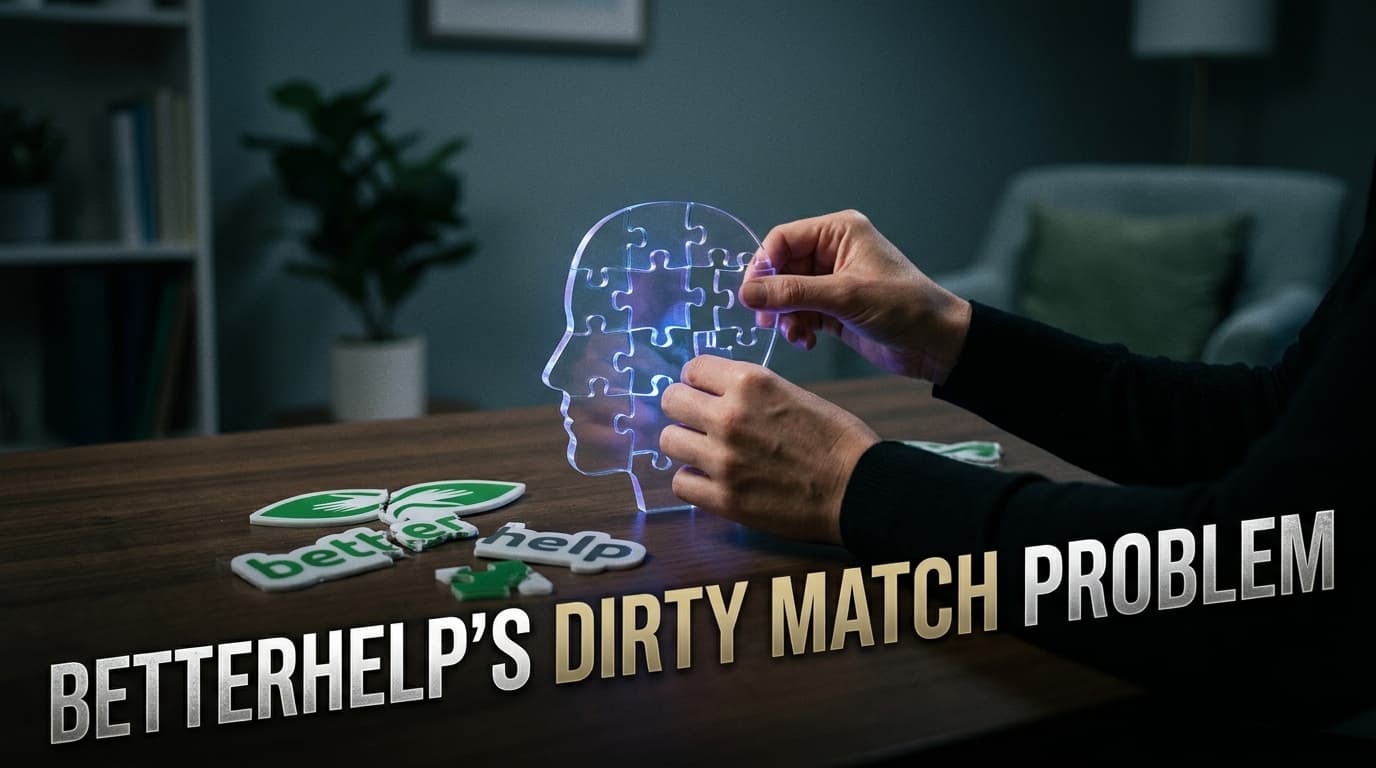
Here is a number worth sitting with: 77% of BetterHelp users retained their first matched therapist. That sounds reassuring until you flip it. Nearly one in four people on the most recognizable subscription therapy app in the world had to start over with a new provider, potentially mid-treatment, with no refund guaranteed and a support team that 43% of users report waiting more than two days to reach. For a parent trying to get consistent, vetted care for a teenager, that statistic lands differently than it does for a marketing team.
The online therapy marketplace has grown explosively, reaching an industry growth rate of 11.83% annually and projected to approach $591 billion globally by 2032. But growth does not equal quality. And for skeptical parents who need to know their child's counselor is real, accountable, and actually going to show up, the model matters as much as the brand name.
What Subscription Apps Actually Sell You
When you sign up for BetterHelp or a similar subscription app, you are buying convenience and speed. The platform matches you through an algorithm, you pay $65 to $100 per week, and a therapist appears in your queue. You do not choose who that person is. Software makes the pairing decision for you.
That model works reasonably well for adults seeking general support. Effectiveness ratings for stress management via teletherapy clock in at 4.5 out of 5. Anxiety disorders score 4.2 and depression 4.0. The overall satisfaction rate across teletherapy users sits above 86%. These are real results backed by real data.
The problem surfaces when the model cracks. A 2025 whistleblower report alleged that some BetterHelp therapists were using AI tools like ChatGPT to generate therapy responses without client knowledge. The Federal Trade Commission settled a $7.8 million case against BetterHelp in 2023 for sharing sensitive user health data with Facebook and other advertisers. A class action lawsuit filed in October 2024 claims the platform misleads customers about match quality. And 32% of BetterHelp users reported experiencing technical glitches during sessions. None of this makes subscription apps worthless. But it raises a legitimate question for parents: when an algorithm picks your child's therapist, who is checking that therapist's work?
How Marketplace Hiring Changes the Power Dynamic
An online therapy marketplace built around freelance credentialed counselors flips the selection model entirely. Instead of being assigned a provider, you browse profiles, read verified credentials, review client feedback, and make an active hiring decision. That shift in agency changes the outcome curve.
Platforms built on marketplace dynamics show meaningful differences in first-match satisfaction. MD Live, a marketplace-style platform, reports 86% of users satisfied or very satisfied with their provider, compared to BetterHelp's 77% first-therapist retention. Online-Therapy.com, which uses a curated credentialed approach rather than pure volume-based automation, reports 84% satisfied with their first match. When people choose their therapist instead of being assigned one, the numbers improve consistently.
The accountability structure shifts too. In a subscription app, the therapist's loyalty runs structurally toward the platform's metrics: session completion, star ratings, caseload size. In a freelance marketplace, the counselor's reputation lives or dies by client reviews and continued engagement. That tends to produce more attentive, relationship-focused care. For parents specifically, the vetting question matters most. Established counseling marketplaces verify licenses against state databases, require background checks, confirm malpractice insurance, and conduct video interviews before approving therapists. That process is not standard on subscription apps, where speed of onboarding has historically taken priority over rigor.
The Ghosting Problem and Why Escrow Matters
One of the most consistent complaints in subscription therapy reviews is therapist ghosting. Providers go quiet mid-treatment, schedules disappear without notice, and sessions get canceled with no resolution. Many BetterHelp therapists treat the platform as side income rather than a primary practice. When another obligation takes priority, the platform client gets dropped.
For parents who have already disclosed sensitive information about their child's mental health and established therapeutic rapport, a ghosted therapist is not a minor inconvenience. It is a trust rupture that can set back progress significantly.
This is precisely where escrow-protected hiring changes the equation. On an online therapy marketplace with escrow built into the transaction, payment is held until the agreed service is delivered. If a counselor disappears without completing sessions, the buyer's funds are protected. The financial consequence is attached to the delivery commitment, not buried in a refund policy no one can reach.
What the Outcome Data Actually Shows
The effectiveness numbers are more nuanced than the headline debate suggests. Research tracking more than 10,000 Talkspace participants found approximately two-thirds reported a symptom reduction over three months. Separate findings show 64% of online therapy users rated it equally effective as in-person care, while 21% found it more effective. These results apply broadly across modalities.
Where the gap opens is in continuity. Mental health outcomes correlate strongly with therapeutic relationship stability. A client who cycles through two or three mismatched therapists over six months will not show the same progress as one who built a sustained relationship with a deliberately chosen counselor. For adolescents specifically, research shows that while 72% say they would access online therapy if needed, only 3.7% have real-world experience with it. The primary barriers are concerns about therapist contact quality and the risk of care being too generic. A vetting-focused, selection-based online therapy marketplace addresses those concerns directly.
The Next Architecture for Mental Health Access
The subscription app model built its market share on a simple promise: fast access, low friction, steady billing. That model served a real need. But the cracks are visible, and informed parents are asking different questions now. Not just "is there a therapist available?" but "who is this person, what is their track record, and what happens if they disappear?"
Those questions point toward an open marketplace where counselors compete on reputation, clients control the selection, and financial protections are built into the transaction itself. Fisheez is a blockchain-based P2P marketplace where SmartShell Escrow holds buyer funds in USDC until service is confirmed as delivered. Sellers pay nothing to list, keeping more of their earnings and reducing the economic pressure that pushes subscription-platform providers toward unsustainable caseloads. When a counselor commits to a session package, the payment structure enforces that commitment. There is no algorithm deciding your child's therapist. There is a transparent profile, a direct hiring decision, and a financial backstop if the provider does not follow through.
The therapy app era proved that online mental health care can work. The next chapter is about making it work reliably, with accountability built into the infrastructure rather than promised in the marketing copy.