
The Shoebox That Paid for a Car
Twenty thousand dollars. That is what one seller walked away with after consigning a battered shoebox of 19th-century stamps, pulled from an estate sale in rural Ohio for less than sixty bucks. The collection had been sitting in a garage for decades, overlooked at three separate yard sales before someone who knew what they were looking at finally scooped it up.
This is not a fantasy. In June 2024, Robert A. Siegel Auction Galleries sold the William H. Gross vintage stamp collection for a staggering $19,201,550, the highest price ever achieved for a U.S. stamp collection. More than 370 bidders registered. Every single lot sold. The final tally landed 22% above pre-sale estimates. Auctioneer Scott Trepel summed up the mood afterward: "The high end is strong, and the low end seems to be equally strong, based on eBay statistics." That means the vintage stamp collection you spotted buried under old Christmas cards last weekend might matter more than you think.
What Made This Collection Worth Chasing
The Ohio seller's find was not a single famous stamp. It was a postal history collection: loose stamps, some still adhered to original covers (envelopes, for the uninitiated), and a handful of 19th-century U.S. issues in mixed condition. The instinct of most estate sale regulars would be to pass or offer a low-ball bundle price. The instinct of someone paying attention to 2024 market data would be to look closer.
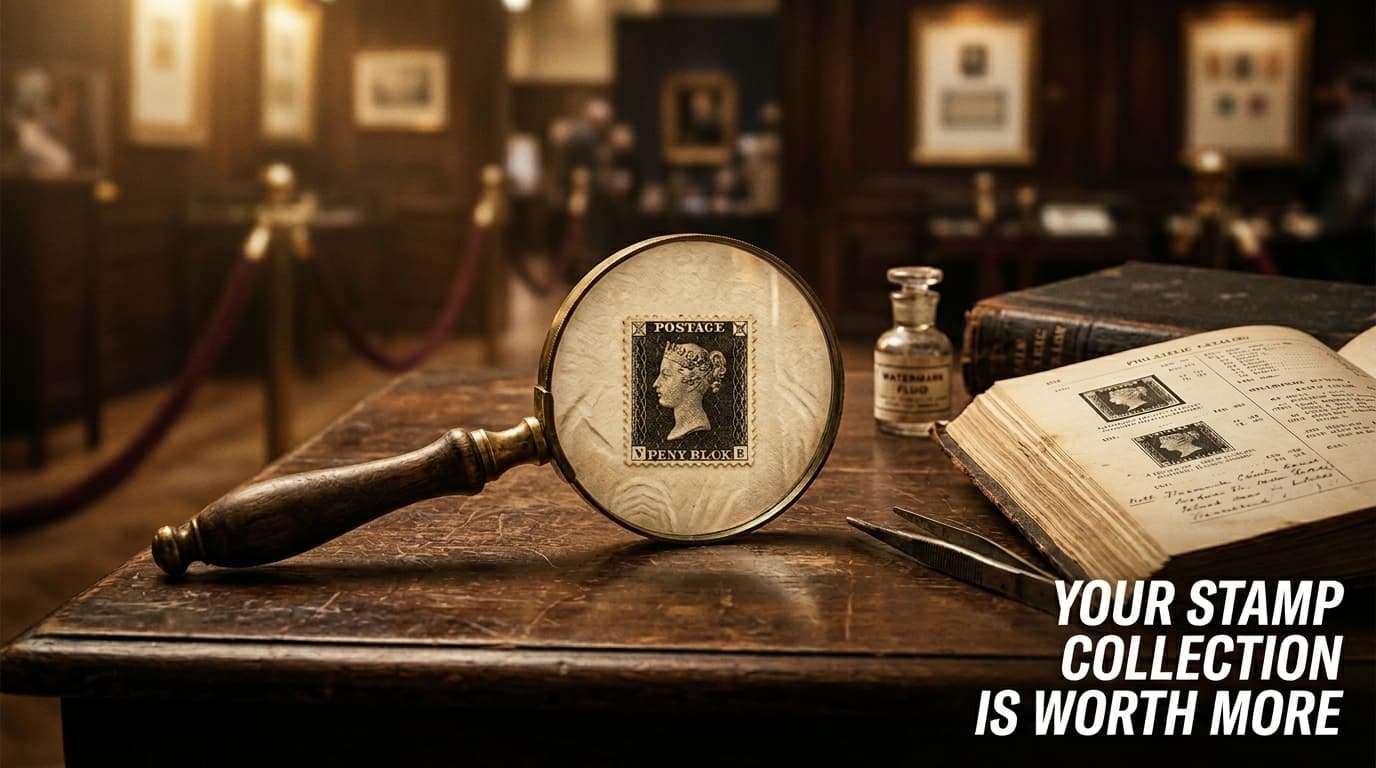
What drives value in a vintage stamp collection right now is a combination of rarity, condition, and category. Classic-era U.S. stamps, generally defined as pre-1900, attract the deepest collector bases. Postal history covers, meaning stamps still on their original mailed envelopes with legible postmarks, routinely outperform loose singles because they preserve a complete historical artifact.
Here is the factor most estate sale buyers miss: production variants and sub-varieties. At the Gross collection auction, a 24-cent Continental Winfield Scott stamp sold for $826,000 not because it was a household name but because it was the only recorded example printed on ribbed paper. Slight differences in paper type, perforation gauge, or ink shade can separate a $40 stamp from a $4,000 one. You do not need to memorize every variant. You need to know enough to slow down before you price.
The Authentication Play: Do Not Skip This Step
The Ohio seller made one decision that separated a decent flip from a five-figure outcome: before listing anything, they got the collection properly assessed. That meant three things, in order.
First, catalog research. The Scott Standard Postage Stamp Catalog is the industry bible. Cross-referencing your stamps against Scott values gives you a floor and flags anything worth a closer professional look.
Second, multiple appraisals. As Warwick and Warwick notes in their stamp seller guidance: never settle for a single valuation. Appraisers specialize. A dealer focused on British Commonwealth may undervalue a strong U.S. classics lot. Get two opinions, ideally three. The cost is usually free at specialist auction houses that want the consignment.
Third, condition grading. Centering, perforation integrity, gum status, and the absence of thins determine whether a stamp sells at catalog value or above it. The 15-cent Lincoln Z Grill in the Gross collection achieved $2,773,000 partly because it carried "virtually perfect centering." Condition is not a detail. Condition is the price.
Choosing Your Sales Channel, and Why It Changes Everything
This is where most estate sale flippers leave money behind. The instinct after finding a rare lot is to throw it on eBay and see what happens. eBay has global reach, but philatelic buyers are cautious online. Without authentication certificates, serious collectors hesitate. You attract bargain hunters, not competing specialists.
The lesson from the 2024 market is specialist channel, specialist result. When Siegel put 317 lots of the Gross vintage stamp collection in front of their registered collector database, the top three telephone bidders alone spent $8.2 million combined, representing 43% of the entire sale. Heritage Auctions learned the alternative lesson: they entered the stamp market and shut their division within two years. Philately rewards category depth and collector trust over platform size. Auction house seller commissions typically run 17.5% or more, so factor that into your net before consigning.
Replicating the Playbook: What You Can Steal
The Ohio seller's $20,000 outcome came from five decisions made in the right order.
Identify before you price. Do the catalog work before you commit to a number. A misidentified variant is money left behind. Separate lots from collections: selling an entire haul as a single bundle is fast but expensive in terms of return. Breaking it into thematic or chronological groupings attracts specialists who want specific eras.
Set a reserve. A reasonable reserve protects against low-ball outcomes while still permitting competitive bidding to push prices past expectations. Choose specialists over generalists. The American Philatelic Society maintains resources for finding vetted dealers and auction houses.
Finally, build a story around provenance. Siegel commissioned a custom hand-painted Louis Vuitton trunk to display the centerpiece 1868 Z Grill, generating interest well beyond the usual philatelic press. You do not need a Louis Vuitton trunk. You need a clear ownership history, photographs of the collection in context, and any documentation that came with the lot. For mid-tier lots in the $200 to $5,000 range, a peer-to-peer platform like Fisheez connects you directly with niche collectors without the overhead of traditional auction commissions.
The Market Is Telling You Something
The 2024 auction data is not a fluke. Niche collectibles with documented scarcity are finding passionate, concentrated buyer bases that drive prices well past casual expectations. When both the high end and the low end of a market are posting strong numbers at the same time, that is a signal worth acting on.
The conditions that produced a $19.2 million sale in June 2024 are the same conditions that produced a $20,000 outcome from a shoebox. Scale differs. Tactics do not. If you are finding postal history lots at estate sales and moving them too quickly through general channels, you are almost certainly underpricing them.
Fisheez connects sellers of niche collectibles directly with the buyers who want them most, with SmartShell Escrow in USDC protecting both sides of every transaction. Sellers pay nothing to list. The vintage stamp collection you picked up last Saturday might be worth exactly what you think, or it might be worth considerably more. The only way to find out is to stop treating it like clutter and start treating it like inventory.