
Amazon's 2026 Crunch: Fees, Tariffs, and Seller Burnout
Amazon sellers began 2026 facing rising Amazon FBA fees 2026 averaging eight cents per unit for Fulfillment by Amazon (FBA), Buy with Prime, and Multi-Channel Fulfillment (MCF), per Seller Central announcement. Increases vary: small items over $50 rise 51 cents per unit, large $10-$50 products five cents, MCF 30 cents average. Revised inbound placement and oversized fees introduce tiers for enhanced services like faster delivery or automation.
Tariffs amplify Amazon seller margin compression. Trade war impacts on China and India imports boosted costs 30-60%, per Haus of Brilliance. Sellers raised prices 25-30% or absorbed losses amid cost-conscious consumers, Modern Retail reports from CrunchGrowth and Bean Coffee.
Marketplace Pulse data confirms fees eat nearly 50% of sales. Amazon generated $150 billion in seller fees 2024, up 7%, backing 10% online store growth. Third-parties endure performance-based deals, inventory reimbursement cuts, stricter storage.
Burnout is rampant. Avenue7Media clients slashed CTV and upper-funnel ads dramatically. Many trim agencies, rethink Prime Day discounts. High-volume ops: 1,000 daily FBA units add $29,000 yearly at eight cents. Haus limits FBA to bestsellers, opts self-fulfillment. Dotcom Reps hears "Ugh, again?" repeatedly.
Common responses include:
- Cutting PPC and agency spends.
- Redirecting to micro-influencers.
- Facing policy shifts on returns, inventory.
- Bracing stricter performance metrics.
Rising Amazon FBA fees 2026 combined with tariffs create acute Amazon seller margin compression, spurring burnout as daily compliance, ads, fulfillment drain resources.
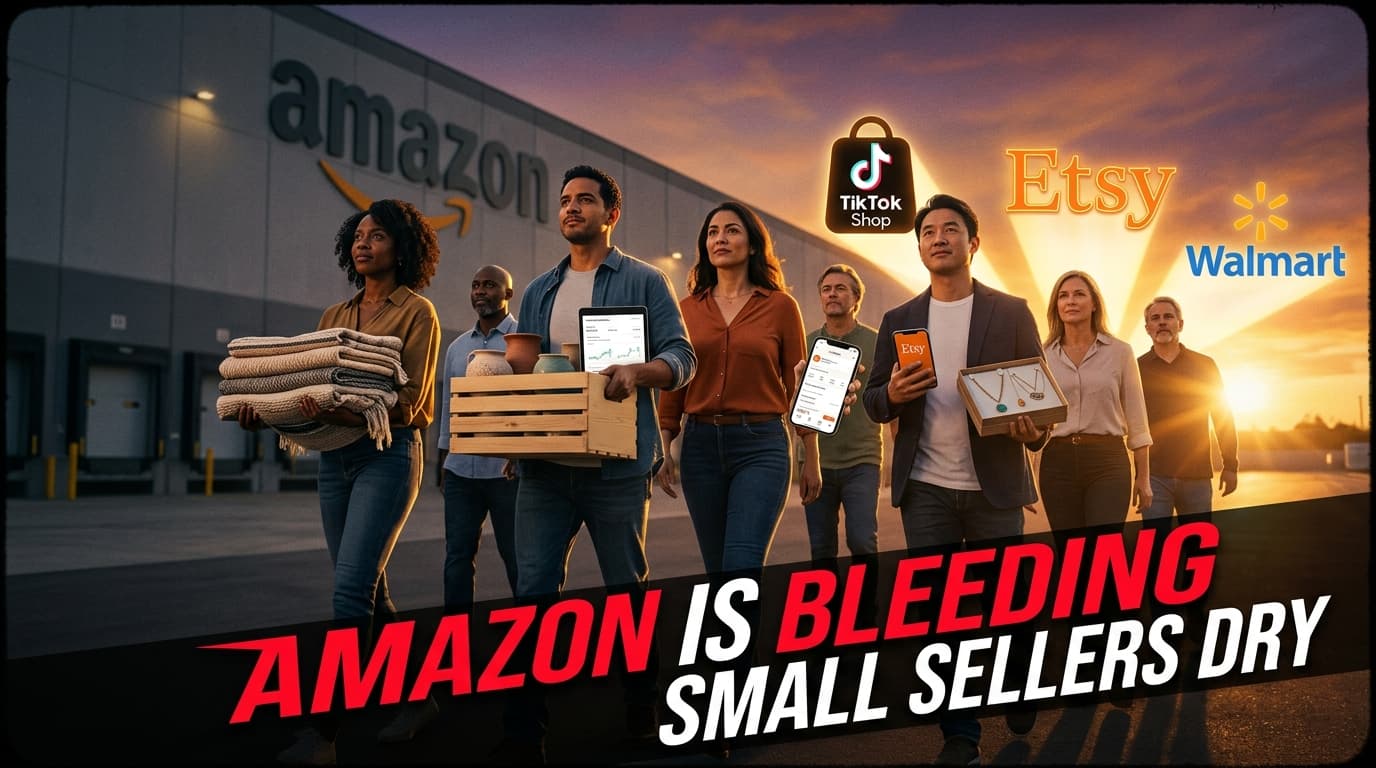
Niche marketplaces small sellers embrace offer salvation: lower fees, targeted audiences, loyalty. Forbes reports vertical marketplaces B2B sales reached $224 billion 2023, accelerating. Etsy for small sellers 2026, Walmart marketplace alternatives Amazon enable shift to niche ecommerce 2026, timely escapes from Amazon's squeeze.
Niche Marketplaces: Why Small Sellers Are Crushing It in 2026
While Amazon sellers grapple with rising Amazon FBA fees 2026, niche marketplaces small sellers platforms thrive. Forbes documents vertical marketplaces B2B 2026 sales exploding to $224 billion in 2023, a 100% annual growth rate, as small sellers leverage specialized ecosystems over broad giants.
These platforms match products to precise buyers, slashing ad costs. Etsy for small sellers 2026 owns crafts, vintage, handmade. Q1 stats show 92% first-click dominance for "hand-thrown mug." Review sentiment and response speed boost rankings. Fees hit $14.20 per $100 sale, half Amazon FBA's $23.70. Buyers return for authenticity, building loyalty absent in mass markets.
Walmart marketplace alternatives Amazon power essentials, home goods. 152 million monthly U.S. visitors scan 147 million SKUs—far quieter than Amazon's 1.2 billion. Local Fulfillment accelerates delivery 32%. Fees average $13.60 per $100, Walmart+ perks elevate conversions for value shoppers.
eBay refurbished sellers 2026 capitalize on collectibles, tech. AI authentication verifies sneakers, watches; auctions lift prices 27%. First sales arrive in 2.5 days median, fees $12.90 per $100.
TikTok Shop Shopify small sellers duo harnesses $24.3 billion GMV, 68% live shopping. 5% commission applies only to TikTok sales; Shopify manages inventory, data.
Yahoo Finance predicts sustained shift to niche ecommerce 2026, Amazon insufficient alone. Alibaba data reveals niche strategies cut burnout versus multi-platform chaos.
Niche marketplaces small sellers advantages include:
- Fees 30-40% below rising Amazon FBA fees 2026, bolstering margins.
- Targeted audiences minimize PPC waste.
- Industry focus forges trust, repeat business.
- Communities yield higher lifetime value.
Small business ecommerce platforms 2026 like BigCommerce streamline multi-channel sync. Avoid Amazon burnout strategies demand niche marketplaces small sellers pivot: relevance trumps volume, efficiency beats exhaustion. Verticals evolve via AI search, real-time inventory, analytics—small players dominate sustainably.