
Why a Checklist Is the Only Way to Buy a Used Honda CBR
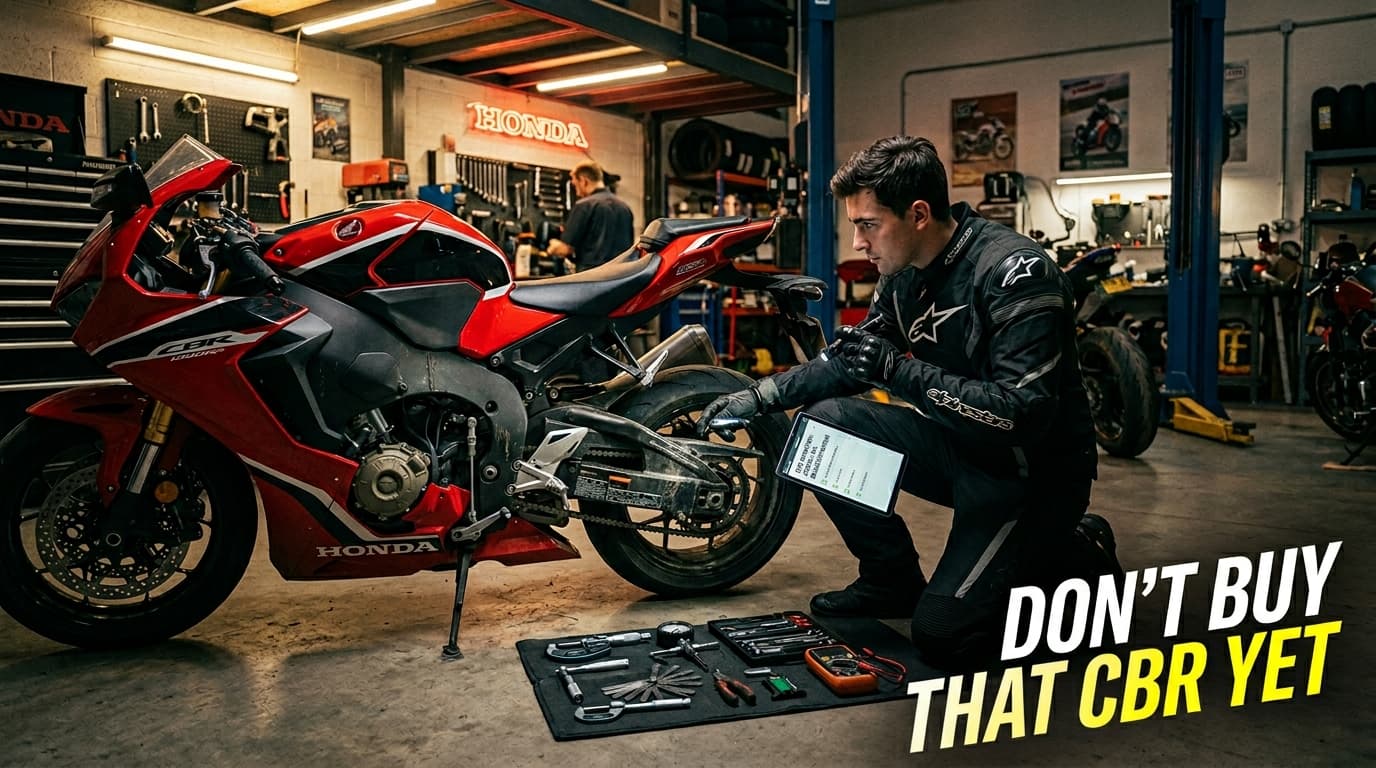
That $4,000 Honda CBR listing looks perfect. Low miles, clean photos, motivated seller. But what happened right before those photos were taken? A used sportbike can hide a surprisingly expensive story behind shiny fairings, and first-time buyers have no way to read that story without a system. A 12-point pre-purchase inspection is that system: a baseline, a negotiation tool, and the confidence to walk away when something does not add up. Print this and bring it to every viewing.
Points 1 to 3: Paperwork Before You Touch the Bike
Point 1: Verify the VIN. The 17-digit Vehicle Identification Number is stamped into the headstock frame. It must match the title exactly, character for character. Any discrepancy is a deal-stopper. A mismatched VIN can mean the bike is stolen, has a salvage history, or has had the frame replaced after a serious crash.
Point 2: Confirm the title is clean. Ask to see the title before anything else. Look for "salvage," "rebuilt," or "flood" designations. A salvage-titled used Honda CBR may look fine on the surface, but it signals structural damage severe enough that an insurer wrote it off. Financing and resale become much harder with a branded title.
Point 3: Check for liens and service records. Call your state DMV with the VIN to confirm no lien is attached. Also ask for service records. A folder of oil change receipts and valve clearance checks tells you the owner cared. A blank stare tells you something else.
Points 4 to 7: The Mechanical Walk-Around
Bring a flashlight. Paperwork passes, now inspect the machine.
Point 4: Look for crash damage. Common evidence includes scratched bar ends, bent or replaced levers, scuffed engine case covers, cracked fairing edges, and fresh paint on one panel while others look sun-faded. A single parking lot drop is not a red flag. Symmetrical damage, replaced hardware, and fresh frame welds are.
Point 5: Inspect the tires. Check the DOT code on the sidewall; the last four digits show the manufacturing week and year. Tires older than seven years should be replaced regardless of tread. Fresh, matching tires on a used Honda CBR are a good sign; a bald rear and new front signals hard riding.
Point 6: Check the chain and sprockets. Pull the chain away from the rear sprocket teeth. If it lifts more than halfway off, it is worn. Sprocket teeth should be uniform and slightly rounded; sharp or hooked teeth mean the whole drivetrain needs replacement, typically $150 to $300.
Point 7: Inspect the brakes and suspension. Brake pads should have at least 2mm of material remaining. Check rotors for deep grooves or warping. Compress the forks and release; they should move smoothly with no oil weeping from the seals. A weeping fork seal is a $200 to $400 repair.
Points 8 and 9: Engine Cold Start and Fluids
Point 8: Start the engine cold. Ask the seller to leave the bike cold, and feel the cases when you arrive. The engine should fire within a few seconds, idle smoothly, and settle within a minute or two. Blue smoke means burning oil. White smoke suggests a coolant leak. Black smoke means a rich mixture. Clattering or a stumbling idle are reasons to dig deeper.
Point 9: Check the fluids. Fresh oil is amber; black, gritty oil signals neglect. Milky or frothy oil means coolant contamination, an expensive fix. Brake fluid should be clear to slightly yellow, not brown.
Point 10: The Test Ride Non-Negotiables
Point 10: Ride the bike, or have a licensed friend do it. RevZilla's used bike buying guide notes that paying the seller first makes a test ride far more likely. During the ride, test the clutch by accelerating hard in a high gear; slipping means the clutch pack is done. Brake firmly from 30 mph and feel for shudder. The bike should track straight with hands loosely on the bars.
Point 11: Negotiate With the Checklist in Your Hand
Point 11: Price every flaw before you offer. Every issue found in Points 4 to 10 is a line-item discount. Tires: $200 to $350 off. Worn chain and sprockets: subtract another $200. Weeping fork seal: $300 to $400. According to Motofomo's inspection guide, each overlooked issue can add 10 to 20 percent to eventual repair costs. A seller asking $4,000 for a bike needing $800 in work is really asking $4,800 from your wallet.
Point 12: Scam Avoidance Before You Pay
Point 12: Never send money before you see the bike in person. The most common private-sale scam has the seller out of state, priced below market, and offering to ship once you send a deposit. According to Motorcyclist Online, email-only sellers who cannot meet in person are a primary red flag. Refuse wire transfers and any escrow service the seller recommends. Meet in person. Inspect first. Pay after.
When you hand over cash privately, you have zero recourse if the title does not transfer or problems surface later. That is a serious gap, and buyers are increasingly using platforms that hold funds in escrow until the deal is confirmed closed.
The Smarter Way to Close a Used Bike Deal
You now have a 12-point framework covering paperwork, mechanical condition, engine health, test ride, negotiation, and scam protection. Most buyers who regret a used motorcycle purchase skipped at least three of these. The ones who walk away satisfied brought a checklist and used it.
Private peer-to-peer sales offer the best prices but the weakest buyer protection. That gap is exactly what Fisheez is built to close. Fisheez is a blockchain-based peer-to-peer marketplace where SmartShell Escrow locks your payment in a smart contract on the BASE network, held in USDC, until you confirm the deal is complete. Funds return automatically if the transaction falls through. No bank. No middleman. Compare that to a $4,000 cash handoff with no recourse on Craigslist or Facebook Marketplace.
Sellers on Fisheez pay nothing. Buyers pay a tiered service fee starting at 8 percent on purchases under $50, dropping significantly on larger amounts. For a used Honda CBR at $4,000, that fee buys real protection. If a dispute arises, trained community volunteers called Peacemakers resolve it, with no financial incentive to favor either side.
Do the inspection. Print the checklist. And when you are ready to pay, use a platform where your money is protected until you say the deal is done.