
1 in 4 Workers Did Gig Work Last Year. Most of Them Needed a Uniform.
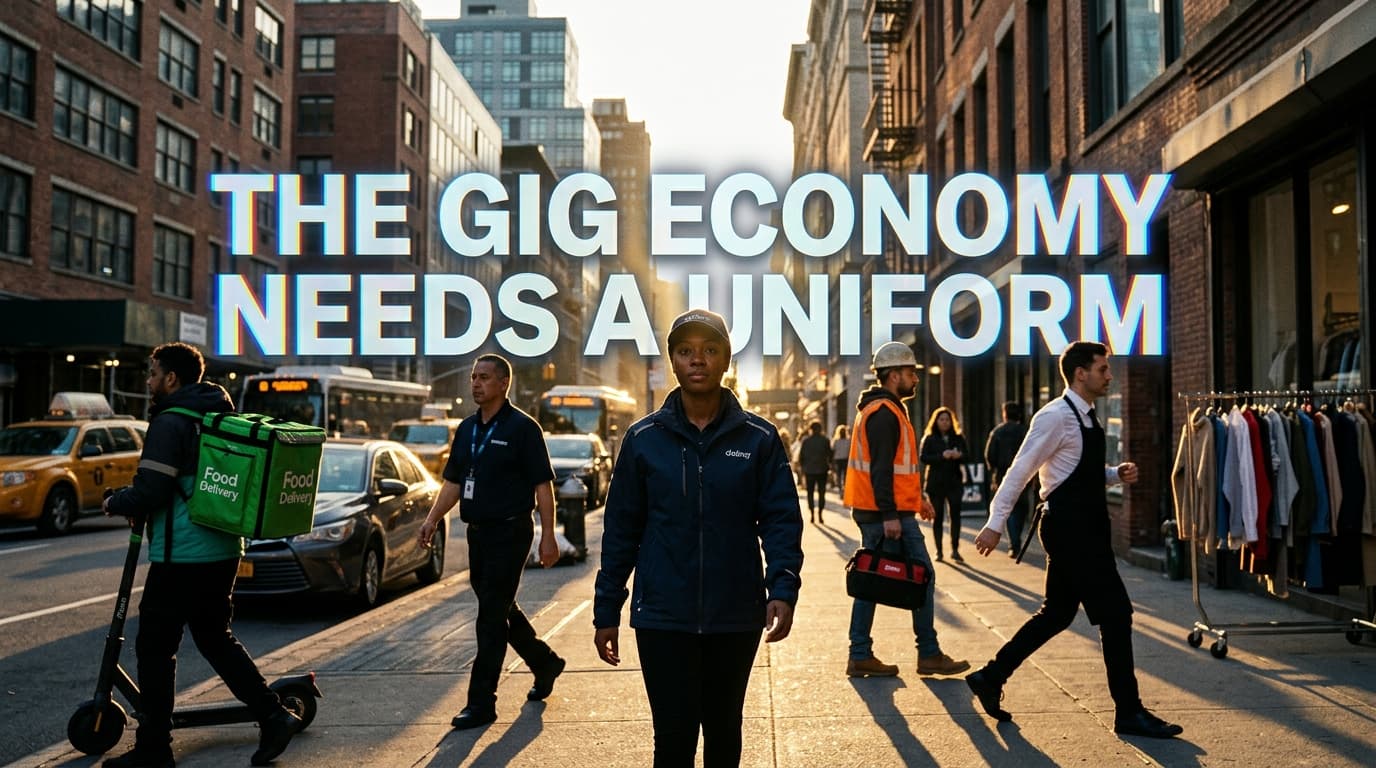
Here is a number that should reframe how you think about the uniform resale market: in 2024, 1 in 4 U.S. workers did some form of gig work over the course of the year. That comes from ADP Research's analysis of over 1.1 million employer payroll records, and the detail that makes it actionable is buried in the methodology. In any given month, only 1 in 10 workers were active in gig roles. By year-end, 1 in 4 had cycled through at least one contingent position. That gap between the monthly snapshot and the annual reality is a rotating pool of tens of millions of workers moving in and out of jobs, and the most common roles in that pool are cooks, servers, housekeepers, bartenders, and drivers. Every single one of those occupations requires a uniform.
This is the demand engine that selling work uniforms trends have been building on without most resellers noticing. Leisure and hospitality alone carries a 16% share of short-term W-2 employment, the highest of any sector. The median temp worker earns around $15 per hour against a national median of $23, which means these workers need gear fast, need it affordable, and are not expensing it through a corporate account. They are buying it themselves, often secondhand, often in a hurry. Independent contractor employment grew 50% between 2019 and the end of 2024, and ADP's researchers are explicit that this is not a pandemic artifact. It is a permanent feature of the modern labor market. The buyer pool for used uniforms is not niche. It is structural, it is growing, and it is underserved.
The Market Nobody Thinks of as a Market
Most resellers think of uniforms as a subcategory of general clothing, something you pick up at an estate sale and flip on eBay. The numbers tell a different story. The global workwear apparel market was valued at $19.20 billion in 2025 and is projected to reach $28.08 billion by 2033, growing at a 4.9% compound annual rate. Expand the scope to include rental programs and managed services and you are looking at a $67.92 billion market, with North America capturing over $26 billion of that on its own. The U.S. alone accounts for nearly 80% of North American workwear revenue.
The durability of this market is not theoretical. Cintas, the world's largest uniform supplier, grew sales and adjusted earnings per share in 51 of the past 53 years and has raised its annual dividend every single year since 1983. UniFirst hit $2 billion in annual revenue in 2022 and has averaged 6% annual revenue growth over the past decade. Aramark's uniform division was valuable enough to be spun off as a standalone public company, now operating as Vestis. These are Fortune 500 companies whose entire business models rest on the assumption that uniform demand never goes away. The regulatory tailwind is real: workplace safety enforcement, OSHA compliance requirements, and sector-specific PPE mandates all create non-discretionary demand. You are not selling a luxury item. You are selling something workers are legally required to wear.
Two Waves, One Inventory Category
Here is the thesis, stated plainly. General apparel resellers are riding one wave: the U.S. secondhand market grew 14% in 2024, five times faster than the broader retail clothing market, and online resale grew eight times faster. That is a strong wave. Uniform resellers are riding two. The workwear market is growing at 4.9% annually on its own fundamentals, completely independent of the resale trend. When you sell secondhand uniforms, you are capturing both tailwinds simultaneously, and no other apparel category offers that combination.
The secondhand market's trajectory is not slowing. Global secondhand apparel is projected to reach $367 billion by 2029 at a 10% annual growth rate. In the U.S. alone, the market is expected to hit $74 billion by 2029. ThredUp's CEO James Reinhart described the current moment as one of "accelerated growth" driven by consumers who are now "thinking secondhand first." Ninety-four percent of retail executives say their customers are already participating in resale, an all-time high. The resale channel for uniforms is growing faster than the primary uniform market itself, which means the opportunity for resellers compounds in a way that simply does not exist in general clothing. Selling work uniforms trends are not following the secondhand market; they are running ahead of it.
Tariffs Just Made Your Argument for You
If the structural case for uniform resale were not already strong enough, the current tariff environment is adding an accelerant. In a GlobalData survey of the top 50 U.S. fashion retailers conducted in early 2025, 80% of retail executives said they expect tariff and trade policy changes to disrupt their global supply chains. More importantly for resellers, 54% of those executives said they believe resale offers a more stable and predictable sourcing channel in the face of tariff fluctuations. Institutional buyers are treating secondhand as a supply chain hedge, not just a consumer trend.
On the consumer side, 62% of shoppers say that if tariffs make new apparel more expensive, they will shift toward secondhand alternatives. Among younger buyers, that number climbs to 66%. For uniform-wearing workers who are already budget-constrained, this is not a preference shift. It is a financial necessity. The tariff pressure is live and current, and it is pushing buyers directly toward the secondhand uniform market at exactly the moment when supply from retiring businesses, fleet refreshes, and corporate uniform overhauls is creating bulk lot opportunities for resellers who know where to look.
Where to Aim: The Niches Growing Fastest
Not all uniform categories are equal, and if you are allocating sourcing budget, the data points to three specific niches. Construction is the single largest application segment in the workwear market, accounting for 23.75% of total revenue. It is the obvious starting point for bulk lot sourcing, and the inventory is abundant: contractors, subcontractors, and labor firms cycle through gear constantly.
Healthcare uniforms, primarily scrubs and lab coats, represent the fastest-growing application segment at a 5.7% CAGR, driven by expanding hospital infrastructure and rising patient volumes. Scrubs are ideal for bulk resale because they are size-standardized, brand-recognizable, and high-turnover. Workers replace them frequently, which means supply is consistent. The third niche is the one most resellers are completely ignoring: women's workwear. Men's gear currently represents 87% of the workwear market, but the women's segment is growing at 5.2% annually, faster than the overall market, as more women enter construction, manufacturing, and engineering. John Deere's 2025 collaboration with Dovetail Workwear to develop women's agricultural apparel is a signal that Fortune 500 companies are already moving into this space. Resellers who source women's uniform lots now are entering an underserved niche before it gets crowded.
One more angle worth understanding: 26% of consumers say they have cut back on cheap apparel because they cannot resell it. Forty-nine percent say they factor resale value into purchase decisions. This means name-brand uniform lots, Carhartt, Dickies, Cintas-issued gear, carry a built-in resale premium. Bulk lots of recognizable workwear brands are not commodity inventory. They are high-velocity, brand-backed product.
How to Move Bulk Lots Without Bleeding Margin
The market thesis for selling work uniforms trends is solid. The execution problem is the platforms. Bulk uniform lots are high-value transactions, often $200 to $2,000 or more per lot, and the standard resale platforms are structurally hostile to that economics. eBay takes 10 to 15% from sellers. Amazon takes 15 to 45%. Etsy charges 6.5% plus additional fees. On a $500 bulk uniform lot, eBay costs you $50 to $75 in seller fees before you factor in shipping. That is not a rounding error. That is the difference between a viable margin and a break-even transaction.
Fisheez charges sellers 0%. The buyer pays a tiered service fee that drops to 3 to 4% on a $1,000 transaction, which means the total cost of the transaction is a fraction of what eBay charges the seller alone. For high-value bulk lots, that fee structure is the direction the resale market needs to move, and it is where the math actually works for resellers operating at volume.
The trust problem is the other half of the equation. Facebook Marketplace and Craigslist are free, but they offer zero payment protection on bulk sales. When you are moving a $1,500 lot of Cintas-issued workwear to a buyer you have never met, "free" is not worth the risk. Fisheez's SmartShell Escrow locks buyer funds in a smart contract on the BASE blockchain in USDC, releasing only when the transaction is confirmed. Both parties are protected without a bank or middleman involved.
For resellers building volume, the Promoter Program is worth understanding. Sellers can open their listings to third-party promoters who earn automatic commission through SmartShell, giving you a built-in referral network without managing it manually. If you are sourcing bulk uniform lots consistently and need to move inventory at scale, that is a meaningful distribution lever.
The double tailwind is real. A $67.92 billion workwear industry growing on regulatory and labor-force fundamentals. A U.S. secondhand market expanding five times faster than retail clothing, now accelerated by tariff pressure. A rotating gig workforce of tens of millions of budget-constrained workers who need uniforms and are buying used. The window to move early into this niche is open. The resellers who recognize selling work uniforms trends as a structural opportunity, not a side category, are the ones who will own the inventory when the rest of the market catches up.